
Geomonhystera galindoi, Prado-Vera & Ferris & Subbotin, 2018
|
publication ID |
https://doi.org/10.11646/zootaxa.4471.1.3 |
|
publication LSID |
lsid:zoobank.org:pub:8115015F-95A7-46C2-ACAE-6F1A264534C8 |
|
DOI |
https://doi.org/10.5281/zenodo.5980656 |
|
persistent identifier |
https://treatment.plazi.org/id/3F5187C5-D34A-E015-F0DD-FD40CE99C4E6 |
|
treatment provided by |
Plazi |
|
scientific name |
Geomonhystera galindoi |
| status |
sp. n. |
Geomonhystera galindoi sp. n.
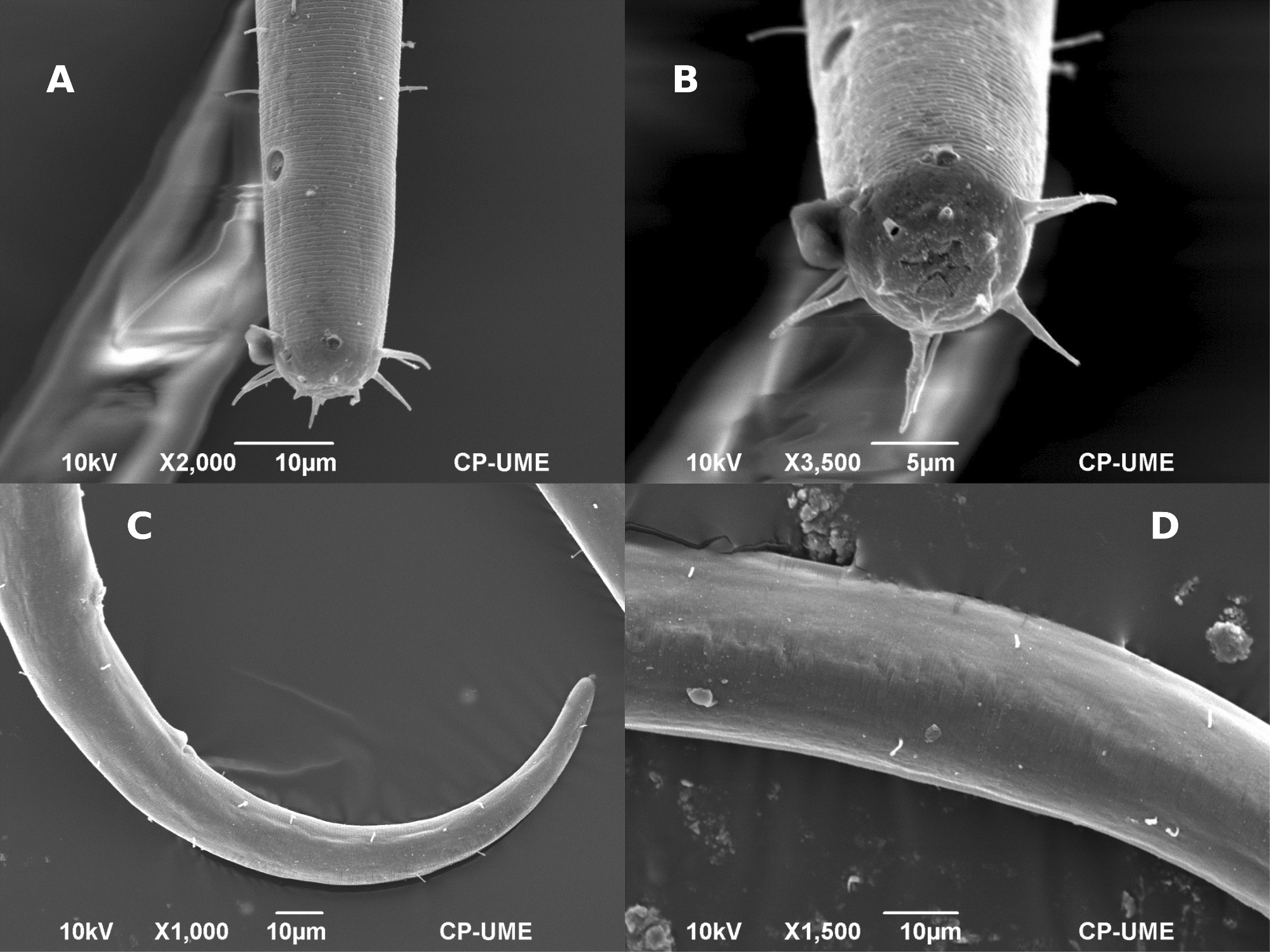
( Fig. 9 A–E View FIGURE 9 ; Fig. 10 A–D View FIGURE 10 )
Measurements. Tables 2, 3 and 4.
Female: (n=25). Body shape of fixed specimens almost straight to slightly arcuate ventrad; cuticle thin, 1 µm thick, with very fine and visible transverse striae, Very small setae sparsely scattered over whole body; head 12–19 (15.5±1.4) µm wide and 3–6 µm high; lips not fused; inner labial papillae very small, conical, 2–3 (2.1±0.4) µm long; outer labial setae not segmented, 7–10 (9.4±0.9) µm long or 47–67 (61±6.0) % of head width; cephalic setae thin, 5–7 (5.8±0.8) µm diameter, 28–47 (36±5.7) % of head width; amphid openings rounded 3–5 (4.7±0.6) µm diameter with the anterior edge 15–25 (21±2.4) µm from the head, both amphids at the same level; pharynx muscular, 156–198 (179±10.7) µm long or 16.6– 21 (18.9±1.1) % of the body length, 438–688 (587±62.2) µm from the vulva and 476–735 (632±61.9) µm from the anus; nerve ring at 40–104 (81±15.2) µm from the anterior end; cardia at base of pharynx 5–17 (11±3.4) µm long and 6–15 (9.4±2.7) µm wide, composed of two conspicuous cells. Outer zone of intestinal walls with many granular refractive inclusions; rectum muscular, 25–45 (33±4.8) µm long and 1.0–2.2 (1.6±0.3) times anal body diameter; anterior anal lip slightly protruding. Distance between vulva and anus 35–50 (41±4.5) µm or 1.5–2.2 times anal body diameter. Gonad (n=7) 132–322 (228±69.6) µm long, ovary short with one row of oocytes, 13–35 (23±7.3) % of body length. Vulval lips slightly protruding; vagina with slightly thickened walls, post-vulval uterine sac absent. Tail tapers evenly, 126–184 (149±12.4) µm long or 13–21 (15.8±1.8) % of the body length, with a few setae; three caudal glands, posterior to the anus and in line, ducted into a common ampulla 5–10 (8.1±2.3) µm long and then through a conspicuous, terminal spinneret which is 2–5 (3.1±0.8) µm long.
Male (n=3): After fixation, body slightly curved with the posterior end strongly curved ventrally, giving a hook-shaped appearance; cuticle 1 µm thick, with exceedingly fine striations; somatic setae rare to few; head 12 µm wide; six lips not fused; inner labial papillae very small, coniform 2 µm long; outer labial setae unsegmented, 6 µm long or 50% of head width; cephalic setae thin, 4–5 (4.3±0.6) µm long or 33– 42 (36±4.8) of head width; amphid apertures rounded, 4 µm diameter and 21–23 (21.7±1.2) µm, or 1.7–1.9 times the head width from the anterior edge of the amphid to the anterior end, respectively; both amphids at the same level; pharynx muscular 160–166 (163±3.0) µm long; nerve ring at 80–85 (82±2.7) µm from the anterior end; cardia 6–10 (8.7±2.3) µm long and 7–11 (9.0±2.0) µm wide, composed of conspicuous cells. Copulatory spicules equal in length, slightly arcuate, 30–34 (32.5±2.1) µm long, with acute tips and non-cephalate; gubernaculum 9–11 (10.3±1.1) µm long. In the ventral precloacal region is a series of 30–37 papilloid cuticular folds. Tail 109–145 (129±18.4) µm long with a few thin setae (4–8 observed), ending in conspicuous, terminal, spinneret 4–6 µm long.
Diagnosis and relationships. Geomonhystera galindoi sp. n. has fine cuticlar striation and sparsely–scattered body setae; the outer labial setae are unsegmented; vulval lips are slightly protruding; vulva-anus distance 35–50 (41±4.4) µm and 1.5–2.2 times anal body diameter; the outer labial setae are 47–67% of head width and the cephalic setae thin, unsegmented and 28–47 (36±5.7) % of the body width; caudal gland ampulla 5–10 µm long and spinneret conspicuous, 2–5 µm long.
Geomonhystera galindoi sp. n. is close to G. dubia Siddiqi & Shahina, 2004 , mainly in the fine striation of the cuticle, in the position of the amphids, the shape of the body when relaxed and in the position of the vulva. It differs in the small and scattered vs. abundant and conspicuous body setae, in the larger body width, 23–31 (25) vs.16–20 µm, in having longer outer labial and cephalic setae, 7.0–10.0 (9.4) and 5.0–7.0 (5.8) vs. 5.0–6.5 (5.8) and 3.5–4.5 µm, respectively, in the vulva-anus distance, 35–50 (41) vs. 22–29 (27) µm; in the length of the tail, 126–184 (149±12.4) vs. 57–77 (69) µm, in the length of the rectum, 25–45 (33±4.8) vs. 20–24 µm. It is also close to G. pervaga ( Argo and Heyns, 1973) Andrássy, 1981 in the finely-striated cuticle, the position of the vulva and in the indexes a and b. It differs in the sparse, small body setae vs. abundant, conspicuous setae, in the shorter tail length, 126–184 (149) vs. 101, and in the vulva-anus distance, 35–50 (41±4.4) vs. 27–39 µm. Males of G. galindoi sp. n. are close to those of G. ecuatoriana sp. n., G. antarcticola Andrássy, 1998 , G. steineri (Micoletsky, 1922) Andrássy, 1981 and G. villosa (Bűtschli, 1973) Andrássy, 1981 in the size of the spicules, but differ from G. ecuatoriana sp. n. in the length of the pharynx (160–166 (163) vs. 137 µm and the distance of the anterior border of the amphid to the head 21–23 (21.7) vs. 18 µm; from G. antarcticola in the length of the body, 0.83–0.93 (0.89) vs. 1.04–1.41 mm, and lengths of the outer labial and cephalic setae, 6 and 4.0–5.0 (4.3) vs. 14.6 and 9.2 µm, respectively; from G. steineri by the index c, 6.2–7.6 (6.9) vs.7.5–9.0, and from G. villosa in the number and size of the body setae and the number of cuticular folds and the indexes a and c’, 37.7–40.6 (39) and 5.2–6.0 (5.7) vs. 45–40 and 6.0–7.0, respectively.
Geomonhystera galindoi sp. n. is similar to G. mexiquense sp. n. in the body length, the fine transverse striae and sparsely-distributed body setae, the position of the vulva and the indexes a and b. It differs in that there are males present in G. galindoi sp. n. but not in G. mexiquense sp. n. Two D2–D3 of 28S rRNA gene sequences obtained from two clones of a sample of G. galindoi sp. n. were different by 0.6% (4 bp) from each other and 17 % (119–120 bp) from two sequences of G. mexiquense sp. n. and by 17% (119–120 bp) from those of G. longispiculata sp. n.
Type locality and habitat. Moss and lichen on trunk of Quercus peduncularis Née in a woodland at San Pablo
Izayoc , Texcoco , México State, 19° 28' 06.7" N 98° 47' 15.4" W, elevation 2572 m asl. The second locality is Juchitepec, México State, 19° 03' 45.2" N 98° 49' 39.1" W. Collections were made from the type locality on October 10, 2008 and from the second locality on January 23, 2009 GoogleMaps .
Type specimens. Holotype female on slide 10394, 15 paratype females on slide 10395 in CNHE. Other type material is deposited in UCRNC on slide number28542, WaNeCo on slide number WT3719, and CPNC on slide number A-100.
Etymology. The species is dedicated to the memory of Dr. Jorge Galindo Alonso, eminent Mexican plant pathologist and outstanding professor and artist.

No known copyright restrictions apply. See Agosti, D., Egloff, W., 2009. Taxonomic information exchange and copyright: the Plazi approach. BMC Research Notes 2009, 2:53 for further explanation.
|
Kingdom |
|
|
Phylum |
|
|
Class |
|
|
Order |
|
|
Family |
|
|
Genus |

Geomonhystera galindoi
| Prado-Vera, Ignacio Cid Del, Ferris, Howard & Subbotin, Sergei A. 2018 |
Geomonhystera galindoi
| Prado-Vera & Ferris & Subbotin 2018 |
G. galindoi
| Prado-Vera & Ferris & Subbotin 2018 |
G. ecuatoriana
| Prado-Vera & Ferris & Subbotin 2018 |
G. ecuatoriana
| Prado-Vera & Ferris & Subbotin 2018 |
Geomonhystera galindoi
| Prado-Vera & Ferris & Subbotin 2018 |
G. mexiquense
| Prado-Vera & Ferris & Subbotin 2018 |
G. galindoi
| Prado-Vera & Ferris & Subbotin 2018 |
G. mexiquense
| Prado-Vera & Ferris & Subbotin 2018 |
G. galindoi
| Prado-Vera & Ferris & Subbotin 2018 |
G. mexiquense
| Prado-Vera & Ferris & Subbotin 2018 |
G. longispiculata
| Prado-Vera & Ferris & Subbotin 2018 |
G. dubia
| Siddiqi & Shahina 2004 |
G. antarcticola Andrássy, 1998
| Andrassy 1998 |
G. antarcticola
| Andrassy 1998 |
G. pervaga ( Argo and Heyns, 1973 ) Andrássy, 1981
| Andrassy 1981 |
G. steineri (Micoletsky, 1922) Andrássy, 1981
| Andrassy 1981 |
G. villosa (Bűtschli, 1973) Andrássy, 1981
| Andrassy 1981 |
G. steineri
| Andrassy 1981 |
G. villosa
| Andrassy 1981 |