
Phanaeus zoque Moctezuma & Halffter, 2017 Phanaeus endymion (Edmonds, 1994)
|
publication ID |
https://doi.org/10.5852/ejt.2021.747.1333 |
|
publication LSID |
lsid:zoobank.org:pub:3F0B6EAF-C616-4865-811A-414A094B590C |
|
DOI |
https://doi.org/10.5281/zenodo.4725850 |
|
persistent identifier |
https://treatment.plazi.org/id/03CA87F2-FFCF-FFF3-FDA1-477EBDC13913 |
|
treatment provided by |
Plazi |
|
scientific name |
Phanaeus zoque Moctezuma & Halffter, 2017 Phanaeus endymion |
| status |
|
Phanaeus zoque Moctezuma & Halffter, 2017
Figs 1Q View Fig , 15 View Fig , 18R View Fig , 19R View Fig
Phanaeus zoque Moctezuma & Halffter, 2017: 47 View Cited Treatment , 48, 52, 55–56, figs 1–15, 23.
Phanaeus zoque – Moctezuma et al. 2017: 113–114, 126, 128, 131–132, fig. 19; 2019: 252–253, fig. 5. — Kohlmann et al. 2018: 83, 88.
Type material
Holotype
MEXICO • ♂, Moctezuma & Halffter 2017: 48 (revised); Oaxaca, Santa María Chimalapa, Chocomanatlán ; IEXA.
Type locality
Mexico, Oaxaca, Santa María Chimalapa, Chocomanatlán (José López Portillo).
Distribution
Temperate mountains of Los Chimalapas, eastern Oaxaca and western Chiapas ( Fig. 15 View Fig ).
Remarks
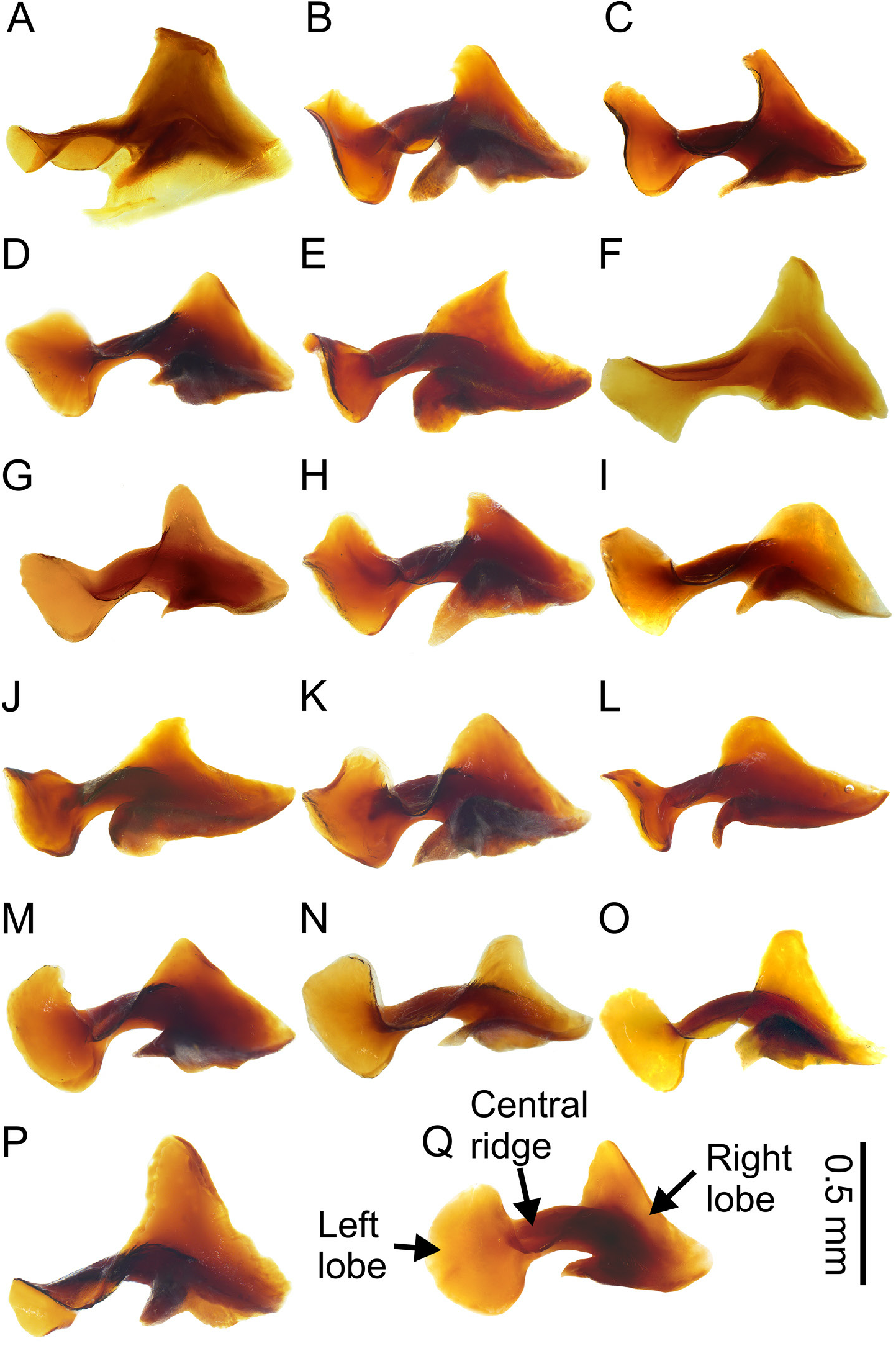
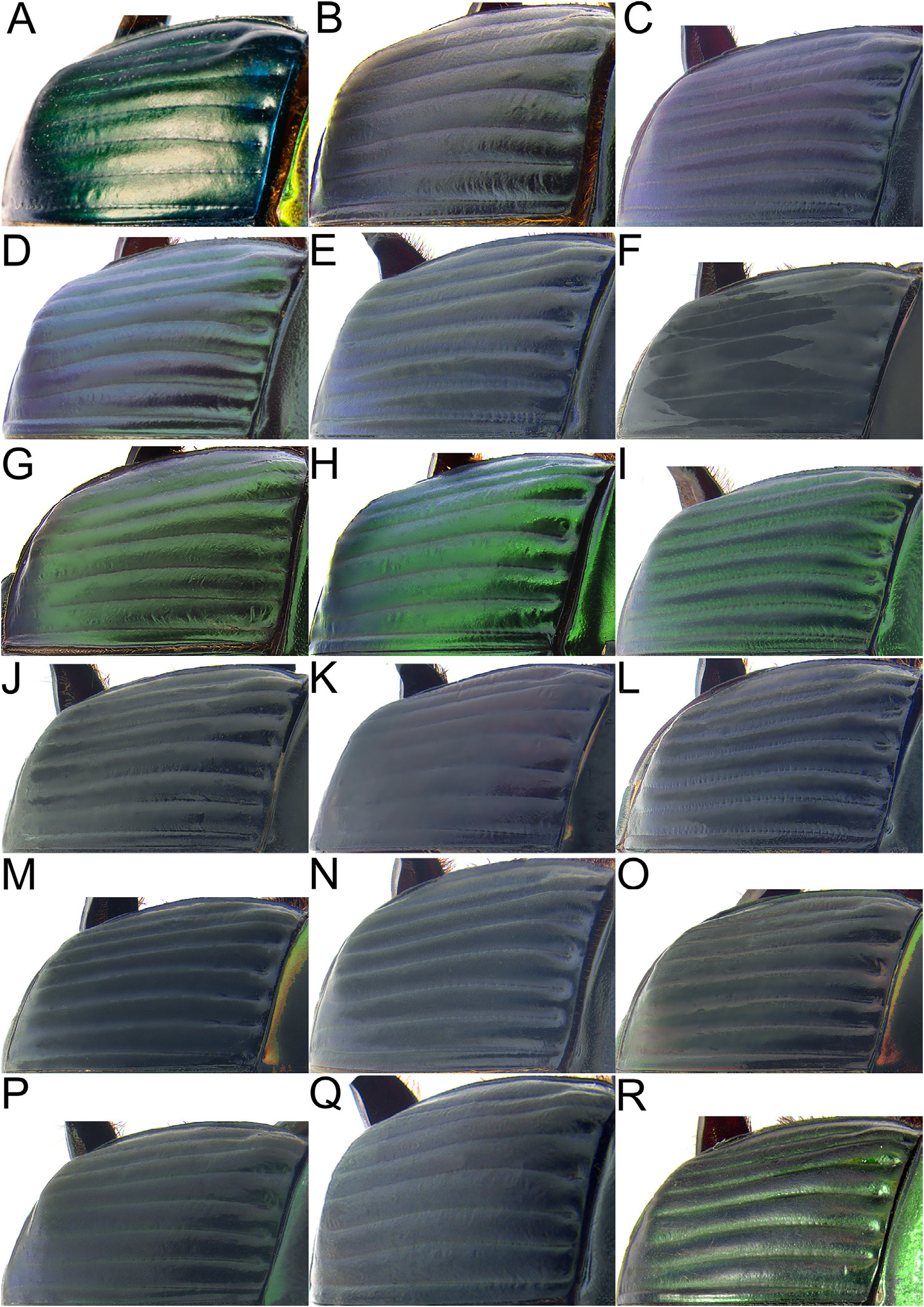
Mean length 15.8 mm ( 13.2–18.4 mm). To the original description we add the elytral striae impressed basally as distinct fossae; right and left lobes of endophallite copulatrix similar in size; right lobe obtusely triangular in shape, distinctly rounded superiorly; left lobe strongly developed, obtusely lobed; central ridge less developed than central column ( Fig. 1Q View Fig ). For the female, the head showing a cephalic trituberculate carina; with conical, similar in size tubercles; middle tubercle slightly more frontally projected than lateral tubercles; frons with almost effaced to effaced punctures; pronotal sculpture completely smooth, with almost effaced to effaced punctures; pronotal process trituberculate, with posterior concavity; with dentiform middle tubercle, strongly more developed and projected frontally than lateral tubercles; carinate or rounded lateral tubercles; posterior pronotal midline almost completely effaced.
After having described P. zoque ( Moctezuma & Halffter 2017) , the following paratypes were deposited by us in additional collections: CEMT: 5 ♂♂, 5 ♀♀; CDC: 5 ♂♂, 5 ♀♀; CMNC: 1 ♂, 1 ♀; CPFA: 6 ♂♂, 6 ♀♀; UVGC: 1 ♂, 1 ♀. These paratypes were previously housed at VMC (see the full list of paratypes in Moctezuma & Halffter 2017).
Key to species of the Phanaeus endymion species group
1. Sutural margin of each elytron upturned to form a sharp ridge, which is progressively more elevated posteriorly and prolonged into a small, sharp tooth at apical angle; elytral margin slightly excised adjacent to this tooth.......................................................................................................................... 2
– Sutural margin of elytra simple (running straight, not upturned)...................................................... 3
2. Male with dentiform keel in the middle of anterior pronotal margin, lateral lines of pronotal triangle straight. Southern Mexico State and Morelos ( Fig. 15 View Fig ).................... P. halffterorum Edmonds, 1979
– Male with keel absent in the middle of anterior pronotal margin, lateral lines of pronotal triangle curved. Sierra Madre del Sur, central Guerrero ( Fig. 15 View Fig ) ................................................................... ............................................................. P. bravoensis Moctezuma, Sánchez-Huerta & Halffter, 2017
3. Pronotal disc of male evenly and densely but finely granulate, granules in most specimens larger and becoming squamose along lateral margins of disc and extending onto posterolateral angles; sides of pronotum strongly roughened ( Figs 2L View Fig , 14A, C View Fig ). Female pronotum slightly roughened; with distinctly impressed midline ( Figs 14B View Fig , 18Q View Fig ). Sierra Madre del Sur and Sierra Norte, central Oaxaca ( Fig. 15 View Fig ) ................................................................................................. P. zapotecus Edmonds, 2006
– Pronotal disc of male lacking distinct granulation, or, if granules present, these are minute and restricted along lateral margins of disc; sides of pronotum smooth. Female pronotum smooth; with superficially impressed to completely effaced midline...................................................................... 4
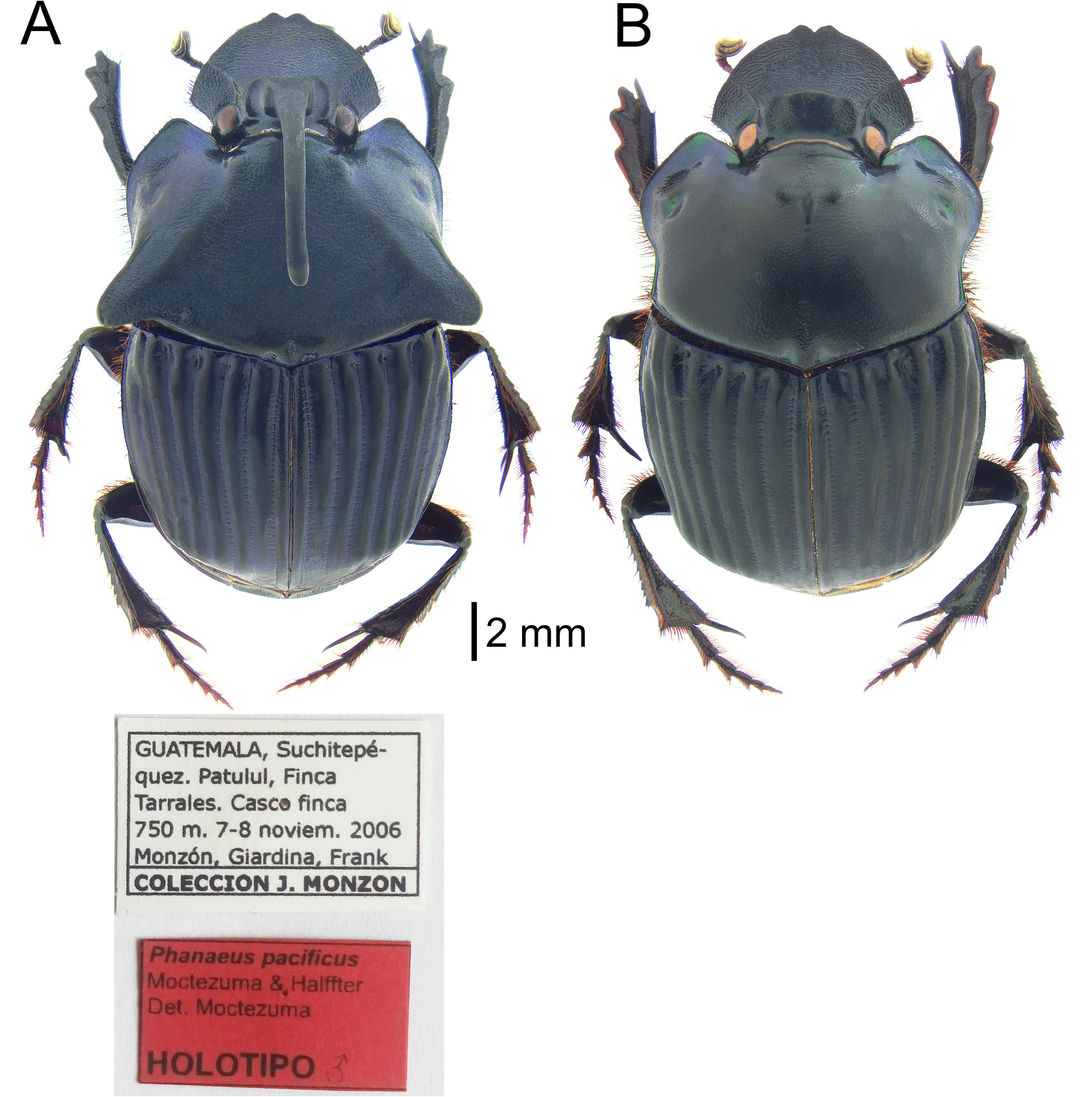
4. Elytral striae deeply punctate; all strial punctures forming a distinct fossa, giving a completely roughened surface to striae ( Figs 1K View Fig , 2G View Fig , 9 View Fig , 19L View Fig ). Pacific slope of the Sierra Madre de Chiapas and El Salvador ( Fig. 15 View Fig )............................................................................................. P. pacificus sp. nov.
– Elytral striae distinctly punctate to impunctate. If strial punctures distinctly impressed, forming a distinct fossa giving a completely roughened surface to first and second striae, or strial punctures forming a distinct fossa giving a partially roughened surface to basal half of striae ....................... 5
5. Pronotum of female with anteromedial concavity bounded anteriorly by three variable on shape tubercles ( Figs 4C View Fig , 11B View Fig , 13B View Fig , 18E, N, P View Fig ).......................................................................................... 6
– Pronotum of female evenly convex, lacking anteromedial concavity even in largest specimens, bearing three round, smooth tubercles in transverse line near anterior margin ( Figs 3B View Fig , 5B View Fig , 6B View Fig , 7B View Fig , 8B View Fig , 10B View Fig , 12C View Fig , 18C, F, I–K, M, O View Fig )................................................................................................... 10
6. Pronotum of female with concavity bounded anteriorly by a raised U- or V-shaped process; middle pronotal tubercle dentiform or rounded, always more developed and frontally projected than lateral tubercles; pronotal concavity interrupted posteriorly by a small rounded bump or strongly developed dentiform tubercle ( Figs 4C View Fig , 13B View Fig , 18E, P View Fig ). Endophallite copulatrix variable................................... 7
– Pronotum of female with concavity bounded anteriorly by three isolated, round, almost aligned tubercles; middle tubercle sometimes dentiform and more strongly developed than lateral tubercles ( Figs 11B View Fig , 18N View Fig ). Right and left lobes of endophallite copulatrix similar in size; right lobe obtusely triangular in shape, weakly developed superiorly; left lobe obtusely lobed, strongly developed; central ridge distinctly developed ( Fig. 1M View Fig ). Caribbean Honduras and Belize ( Fig. 16 View Fig ) .......................................................................................... P. porioni Arnaud, 2002 stat. rev.
7. Pronotal disc of male with superficially impressed midline ( Fig. 2K View Fig ). Right lobe of endophallite copulatrix more developed than left lobe; right lobe obtusely triangular in shape, sharply acute frontally, rounded superiorly; left lobe strongly developed, obtusely lobed; central ridge strongly developed ( Fig. 1O View Fig ). Sierra Madre del Sur, southern Michoacán ( Fig. 15 View Fig ) ...... P. rzedowskii sp. nov.
– Pronotal disc of male with completely effaced midline ( Fig. 2B View Fig ). Central ridge of endophallite copulatrix distinctly developed ( Fig. 1D, G, Q View Fig ) ................................................................................ 8
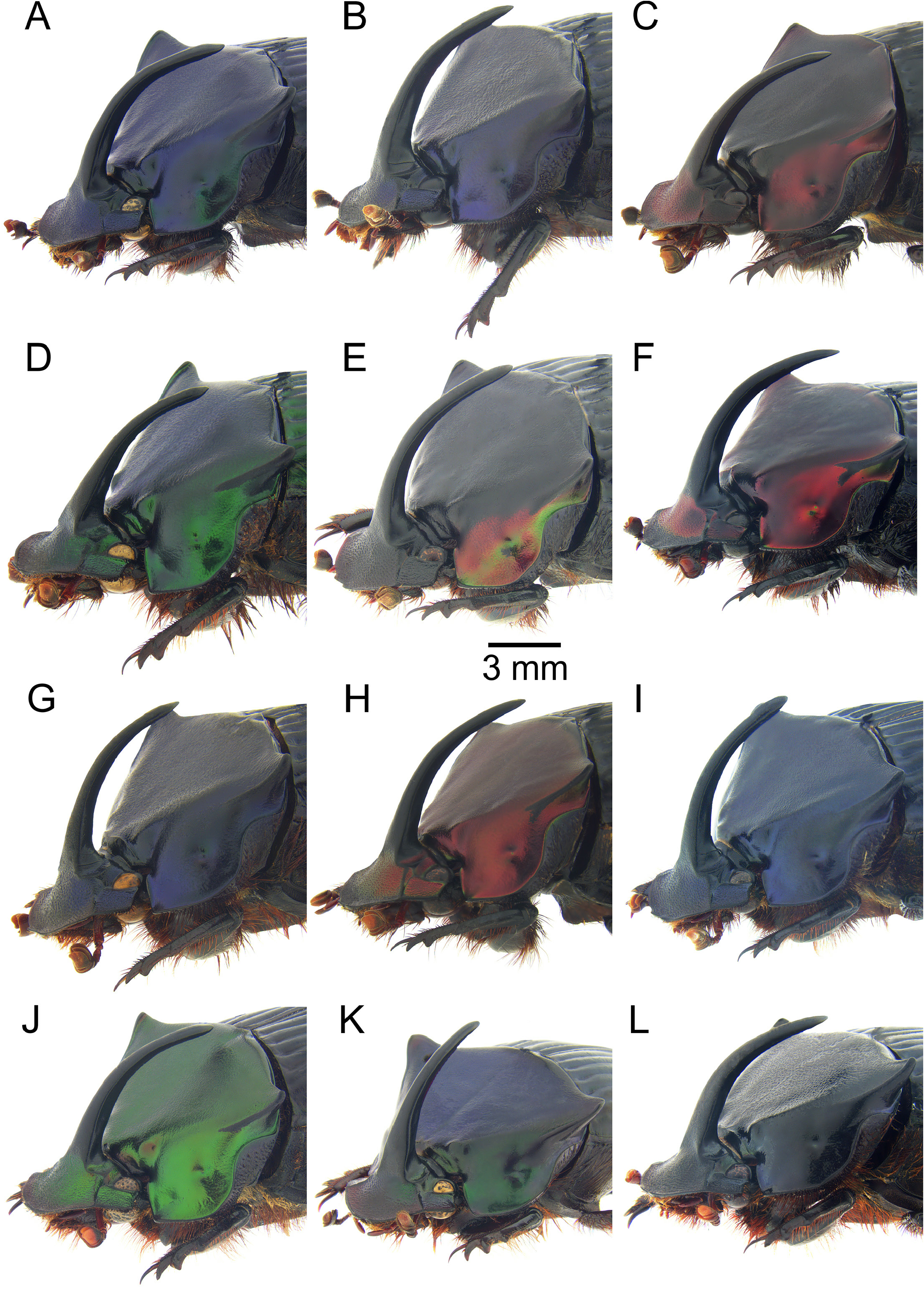
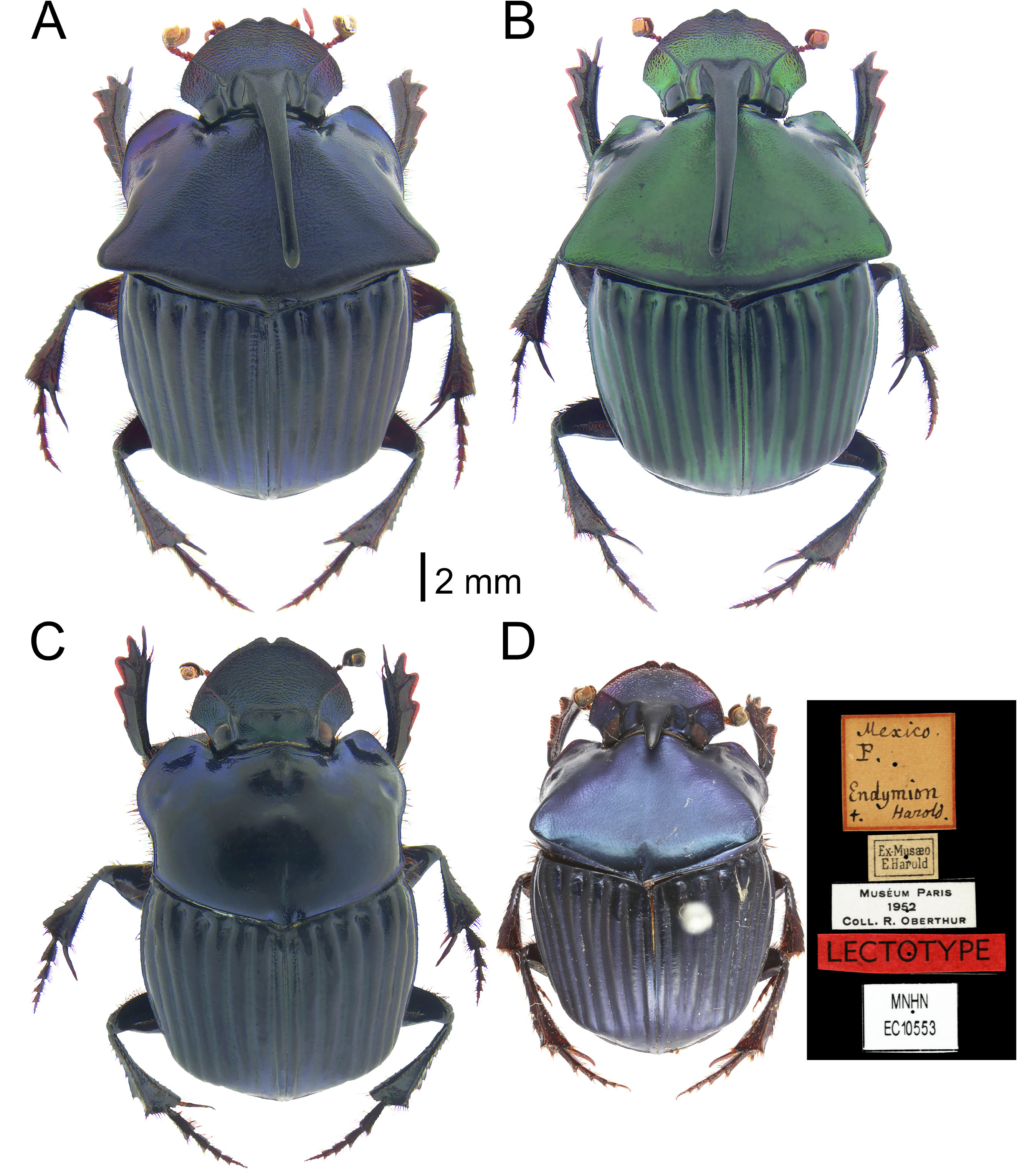
8. Pronotum of male uniformly dark blue, dark metallic blue-green or dark metallic green ( Figs 2B View Fig , 4A–B View Fig ). Weakly developed keel close to anterior margin of pronotum, or keel completely effaced ( Fig. 2b View Fig ). Right lobe of endophallite copulatrix more developed than left lobe; right lobe obtusely triangular in shape; left lobe obtusely lobed inferiorly, obtusely triangular superiorly; central ridge less developed than central column ( Fig. 1D View Fig ). Lowlands and midlands of the Gulf of Mexico slope, Yucatán Peninsula, Belize, northern Guatemala ( Fig. 15 View Fig )......................... P. endymion Harold, 1863
– Pronotum of male uniformly bright metallic green, bright metallic green-blue, sometimes showing a red or golden sheen. Keel always absent on anterior margin of pronotum. Endophallite copulatrix variable .............................................................................................................................................. 9
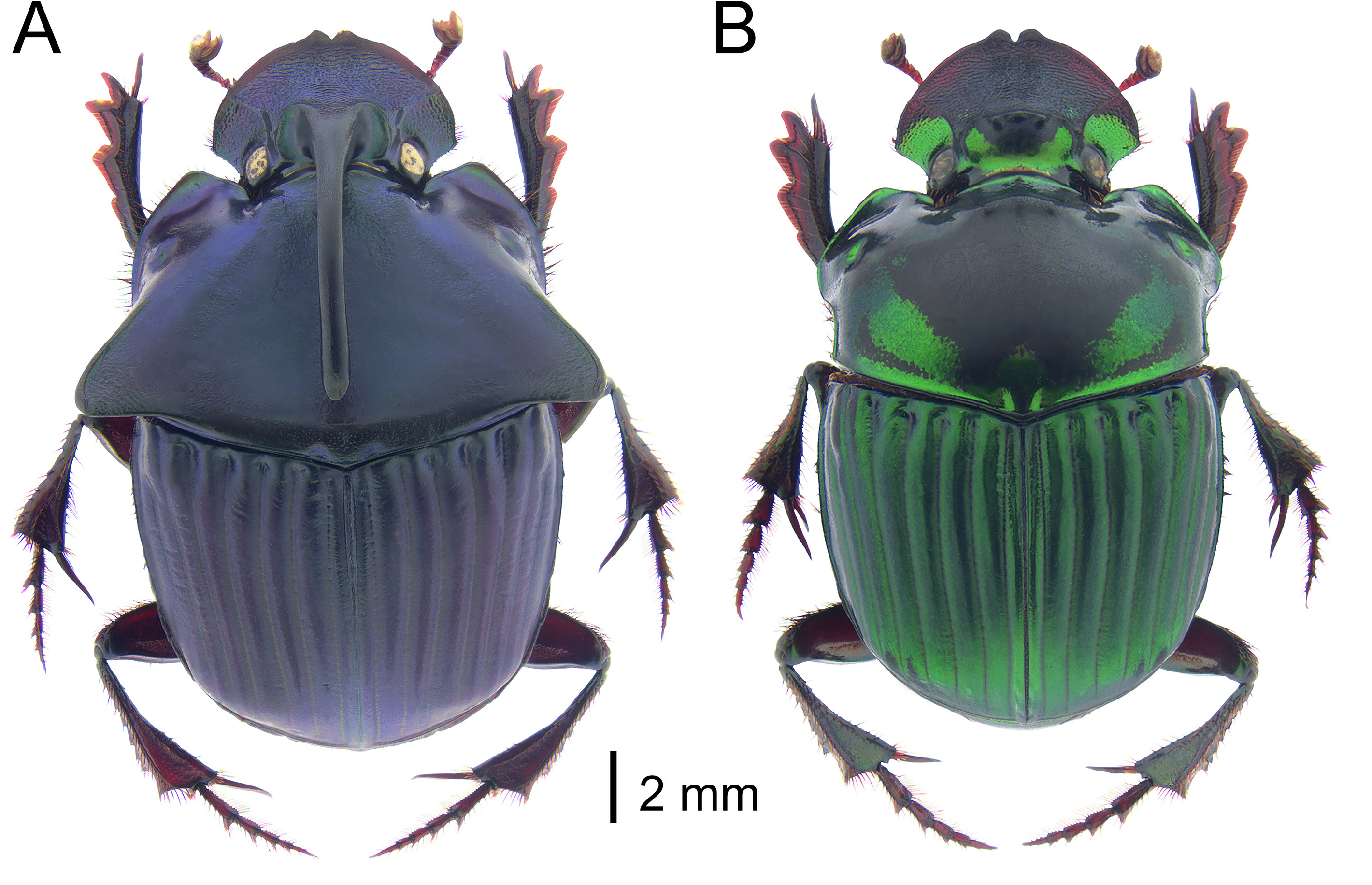
9. Anterior metasternal angle obtuse in lateral view. Lateral metasternal angles well defined and slightly curved. Left lobe of endophallite copulatrix almost completely lobed ( Fig. 1Q View Fig ). Temperate mountains of Los Chimalapas, eastern Oaxaca and western Chiapas ( Fig. 15 View Fig ).................................. ................................................................................................. P. zoque Moctezuma & Halffter, 2017
– Anterior metasternal angle almost right angled but with rounded apex in lateral view. Lateral metasternal angles evanescent. Left lobe of endophallite copulatrix straight posteroinferiorly ( Fig. 1G View Fig ). Jalisco, northern Michoacán, Nayarit, southern Sinaloa ( Fig. 15 View Fig ) ..................................... .................................................................. P. huichol Moctezuma, Sánchez-Huerta & Halffter, 2017
10. Elytral interstriae evenly convex and glossy midlongitudinally; striae impressed basally as distinct fossae ( Figs 3 View Fig , 6 View Fig , 7 View Fig , 18C, I–J View Fig ) ...........................................................................................................11
– Elytral interstriae distinctly flattened and uniformly dull; striae not strongly impressed basally ( Figs 5 View Fig , 8 View Fig , 10 View Fig , 12 View Fig , 18F, K, M, O View Fig )...................................................................................................... 14
11. Almost completely bright black dorsally ( Figs 2E View Fig , 7 View Fig ). Pacific slope of the Cordillera de Talamanca, Costa Rica and Panama ( Fig. 16 View Fig ) ..................................................................... P. malyi Arnaud, 2002
– Pronotum typically bright metallic green, blue-green or dark metallic blue ( Figs 2A, D View Fig , 3 View Fig , 6 View Fig )...... 12
12. Distinctly developed keel on central anterior margin of pronotum of male; right lobe of endophallite copulatrix tapering superiorly and straight apically ( Fig. 1C View Fig ). Sierra Madre del Sur, southern Oaxaca ( Fig. 15 View Fig ) ............................................................... P. edmondsi Moctezuma, Deloya & Halffter, 2019
– Always with keel absent on central anterior margin of pronotum of male ( Fig. 2A, D View Fig ). Endophallite copulatrix variable ........................................................................................................................... 13
13. Larger species, frequently attaining 19–20 mm in length. Posterolateral angles of male widened, slightly projected posteriorly ( Figs 2A View Fig , 3 View Fig ). Central highlands of Chiapas ( Fig. 15 View Fig ) ........................... ........................................................................................................................ P. chiapanecus sp. nov.
– Smaller species, never attaining 19 mm in length. Posterolateral angles of male sharply acute, strongly projected posteriorly ( Figs 2D View Fig , 6 View Fig ). Inner slope of the Sierra Madre de Chiapas, south-central Guatemala and southeastern Chiapas ( Fig. 15 View Fig ) ................................................... P. jackenioi sp. nov.
14. Pronotal disc of male completely bright metallic ( Figs 2J View Fig , 12 View Fig )....................................................... 15
– Pronotal disc of male distinctly black, without metallic reflection ( Figs 2E, J, L View Fig , 5A, C View Fig , 8A View Fig , 10A View Fig ) .. ........................................................................................................................................................ 16
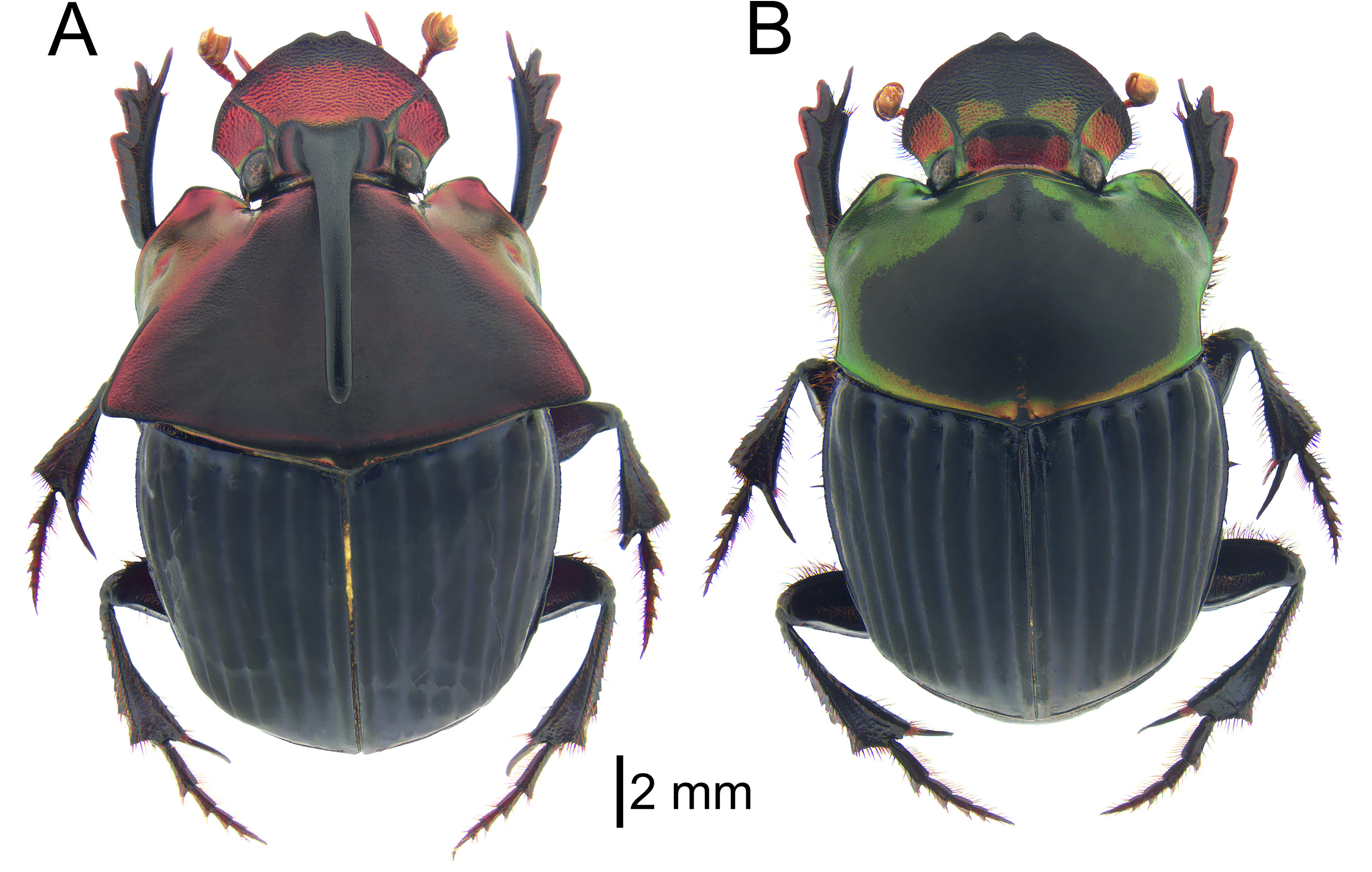
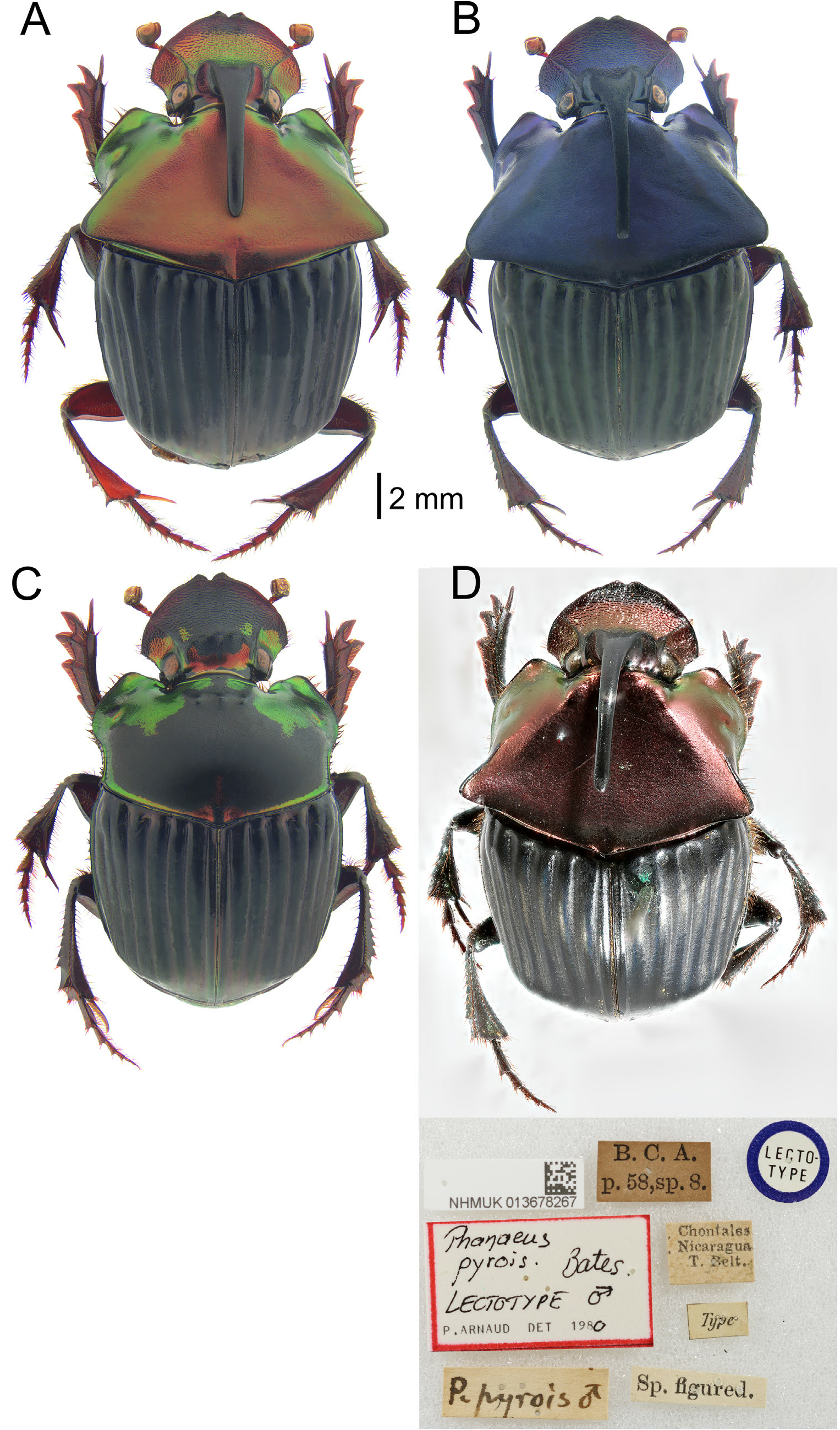
15. Pronotal disc typically bright metallic green, rarely dark metallic blue. Pronotal process of female with central tubercle more developed and anteriorly projected than lateral tubercles. Ecuador ( Figs 17 View Fig , 18A View Fig ).............................................................................................. P. arletteae Arnaud, 2002
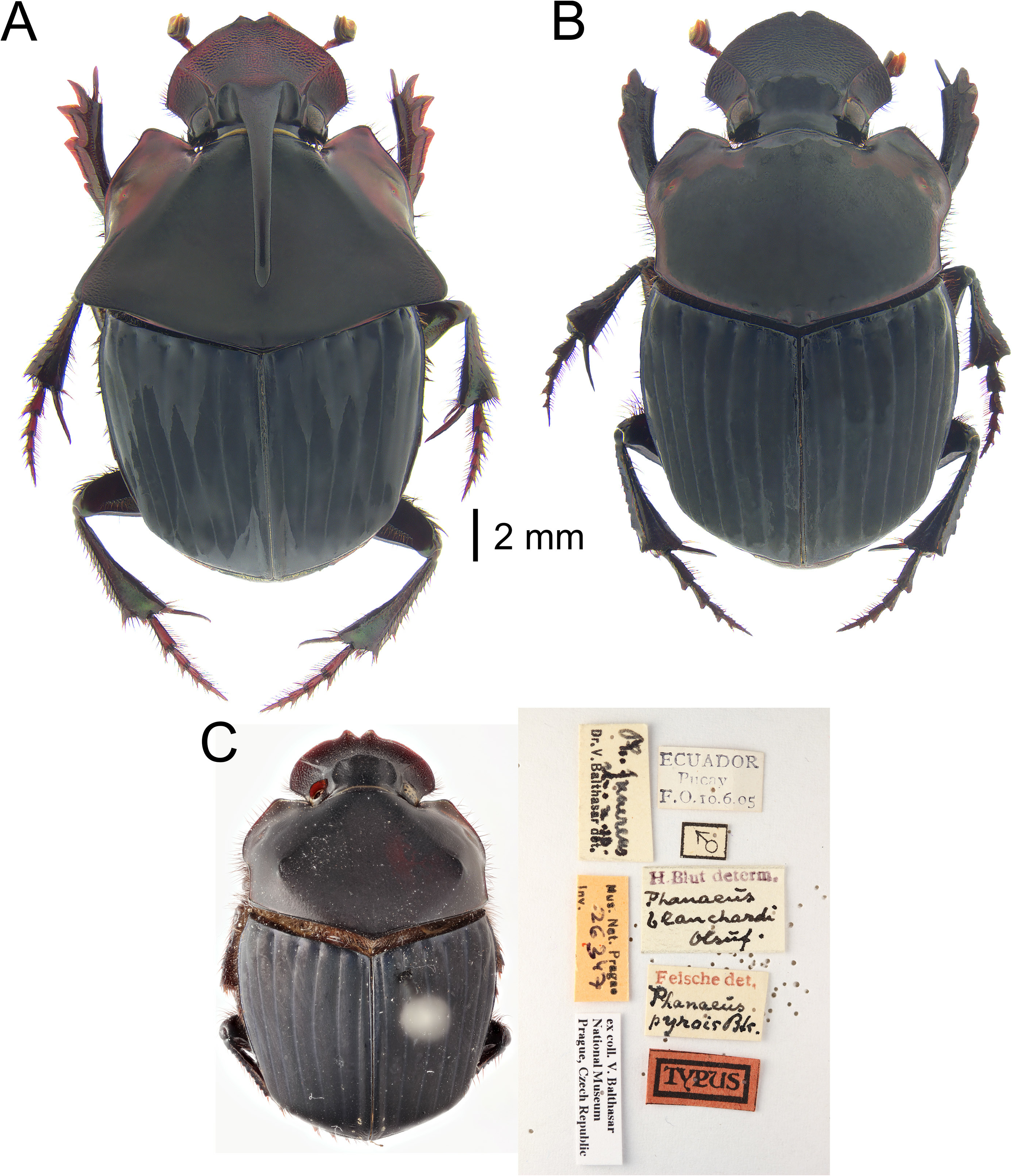
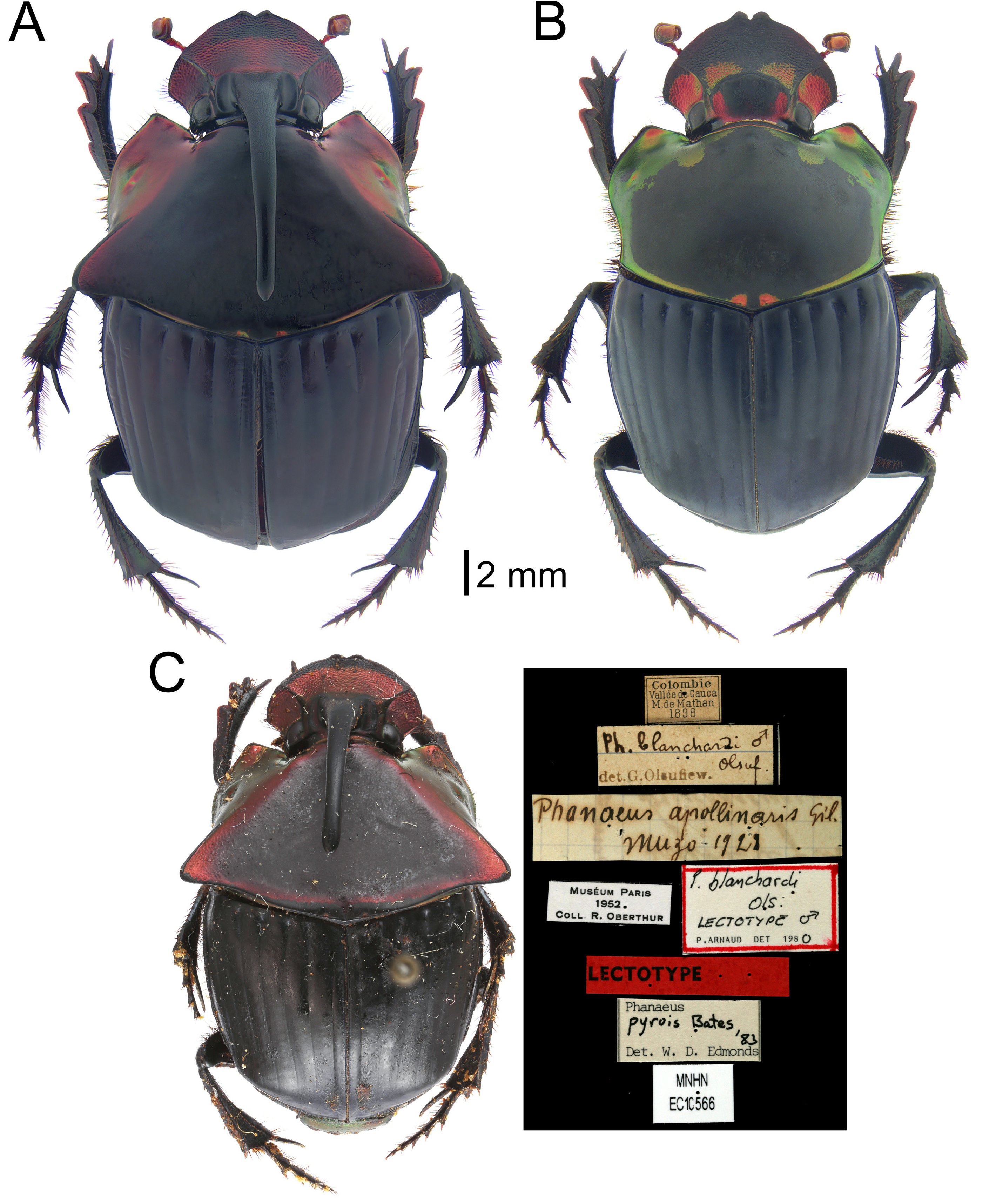
– Pronotal disc typically bright metallic red, green, or dark metallic blue ( Figs 2J View Fig , 12 View Fig ). Pronotal process of female with tubercles almost aligned, central tubercle not projecting anteriorly ( Figs 12C View Fig , 18O View Fig ). Nicaragua and north Caribbean Costa Rica ( Fig. 16 View Fig )......................................... P. pyrois Bates, 1887
16 Pronotum distinctly bright metallic red frontolaterally. Head bright metallic red with green-yellow metallic sheen ( Figs 2F, H View Fig , 8 View Fig , 10 View Fig ).................................................................................................... 17
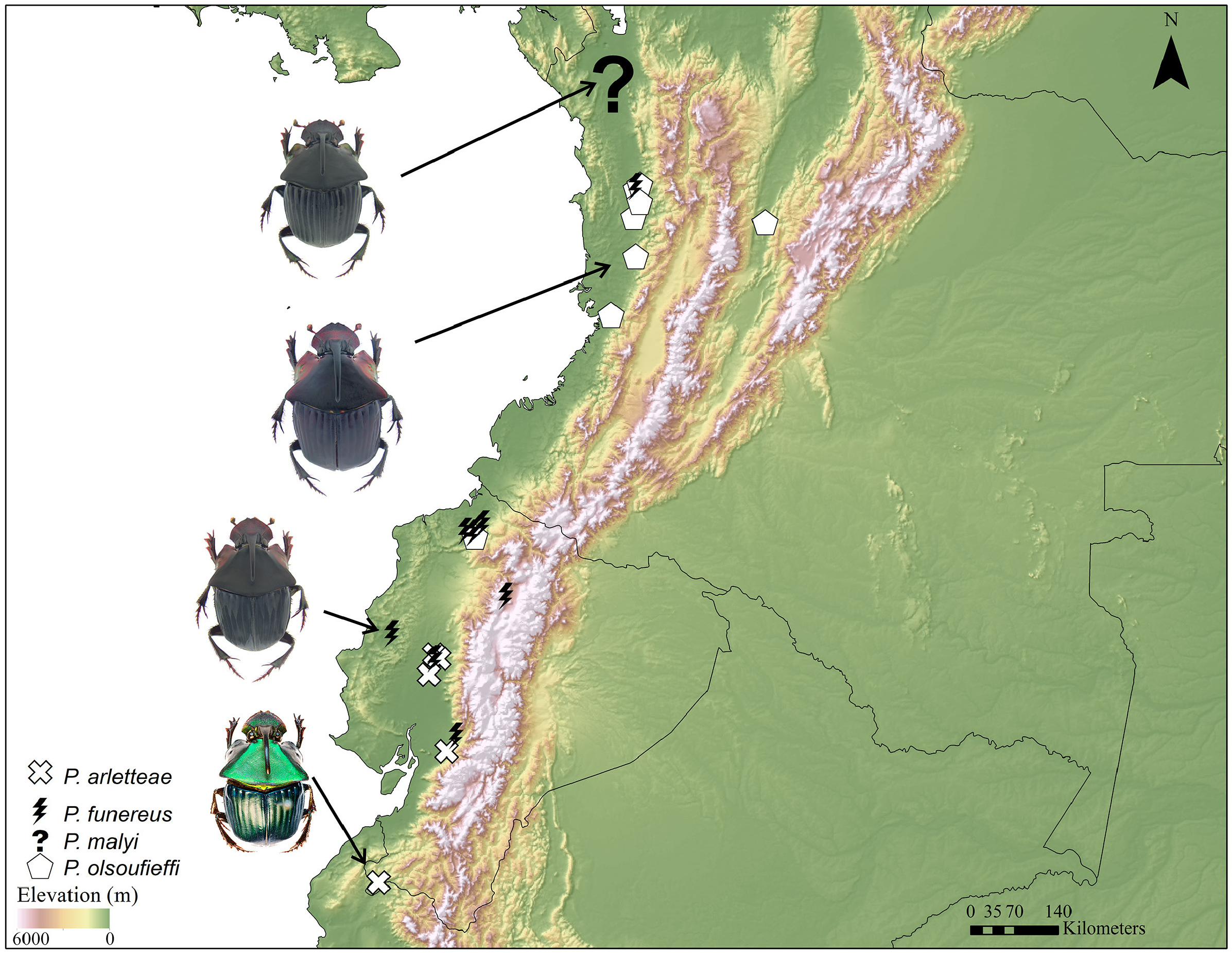
– Pronotum distinctly dull metallic red frontolaterally. Head dull metallic red without green-yellow metallic sheen ( Figs 2C View Fig , 5 View Fig ). Pacific slope of the Andes, north-central Ecuador and Colombia ( Fig. 17 View Fig ) ..................................................................................... P. funereus Balthasar, 1939 stat. rev.
17. Larger species, frequently attaining from 22 to 24 mm in length. Carinate, distinctly developed keel on central anterior margin of pronotum of male ( Fig. 2F View Fig ). Pronotal posterolateral angles of male strongly developed, projected laterally ( Fig. 8A View Fig ). Pacific slope of the Andes, south-central Colombia and northern Ecuador ( Fig. 17 View Fig )................................................ P. olsoufieffi Balthasar, 1939 stat. rev.
– Smaller species, rarely attaining 20 mm in length. Always with keel absent on central anterior margin of pronotum of male ( Fig. 2H View Fig ). Pronotal posterolateral angles of male weakly developed, widened, and slightly projected posteriorly ( Fig. 10A View Fig ). Caribbean Costa Rica and Panama ( Fig. 16 View Fig ) ........................................................................................................... P. panamensis sp. nov.
Key to species of the Phanaeus endymion species group
1. Sutural margin of each elytron upturned to form a sharp ridge, which is progressively more elevated posteriorly and prolonged into a small, sharp tooth at apical angle; elytral margin slightly excised adjacent to this tooth.......................................................................................................................... 2
– Sutural margin of elytra simple (running straight, not upturned)...................................................... 3
2. Male with dentiform keel in the middle of anterior pronotal margin, lateral lines of pronotal triangle straight. Southern Mexico State and Morelos ( Fig. 15 View Fig ).................... P. halffterorum Edmonds, 1979
– Male with keel absent in the middle of anterior pronotal margin, lateral lines of pronotal triangle curved. Sierra Madre del Sur, central Guerrero ( Fig. 15 View Fig ) ................................................................... ............................................................. P. bravoensis Moctezuma, Sánchez-Huerta & Halffter, 2017
3. Pronotal disc of male evenly and densely but finely granulate, granules in most specimens larger and becoming squamose along lateral margins of disc and extending onto posterolateral angles; sides of pronotum strongly roughened ( Figs 2L View Fig , 14A, C View Fig ). Female pronotum slightly roughened; with distinctly impressed midline ( Figs 14B View Fig , 18Q View Fig ). Sierra Madre del Sur and Sierra Norte, central Oaxaca ( Fig. 15 View Fig ) ................................................................................................. P. zapotecus Edmonds, 2006
– Pronotal disc of male lacking distinct granulation, or, if granules present, these are minute and restricted along lateral margins of disc; sides of pronotum smooth. Female pronotum smooth; with superficially impressed to completely effaced midline...................................................................... 4
4. Elytral striae deeply punctate; all strial punctures forming a distinct fossa, giving a completely roughened surface to striae ( Figs 1K View Fig , 2G View Fig , 9 View Fig , 19L View Fig ). Pacific slope of the Sierra Madre de Chiapas and El Salvador ( Fig. 15 View Fig )............................................................................................. P. pacificus sp. nov.
– Elytral striae distinctly punctate to impunctate. If strial punctures distinctly impressed, forming a distinct fossa giving a completely roughened surface to first and second striae, or strial punctures forming a distinct fossa giving a partially roughened surface to basal half of striae ....................... 5
5. Pronotum of female with anteromedial concavity bounded anteriorly by three variable on shape tubercles ( Figs 4C View Fig , 11B View Fig , 13B View Fig , 18E, N, P View Fig ).......................................................................................... 6
– Pronotum of female evenly convex, lacking anteromedial concavity even in largest specimens, bearing three round, smooth tubercles in transverse line near anterior margin ( Figs 3B View Fig , 5B View Fig , 6B View Fig , 7B View Fig , 8B View Fig , 10B View Fig , 12C View Fig , 18C, F, I–K, M, O View Fig )................................................................................................... 10
6. Pronotum of female with concavity bounded anteriorly by a raised U- or V-shaped process; middle pronotal tubercle dentiform or rounded, always more developed and frontally projected than lateral tubercles; pronotal concavity interrupted posteriorly by a small rounded bump or strongly developed dentiform tubercle ( Figs 4C View Fig , 13B View Fig , 18E, P View Fig ). Endophallite copulatrix variable................................... 7
– Pronotum of female with concavity bounded anteriorly by three isolated, round, almost aligned tubercles; middle tubercle sometimes dentiform and more strongly developed than lateral tubercles ( Figs 11B View Fig , 18N View Fig ). Right and left lobes of endophallite copulatrix similar in size; right lobe obtusely triangular in shape, weakly developed superiorly; left lobe obtusely lobed, strongly developed; central ridge distinctly developed ( Fig. 1M View Fig ). Caribbean Honduras and Belize ( Fig. 16 View Fig ) .......................................................................................... P. porioni Arnaud, 2002 stat. rev.
7. Pronotal disc of male with superficially impressed midline ( Fig. 2K View Fig ). Right lobe of endophallite copulatrix more developed than left lobe; right lobe obtusely triangular in shape, sharply acute frontally, rounded superiorly; left lobe strongly developed, obtusely lobed; central ridge strongly developed ( Fig. 1O View Fig ). Sierra Madre del Sur, southern Michoacán ( Fig. 15 View Fig ) ...... P. rzedowskii sp. nov.
– Pronotal disc of male with completely effaced midline ( Fig. 2B View Fig ). Central ridge of endophallite copulatrix distinctly developed ( Fig. 1D, G, Q View Fig ) ................................................................................ 8
8. Pronotum of male uniformly dark blue, dark metallic blue-green or dark metallic green ( Figs 2B View Fig , 4A–B View Fig ). Weakly developed keel close to anterior margin of pronotum, or keel completely effaced ( Fig. 2b View Fig ). Right lobe of endophallite copulatrix more developed than left lobe; right lobe obtusely triangular in shape; left lobe obtusely lobed inferiorly, obtusely triangular superiorly; central ridge less developed than central column ( Fig. 1D View Fig ). Lowlands and midlands of the Gulf of Mexico slope, Yucatán Peninsula, Belize, northern Guatemala ( Fig. 15 View Fig )......................... P. endymion Harold, 1863
– Pronotum of male uniformly bright metallic green, bright metallic green-blue, sometimes showing a red or golden sheen. Keel always absent on anterior margin of pronotum. Endophallite copulatrix variable .............................................................................................................................................. 9
9. Anterior metasternal angle obtuse in lateral view. Lateral metasternal angles well defined and slightly curved. Left lobe of endophallite copulatrix almost completely lobed ( Fig. 1Q View Fig ). Temperate mountains of Los Chimalapas, eastern Oaxaca and western Chiapas ( Fig. 15 View Fig ).................................. ................................................................................................. P. zoque Moctezuma & Halffter, 2017
– Anterior metasternal angle almost right angled but with rounded apex in lateral view. Lateral metasternal angles evanescent. Left lobe of endophallite copulatrix straight posteroinferiorly ( Fig. 1G View Fig ). Jalisco, northern Michoacán, Nayarit, southern Sinaloa ( Fig. 15 View Fig ) ..................................... .................................................................. P. huichol Moctezuma, Sánchez-Huerta & Halffter, 2017
10. Elytral interstriae evenly convex and glossy midlongitudinally; striae impressed basally as distinct fossae ( Figs 3 View Fig , 6 View Fig , 7 View Fig , 18C, I–J View Fig ) ...........................................................................................................11
– Elytral interstriae distinctly flattened and uniformly dull; striae not strongly impressed basally ( Figs 5 View Fig , 8 View Fig , 10 View Fig , 12 View Fig , 18F, K, M, O View Fig )...................................................................................................... 14
11. Almost completely bright black dorsally ( Figs 2E View Fig , 7 View Fig ). Pacific slope of the Cordillera de Talamanca, Costa Rica and Panama ( Fig. 16 View Fig ) ..................................................................... P. malyi Arnaud, 2002
– Pronotum typically bright metallic green, blue-green or dark metallic blue ( Figs 2A, D View Fig , 3 View Fig , 6 View Fig )...... 12
12. Distinctly developed keel on central anterior margin of pronotum of male; right lobe of endophallite copulatrix tapering superiorly and straight apically ( Fig. 1C View Fig ). Sierra Madre del Sur, southern Oaxaca ( Fig. 15 View Fig ) ............................................................... P. edmondsi Moctezuma, Deloya & Halffter, 2019
– Always with keel absent on central anterior margin of pronotum of male ( Fig. 2A, D View Fig ). Endophallite copulatrix variable ........................................................................................................................... 13
13. Larger species, frequently attaining 19–20 mm in length. Posterolateral angles of male widened, slightly projected posteriorly ( Figs 2A View Fig , 3 View Fig ). Central highlands of Chiapas ( Fig. 15 View Fig ) ........................... ........................................................................................................................ P. chiapanecus sp. nov.
– Smaller species, never attaining 19 mm in length. Posterolateral angles of male sharply acute, strongly projected posteriorly ( Figs 2D View Fig , 6 View Fig ). Inner slope of the Sierra Madre de Chiapas, south-central Guatemala and southeastern Chiapas ( Fig. 15 View Fig ) ................................................... P. jackenioi sp. nov.
14. Pronotal disc of male completely bright metallic ( Figs 2J View Fig , 12 View Fig )....................................................... 15
– Pronotal disc of male distinctly black, without metallic reflection ( Figs 2E, J, L View Fig , 5A, C View Fig , 8A View Fig , 10A View Fig ) .. ........................................................................................................................................................ 16
15. Pronotal disc typically bright metallic green, rarely dark metallic blue. Pronotal process of female with central tubercle more developed and anteriorly projected than lateral tubercles. Ecuador ( Figs 17 View Fig , 18A View Fig ).............................................................................................. P. arletteae Arnaud, 2002
– Pronotal disc typically bright metallic red, green, or dark metallic blue ( Figs 2J View Fig , 12 View Fig ). Pronotal process of female with tubercles almost aligned, central tubercle not projecting anteriorly ( Figs 12C View Fig , 18O View Fig ). Nicaragua and north Caribbean Costa Rica ( Fig. 16 View Fig )......................................... P. pyrois Bates, 1887
16 Pronotum distinctly bright metallic red frontolaterally. Head bright metallic red with green-yellow metallic sheen ( Figs 2F, H View Fig , 8 View Fig , 10 View Fig ).................................................................................................... 17
– Pronotum distinctly dull metallic red frontolaterally. Head dull metallic red without green-yellow metallic sheen ( Figs 2C View Fig , 5 View Fig ). Pacific slope of the Andes, north-central Ecuador and Colombia ( Fig. 17 View Fig ) ..................................................................................... P. funereus Balthasar, 1939 stat. rev.
17. Larger species, frequently attaining from 22 to 24 mm in length. Carinate, distinctly developed keel on central anterior margin of pronotum of male ( Fig. 2F View Fig ). Pronotal posterolateral angles of male strongly developed, projected laterally ( Fig. 8A View Fig ). Pacific slope of the Andes, south-central Colombia and northern Ecuador ( Fig. 17 View Fig )................................................ P. olsoufieffi Balthasar, 1939 stat. rev.
– Smaller species, rarely attaining 20 mm in length. Always with keel absent on central anterior margin of pronotum of male ( Fig. 2H View Fig ). Pronotal posterolateral angles of male weakly developed, widened, and slightly projected posteriorly ( Fig. 10A View Fig ). Caribbean Costa Rica and Panama ( Fig. 16 View Fig ) ........................................................................................................... P. panamensis sp. nov.








No known copyright restrictions apply. See Agosti, D., Egloff, W., 2009. Taxonomic information exchange and copyright: the Plazi approach. BMC Research Notes 2009, 2:53 for further explanation.
|
Kingdom |
|
|
Phylum |
|
|
Class |
|
|
Order |
|
|
Family |
|
|
Genus |

Phanaeus zoque Moctezuma & Halffter, 2017 Phanaeus endymion
| Moctezuma, Victor & Halffter, Gonzalo 2021 |
Phanaeus zoque
| Kohlmann B. & Arriaga-Jimenez A. & Ros M. 2018: 83 |