
Anyphaena sofiae, Rivera-Quiroz & Álvarez-Padilla, 2023
|
publication ID |
https://doi.org/10.5852/ejt.2023.865.2097 |
|
publication LSID |
lsid:zoobank.org:pub:845BAE1A-0E6E-484B-BE6D-17F866777B51 |
|
persistent identifier |
https://treatment.plazi.org/id/03C8E927-FF8D-FFAB-FDFC-F9ACFBA26688 |
|
treatment provided by |
Felipe |
|
scientific name |
Anyphaena sofiae |
| status |
|
Anyphaena sofiae sp. nov.
urn:lsid:zoobank.org:act:
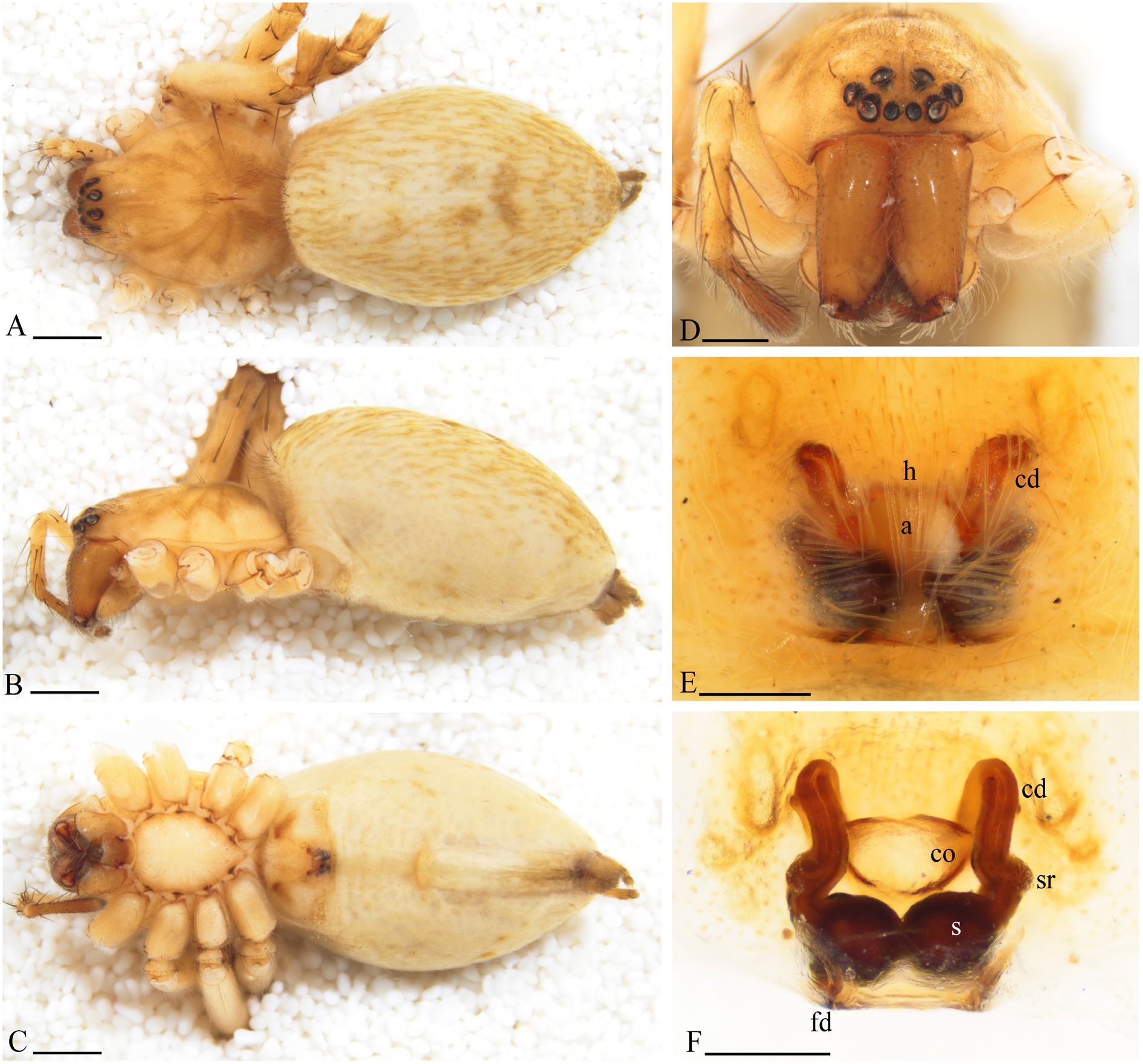
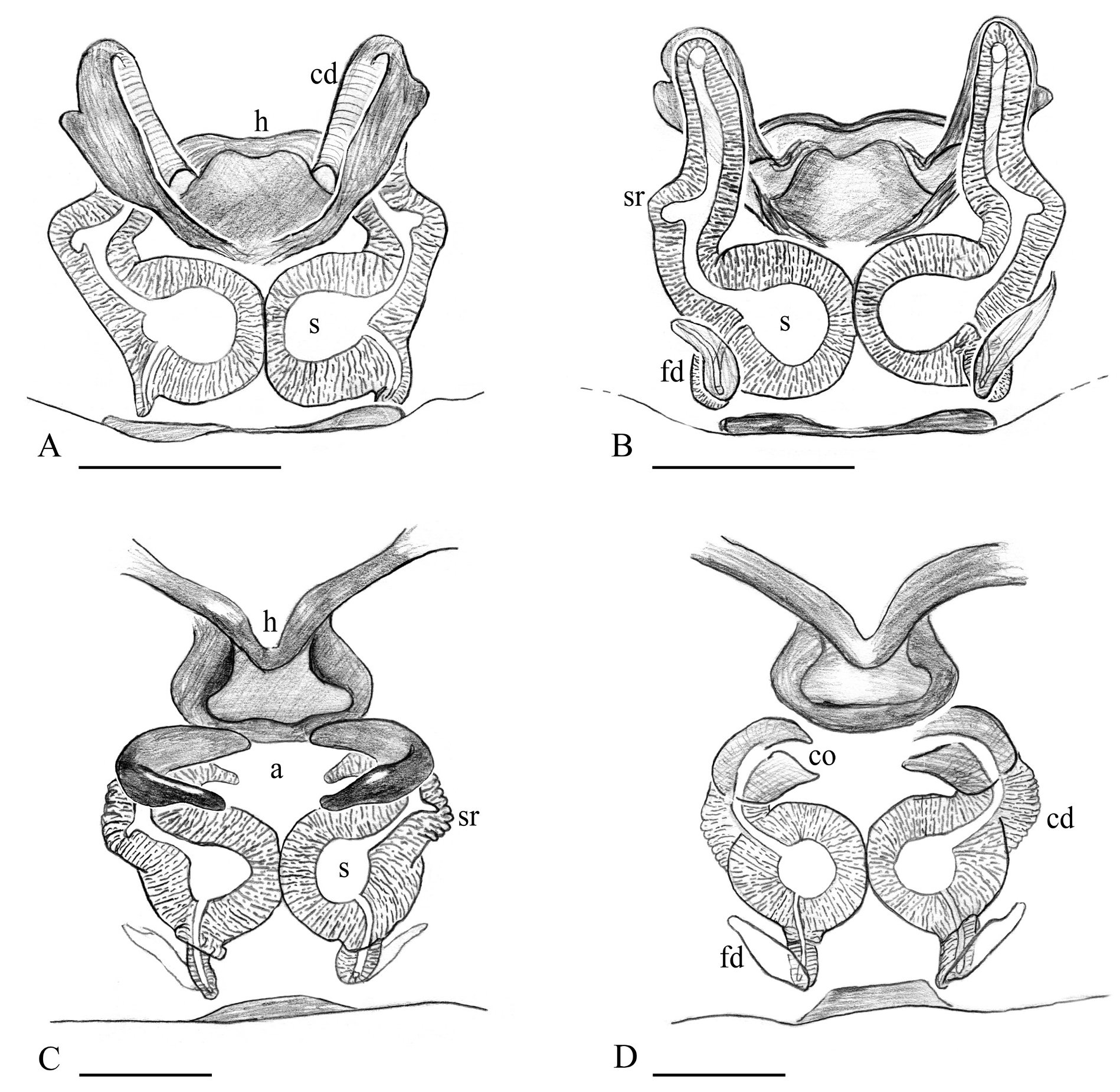
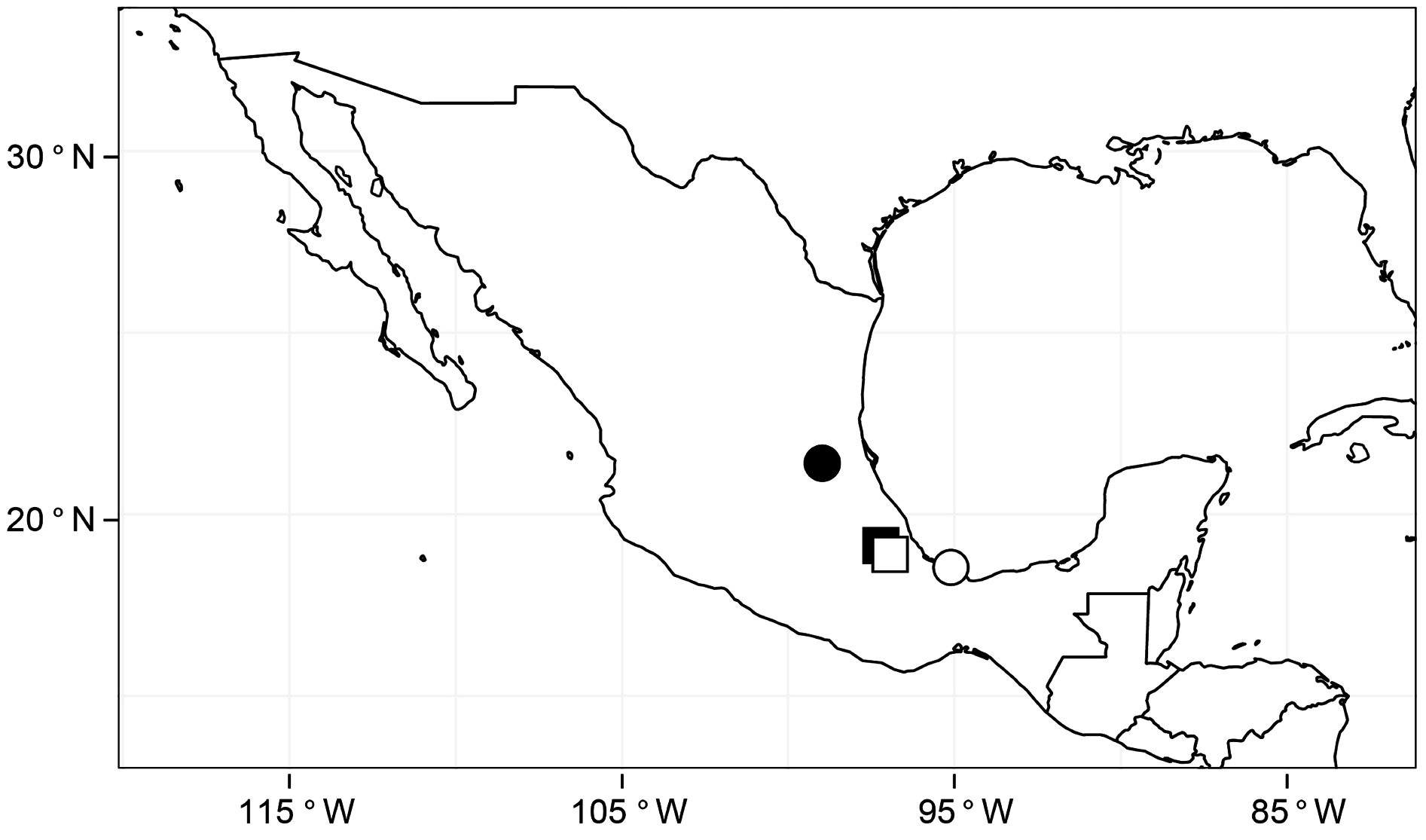
Figs 36 View Fig , 38A–B View Fig , 52 View Fig
Differential diagnosis
Females of A. sofiae sp. nov. are differentiated from those of all species of the pectorosa and pacifica groups by the following features: copulatory ducts extending beyond the hood, atrium oval, hood faint, thin and straight ( Figs 36E–F View Fig , 38A–B View Fig ).
Etymology
The species epithet is dedicated to Sofia Rivera, niece of the first author.
Material examined
Holotype
MEXICO • ♀; Veracruz, Calcahualco, Atotonilco, Plot II; 19.29483° N, 97.2045° W; alt. 2388 m; 15–24 Feb. 2013; Arcanolab team leg.; oak and pine forest fragment; BEAT; AR_060; GenBank: ON619648; CNAN-T01538 .
Paratypes
MEXICO • 1 ♀; Veracruz, Calcahualco, Atotonilco, Plot I; 19.12569° N, 97.06756° W; alt. 2300 m; 21–30 May 2012; Aracnolab team leg.; oak forest fragment; LUP; AR_057; GenBank: ON619646; CNAN-T01572 • 1 ♀; same collection data as for preceding; AR_059; GenBank: ON619647; CNAN-T01573 .
Additional material
MEXICO • 1 ♀; Veracruz, Calcahualco, Atotonilco GoogleMaps , Plot I; 19.12569° N, 97.06756° W; alt. 2300 m; 15–24 Feb. 2013; Aracnolab team leg.; oak forest fragment; BEAT • 1 ♀; same collection data as for preceding; LUP • 1 ♀; same collection data as for preceding; 21–30 May 2012; LUP • 1 ♀; same collection data as for preceding; ANYM025 • 1 ♀; same collection data as for preceding; Atotonilco. Plot II; 19.29483° N, 97.2045° W; alt. 2388 m; 15–24 Feb. 2013; oak and pine forest fragment; BEAT • 1 ♀; same collection data as for preceding; CRP • 3 ♀♀; same collection data as for preceding; LUP • 1 ♀; same collection data as for preceding; ANYM029 • 1 ♀; same collection data as for preceding; 21–30 May 2012; BEAT; ANYM026 • 1 ♀; same collection data as for preceding; ANYM027 • 1 ♀; same collection data as for preceding; ANYM028 • 1 ♀; same collection data as for preceding; LUP • 1 ♀; same collection data as for preceding; ANYM030 • 1 ♀; same collection data as for preceding; 4–14 Oct. 2012; LUP.
Description
Female
Total length 7.8. Carapace yellow, pattern with darker bands delineating cephalic area, around fovea and clypeus ( Fig. 36A, D View Fig ). Sternum surface white, intercoxal triangles present on all legs. Labium brown, white at tip, longer than wide. Endites yellow, rectangular, broader at tip ( Fig. 36C View Fig ). Chelicerae brown, without dorsal pattern ( Fig. 36B, D View Fig ), promargin with four teeth, retromargin with eight to nine denticles. Abdomen dorsal surface white, covered with darker patches and some diffuse chevrons at center, lateral and ventral surfaces white, pattern diffusing ventrally, tracheal spiracle slightly closer to epigastric furrow ( Fig. 36A–C View Fig ). Anterior area of epigynal plate delineated laterally by two faint pits near copulatory ducts bent. Genital openings at both sides of hood. Copulatory duct paths bent posteriorly beyond hood and entering spermathecae antero-laterally. Seminal receptacles closer to spermathecae at one third of copulatory ducts’ length. Fertilization ducts short, straight, and entering spermathecae via postero-lateral surface ( Figs 36E–F View Fig , 38A–B View Fig ). Cephalothorax length 2.93, thoracic width 2.29, cephalic width 1.23. Clypeus height 0.1. Eye diameters: AME 0.09, ALE 0.12, PME 0.12, PLE 0.12. Eye interdistances: AME–AME 0.06, AME–ALE 0.04, ALE–PLE 0.17, PME–PME 0.17, PME–PLE 0.13. Femur lengths: I 3.13, II 2.9, III 2.26, IV 3.0. Leg spination: femur I d1-1-1, p0-1-2, r0-1-1. Tibia I v2-2-0, p1-1-1, r1-1-1. Metatarsus I v2-2-0, p1-1-1, r1-1-1. Femur II d1-1-1, p0-1-1, r0-1-1. Tibia II v2-2-0, p1-1-1, r1-1-1. Metatarsus II v2-2-0, p1-1-1, r1-1-1. Femur III d1-1-1, p0-1-1, r0-1-1. Tibia III v2-2-2, p0-1-1, r0-1-1. Metatarsus III v2-2-2, p1-1-2, r1-1-2. Femur IV d1-1-1, p0-1-1, r0-0-1. Tibia IV v2-2-2, p0-1-1, r0-1-1. Metatarsus IV v2-2-2, p1-1-2, r1-1-2
Male
Unknown.
Variation
Females (N =10): total length 8.03 (± 0.62), cephalothorax length 3.41 (± 0.3), thoracic width 2.48 (± 0.19), cephalic width 1.27 (± 0.08), femur I 3.46 (± 0.27).
Distribution
Only known from the type locality ( Fig. 52 View Fig ).
Natural history
Most specimens collected by beating and direct searching over vegetation.
| CRP |
I.N.T.A., E.E.A. Bariloche |
No known copyright restrictions apply. See Agosti, D., Egloff, W., 2009. Taxonomic information exchange and copyright: the Plazi approach. BMC Research Notes 2009, 2:53 for further explanation.