
Phyllonorycter, Hubner, 1822
|
publication ID |
https://doi.org/10.11646/zootaxa.3594.1.1 |
|
publication LSID |
lsid:zoobank.org:pub:B00799F3-F397-438C-B1E1-A8440E636921 |
|
DOI |
https://doi.org/10.5281/zenodo.6308653 |
|
persistent identifier |
https://treatment.plazi.org/id/03ADE350-B128-FFB7-F1CF-F9EC8A9ACF16 |
|
treatment provided by |
Felipe |
|
scientific name |
Phyllonorycter |
| status |
|
Key to the species groups of Afrotropical Phyllonorycter View in CoL based on male genitalia*
1. Tegumen trilobed (with two lateral appendages) ( Figs 191 View FIGURES 191–197 , 198 View FIGURES 198–200 )................................... grewiaecola View in CoL group
– Tegumen simple, without lateral appendages................................................................ 2
2. Tegumen reduced, truncate, short, shorter than sternum VIII; tuba analis not protruded............................... 3
– Tegumen ca. as long as sternum VIII or longer or tuba analis protruded........................................... 4
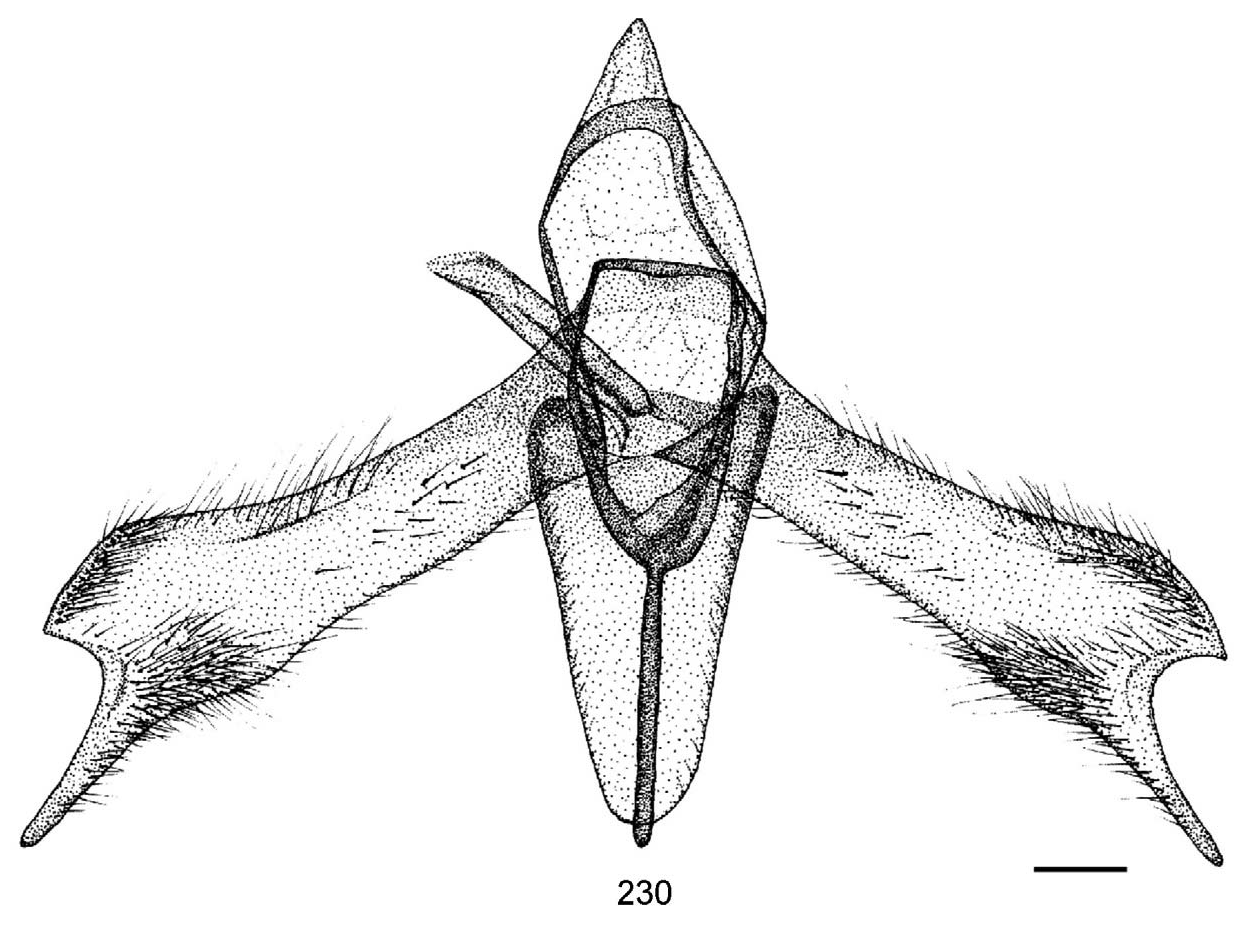
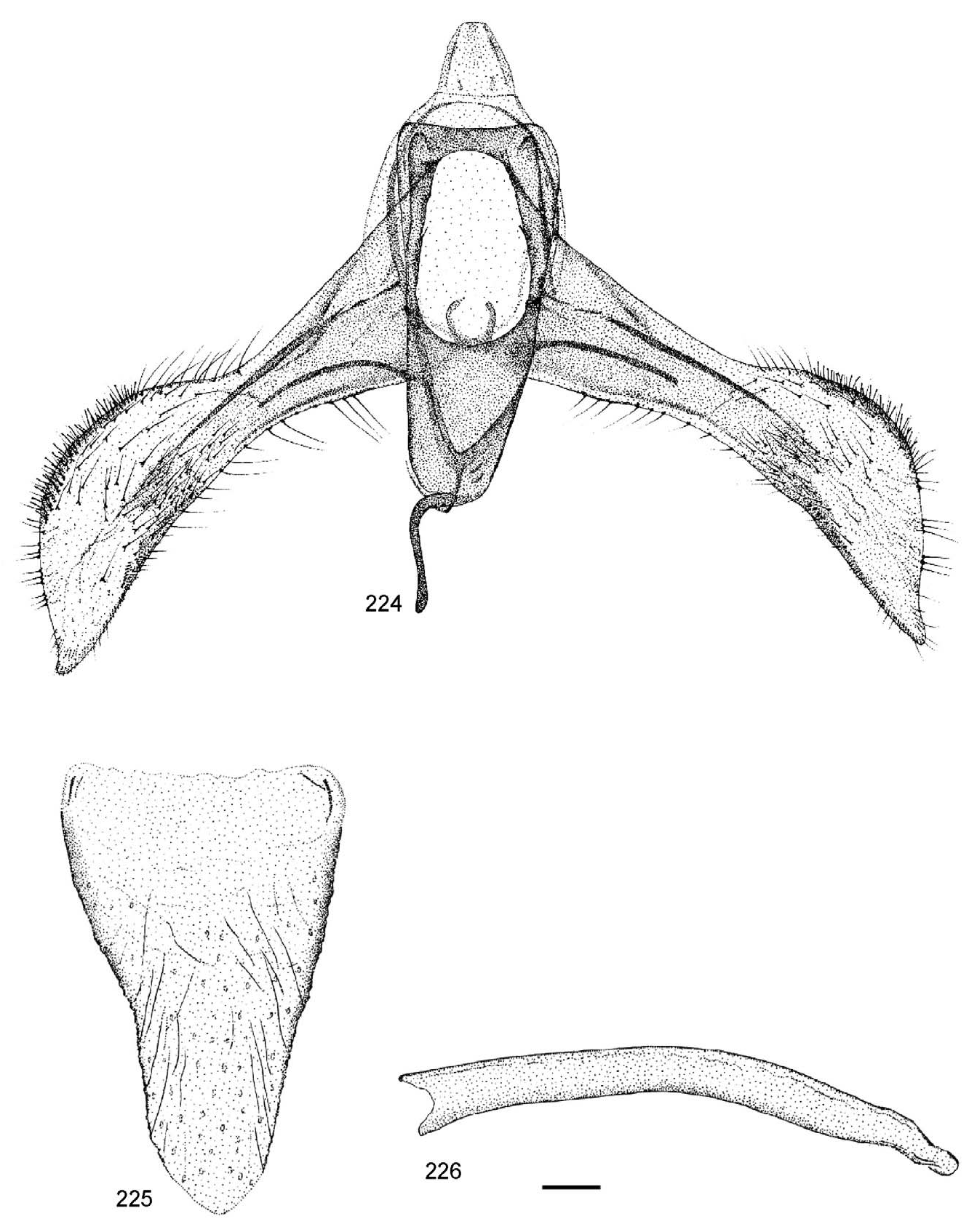
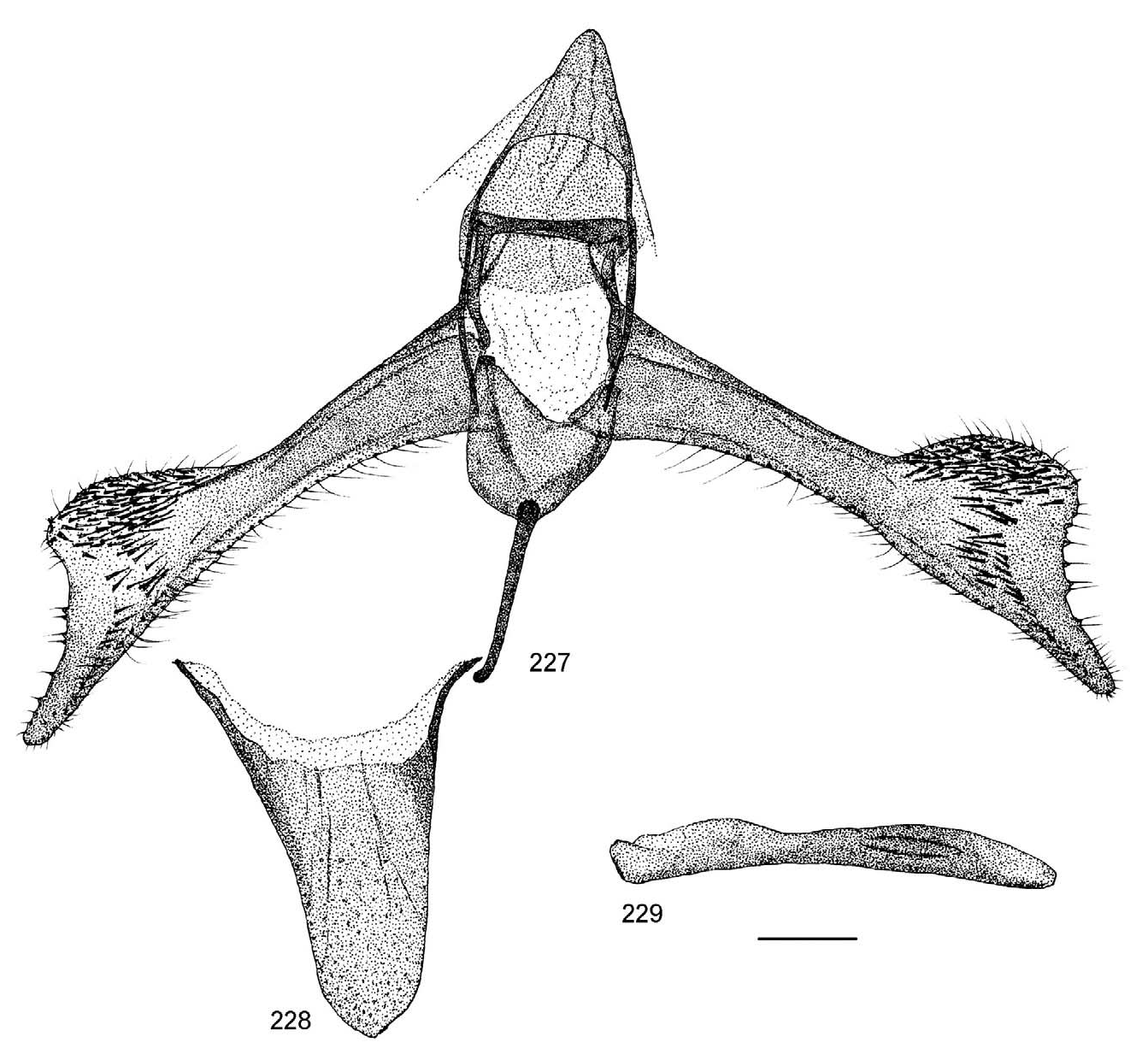
3. Saccus slender, strongly folded on the junction with vinculum, transtilla reactangular, aedoeagus shorter than valva ( Figs 224 View FIGURES 224–226 , 227 View FIGURES 227–229 , 230 View FIGURE 230 , 231, 234 View FIGURES 231–236 )........................................................................ leucaspis View in CoL group
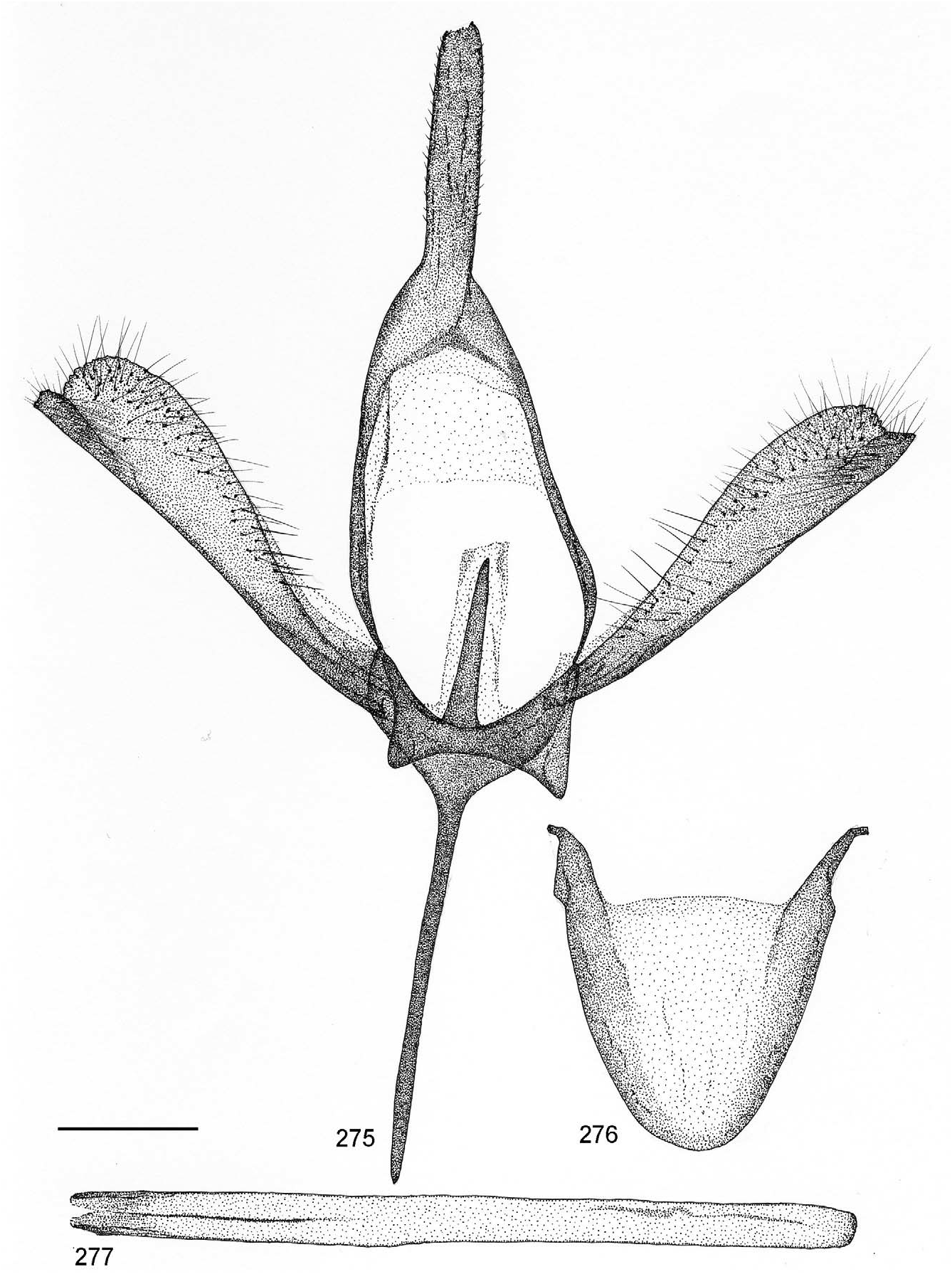
– Saccus straight, transtilla with broader and thicker lateral sides, aedoeagus long, ca.1.5× longer than valva ( Figs 275, 277 View FIGURES 275–277 )........................................................................................... ruwenzori View in CoL group
4. Valva narrow, slender and long, more than 25× longer than broad................................................ 5
– Valva broad, or has different shapes with appendages, of mid-length or short, less than 25× long than broad.............. 9
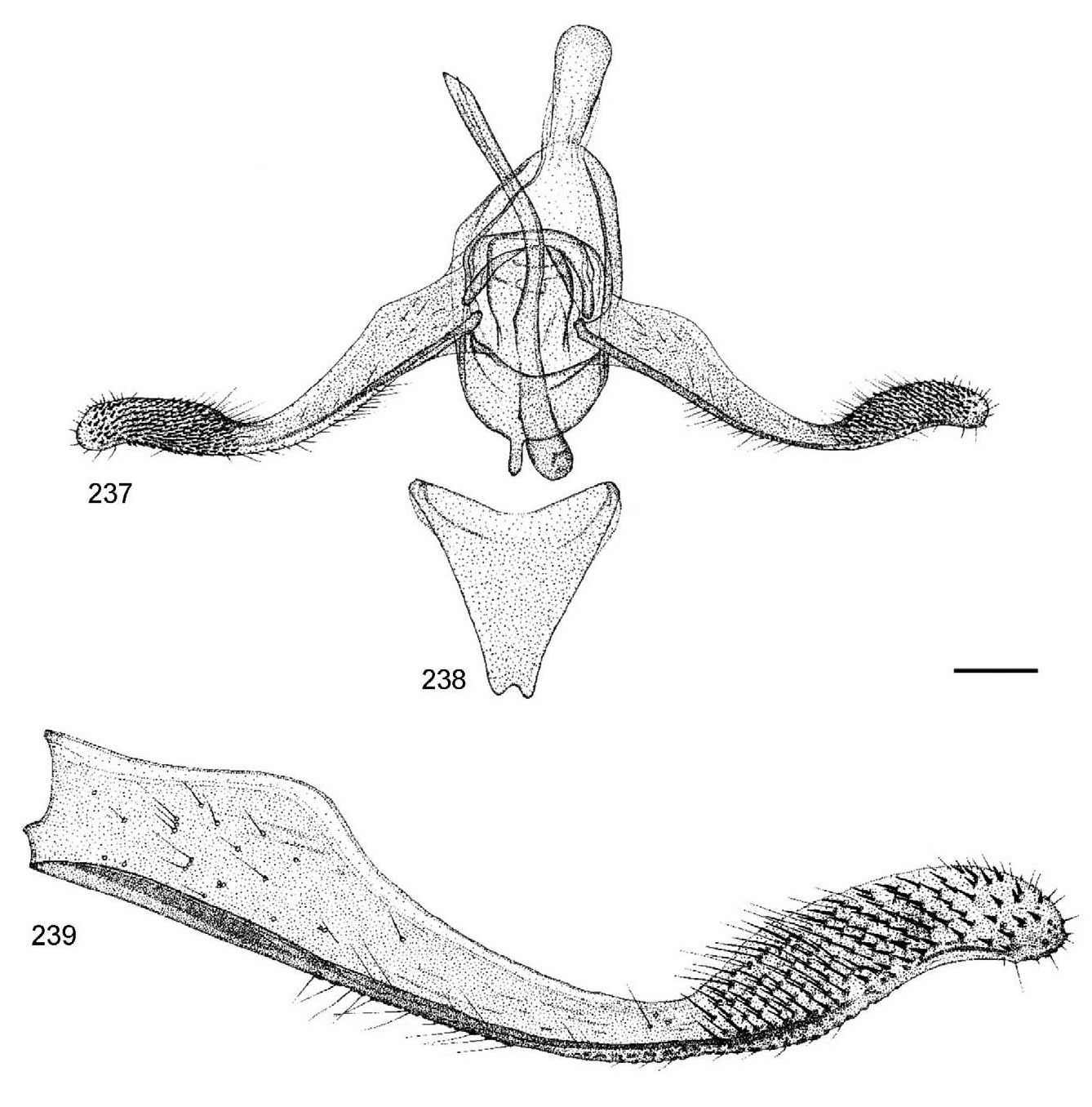
5. Valva narrow, sinuated, cucullus narrow, apical 1/3 of valva densely setose, transtilla broad U-shaped; tegumen of medium length, tuba analis protruded almost as long as length of tegumen, vinculum broad, crescent, saccus short, sternum VIII with small notch caudally ( Fig. 237, 239 View FIGURES 237–239 )........................................................... loxozona View in CoL group
– Valva straight or slightly bent, but not sinuated.............................................................. 6
6. Valva narrow, slender but with an enlarged cucullus; transtilla narrow, U-shaped; tegumen very long, almost as long as valva; saccus short, extended ( Figs 176, 179 View FIGURES 176–181 ).......................................................... agassizi View in CoL group
– Valva narrow slender along all its length or with acuting apex.................................................. 7
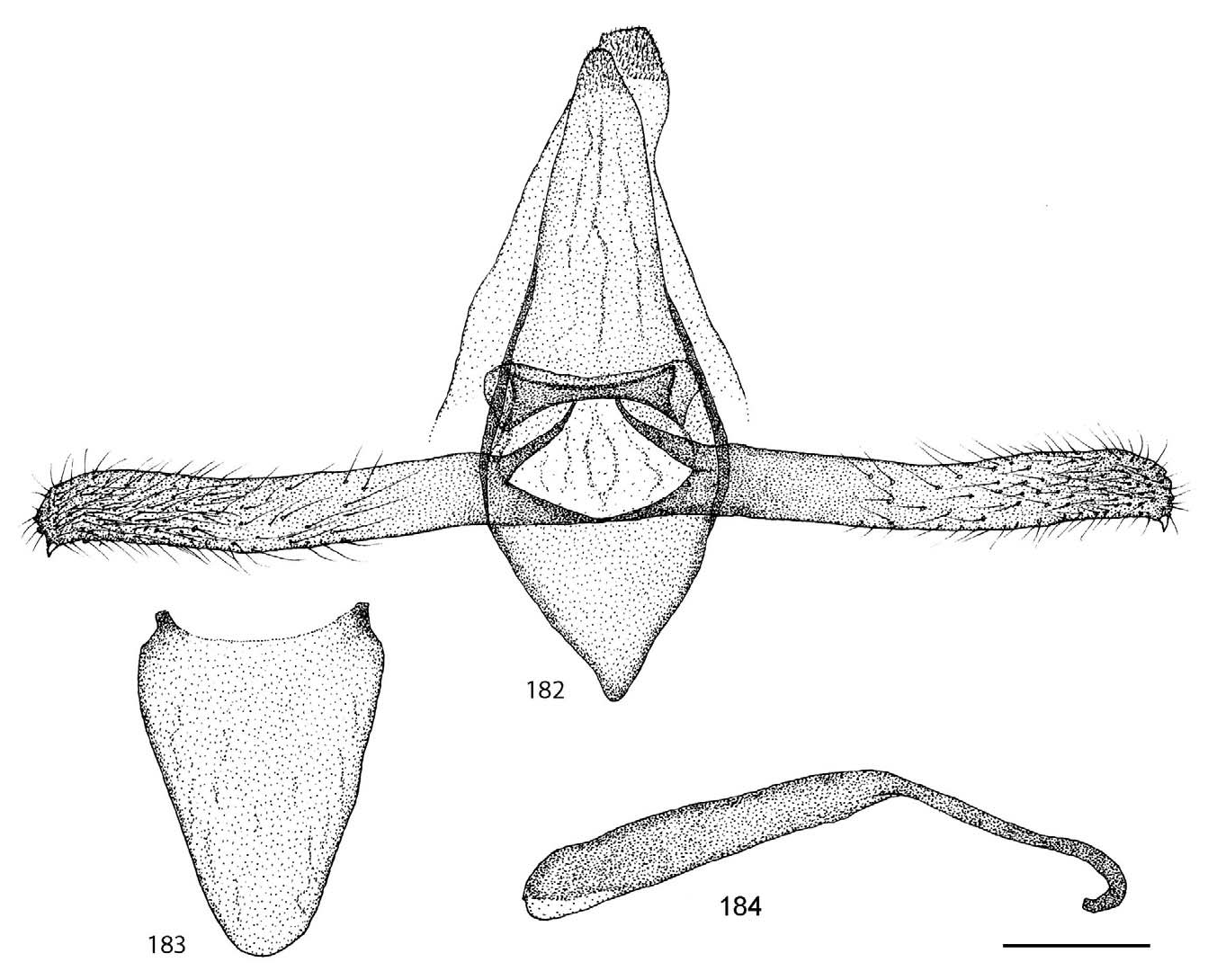
7. Valva about as broad basally as apically, straight; transtilla butterfly-shaped with thick lateral sides; tegumen truncate at apex; vinculum triangular shaped, saccus not extended; aedoeagus broad at coecum and very slender at vesica ( Figs 182–184 View FIGURES 182–184 )............................................................................................. chionopa View in CoL group
– Apex of valva acute, sharp or bearing a sharp spine at narrow apex.............................................. 8
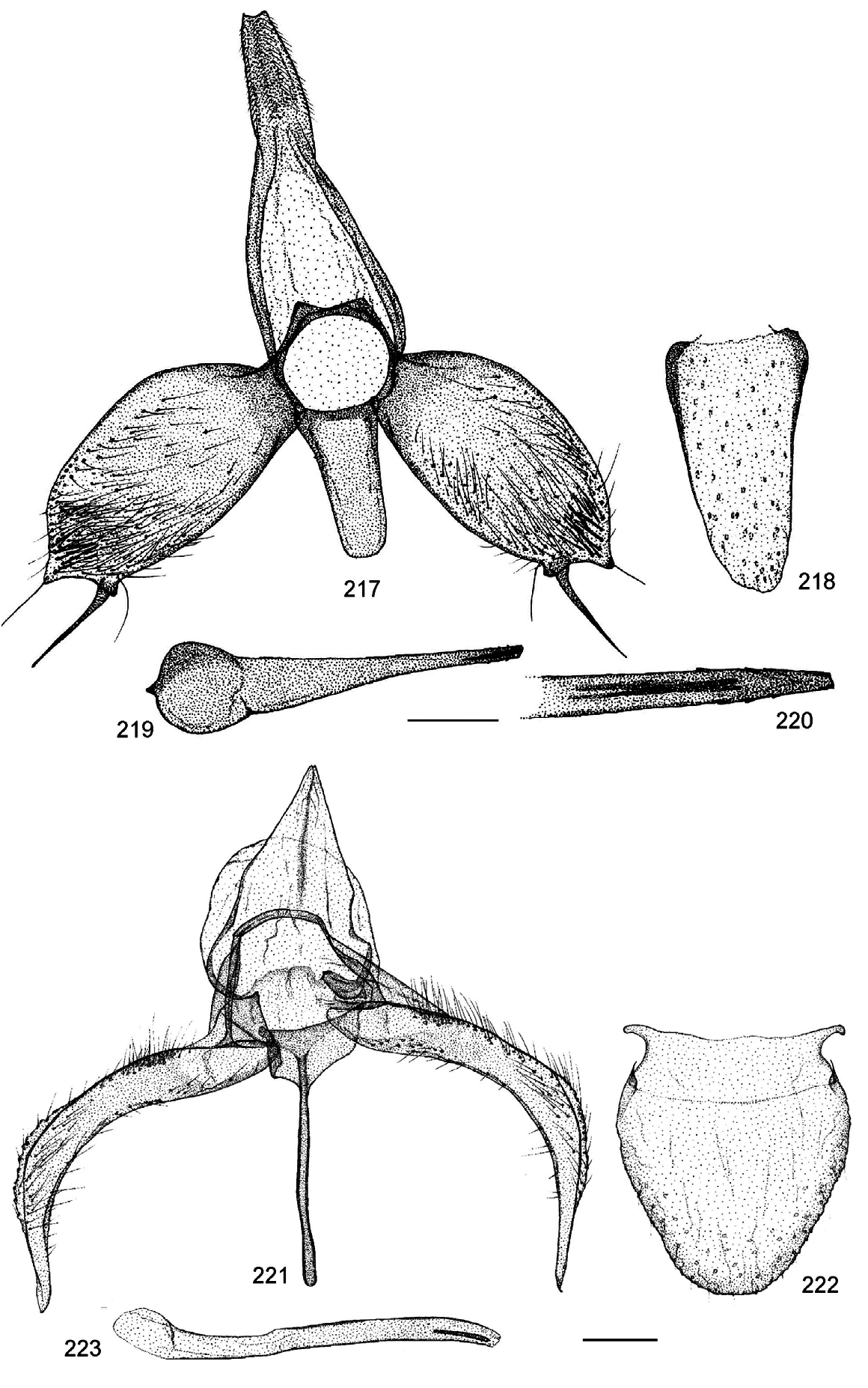
8. Valva bent ventrad, with sharp acuting apex, no spines; transtilla complete, arc-shaped, narrow, tegumen of mid-length, basally ca. as long as broad ( Fig. 221 View FIGURES 217–223 )............................................................. lemarchandi group
– Valva gently acuting towards slightly rounded apex, apex bears a sharp spine; transtilla incomplete; tegumen long, ca. 3× longer than broad basally ( Figs 170, 171 View FIGURES 170–175 )......................................................... achilleus View in CoL group
9. Valva with flap or weakly sclerotized digitate projections or appendices......................................... 10
– Valva without ventral projections, may bear a spine subapically................................................ 11
10. Valva with digitate projection on cucullus, bifurcated; saccus short, shorter than width of vinculum ( Fig. 173 View FIGURES 170–175 ).. adderis View in CoL group
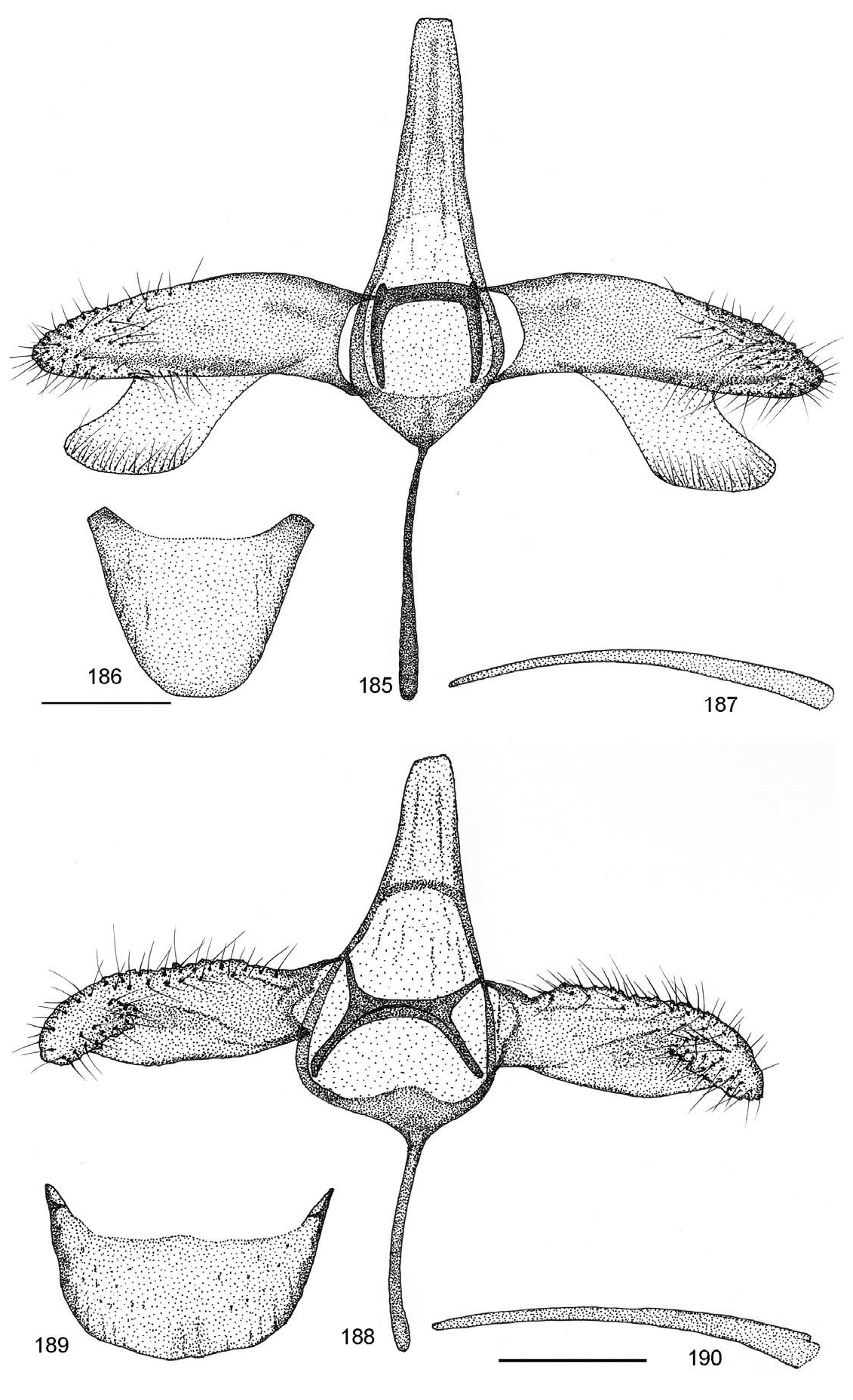
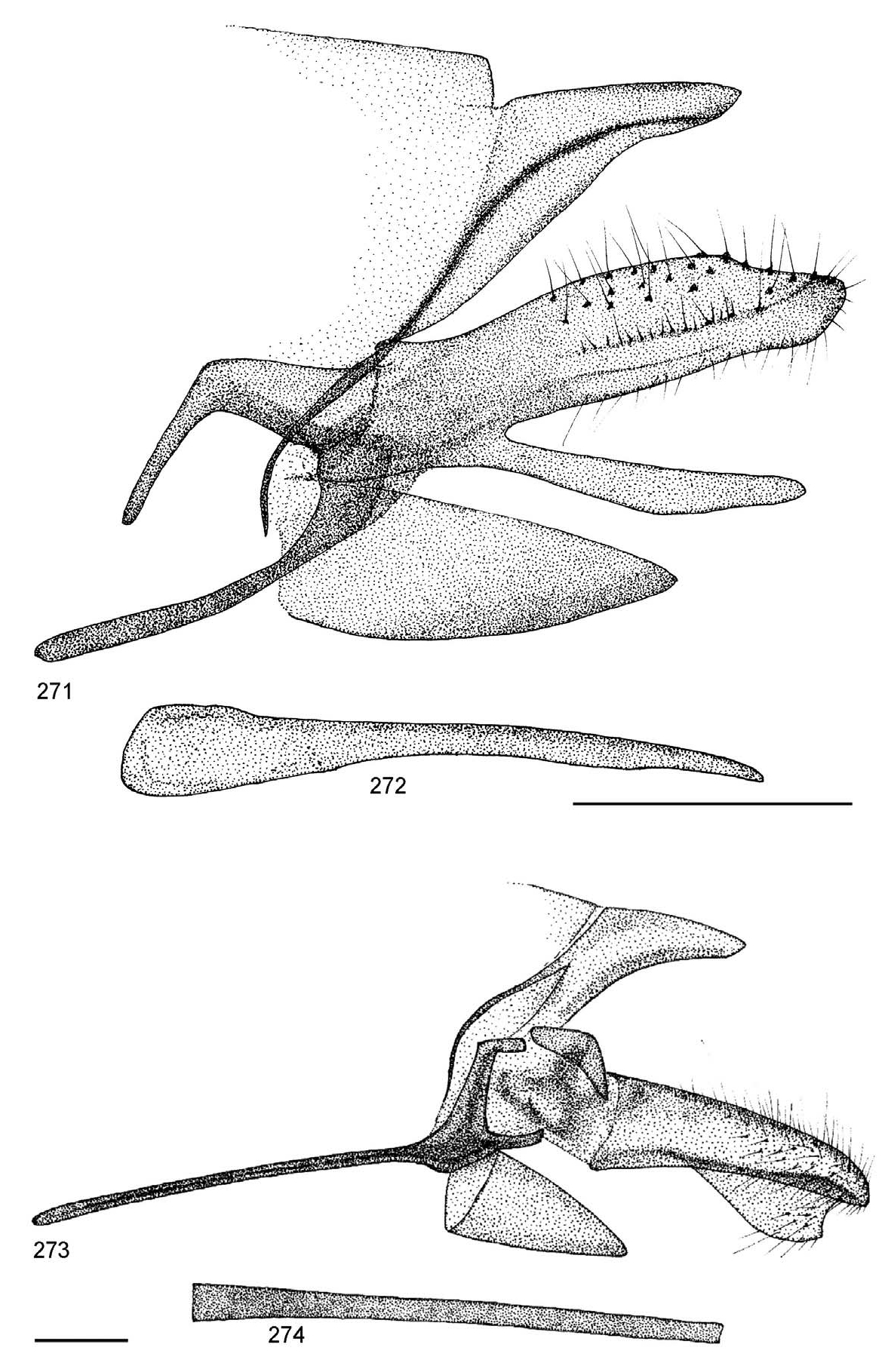
– Valva with ventral or basal projections and appendices; saccus of mid-length, longer than sternum VIII, or very long ( Figs 185–190 View FIGURES 185–190 , 257–274 View FIGURES 257–258 View FIGURES 259–264 View FIGURES 265–270 View FIGURES 271–274 )......................................................... encaeria View in CoL group, rhynchosiae View in CoL group
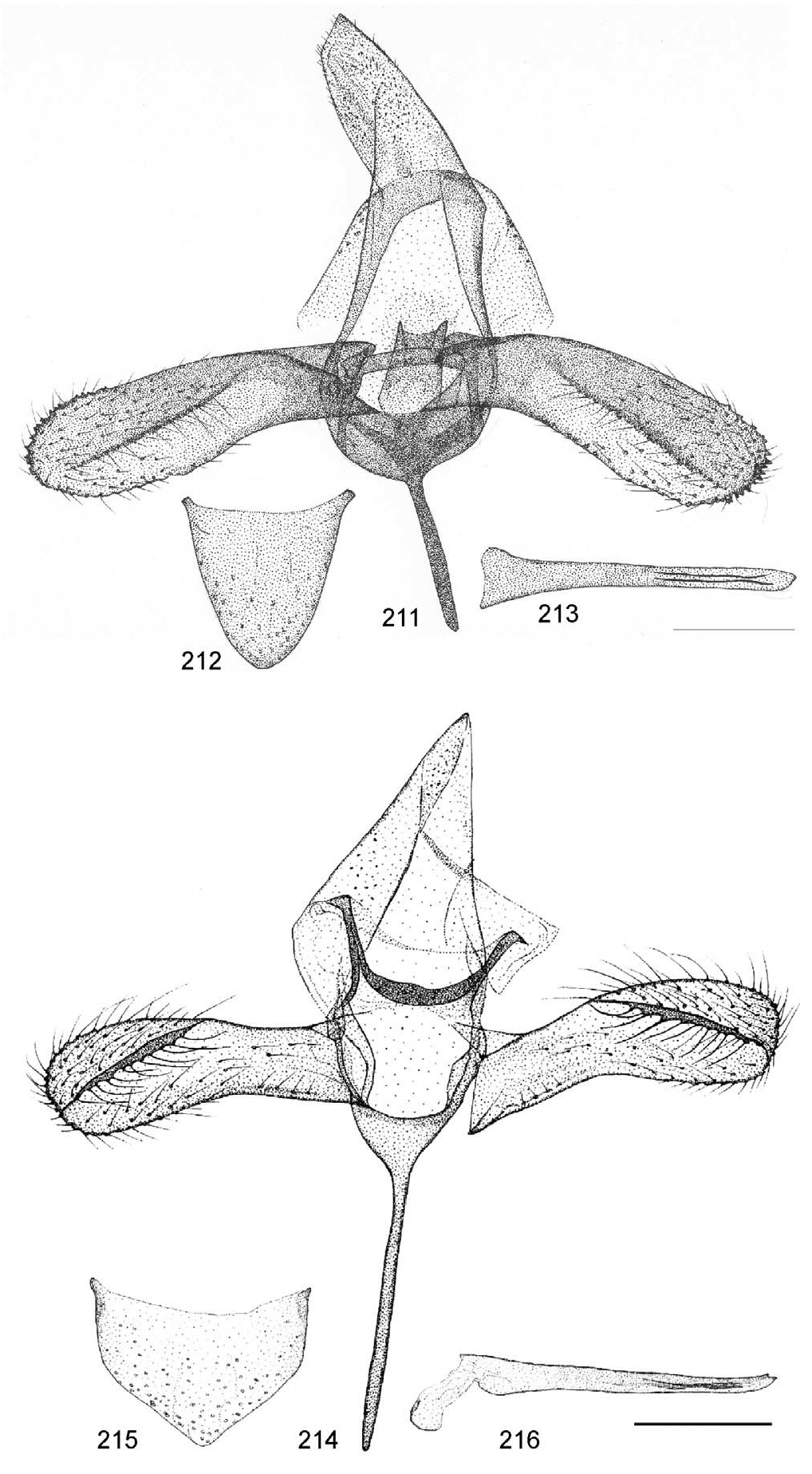
11. Valva with sclerotized suture on its ventral surface ( Figs 206, 208 View FIGURES 206–210 , 211, 214 View FIGURES 211–216 )........................... hibiscina View in CoL group
– Valva without suture on its ventral surface................................................................. 12
12. Valva with enlarged, gently rounded apical part, no special projections at apex, lacking spines and/or bristles............ 13
– Valva broad basally, attenuate apically, with or without triangular small projection at apex, with bristles and/or spine...... 14
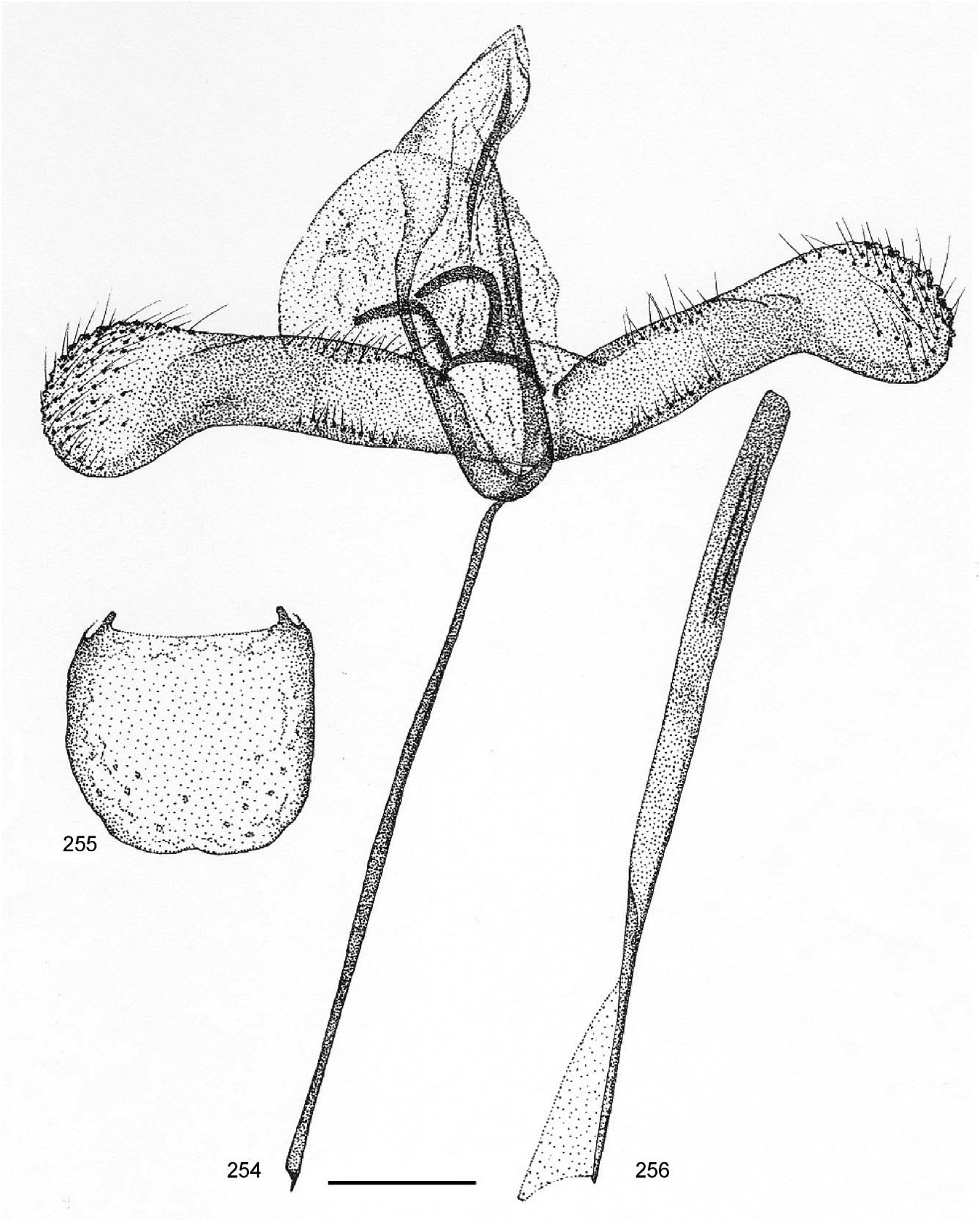
13. Saccus very long ca. 2× longer than valva ( Figs 254–256 View FIGURES 254–256 ).......................................... obandai View in CoL group
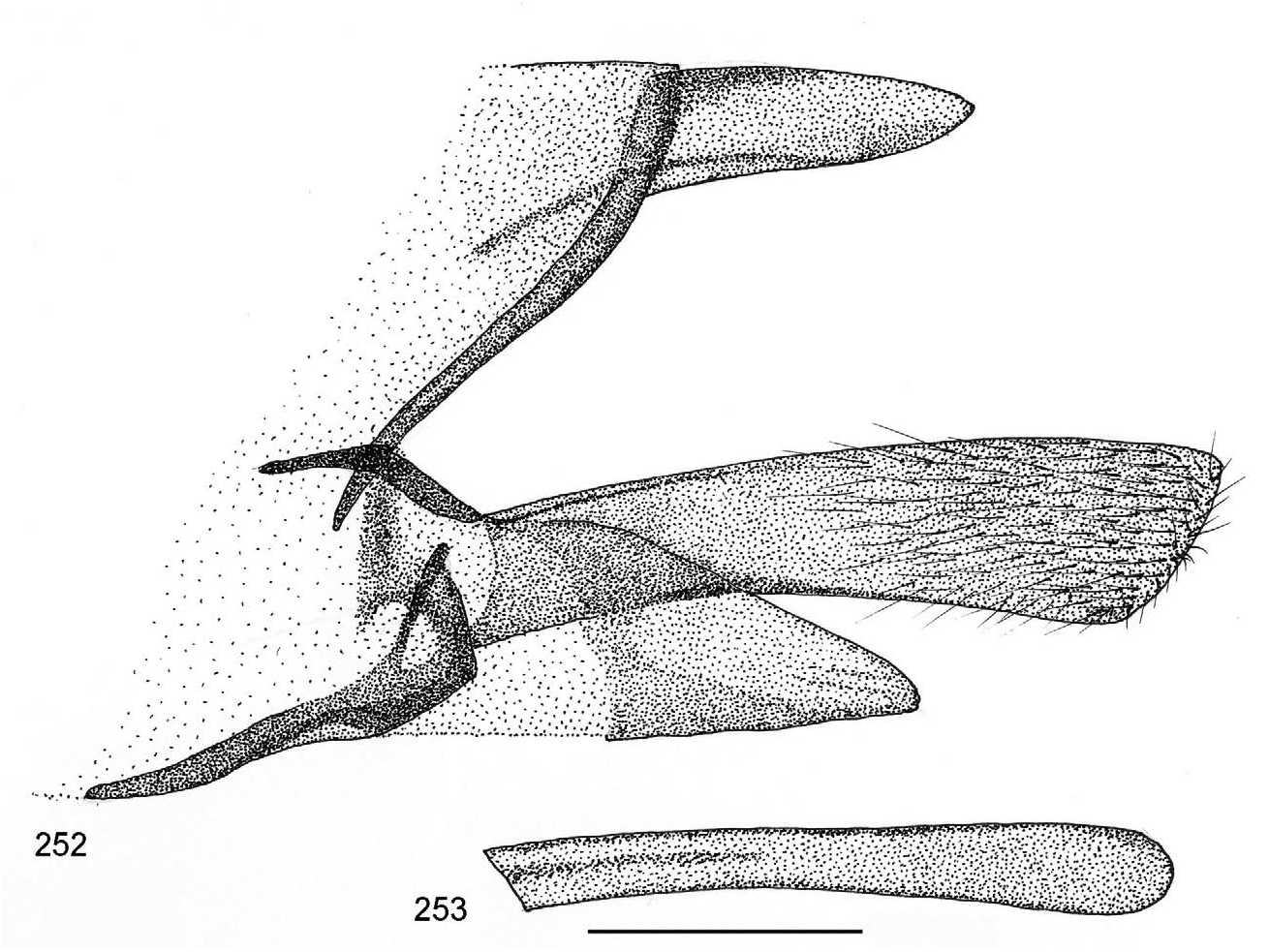
– Saccus ca. 2× shorter than valva ( Fig. 252 View FIGURES 252–253 ).................................................... melhaniae View in CoL group
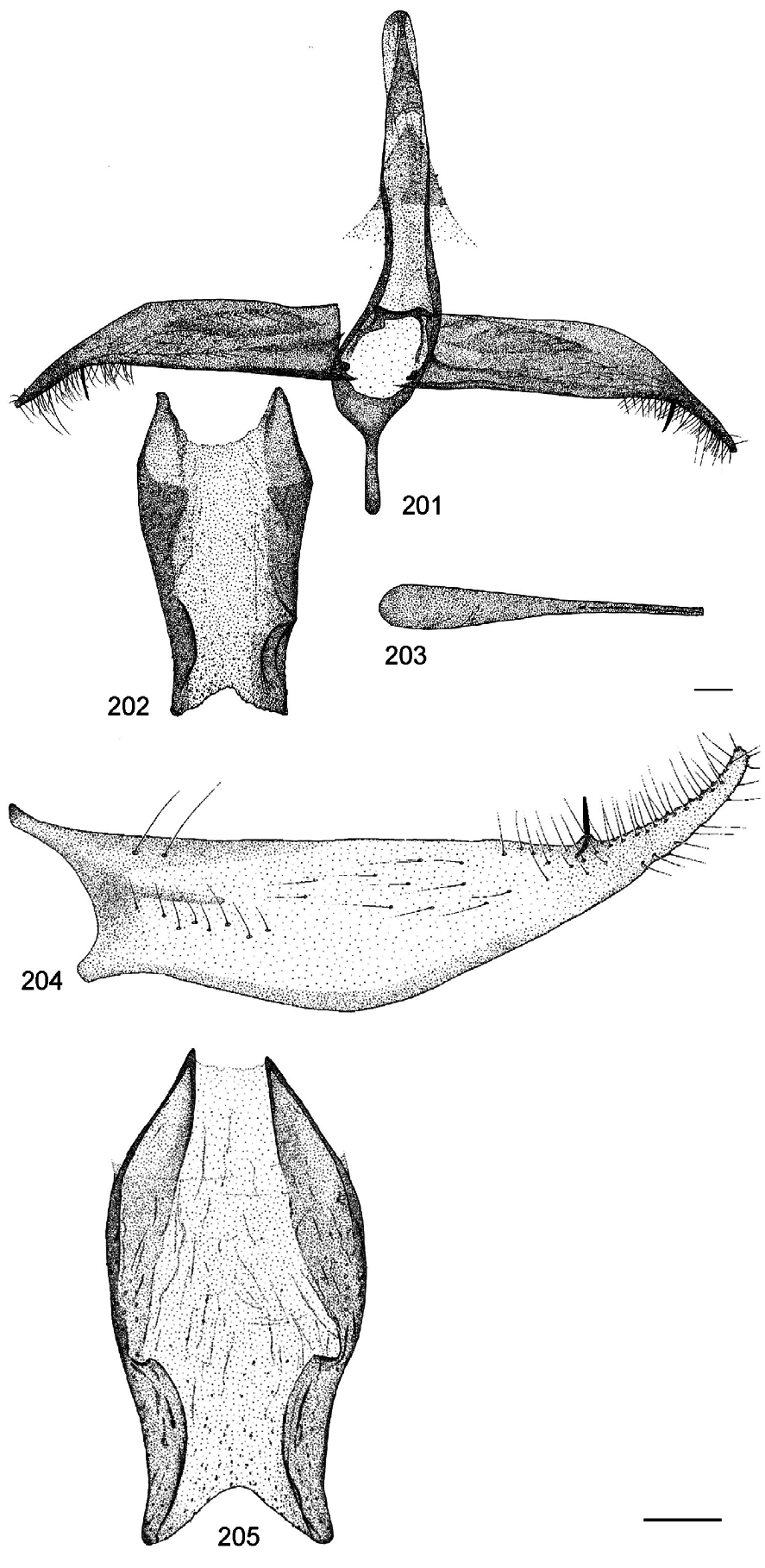
14. Sternum VIII very big, broad also apically, deeply bifurcated caudally ( Figs 202, 205 View FIGURES 201–205 )................... grewiella View in CoL group
– Sternum VIII sharply acuminating caudally or gently acuminating, with more or less rounded apex attaining very shallow, tiny cleft............................................................................................... 15
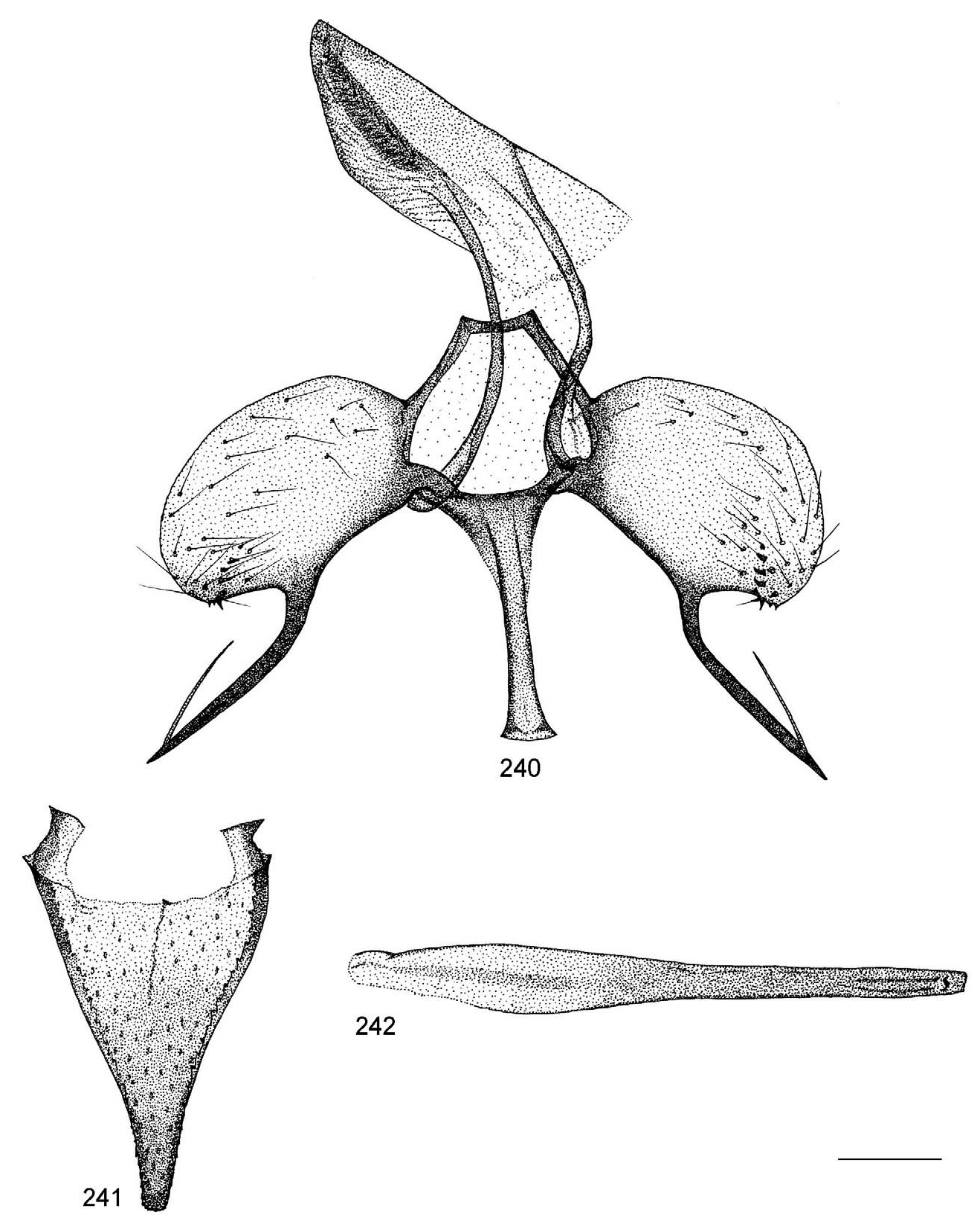
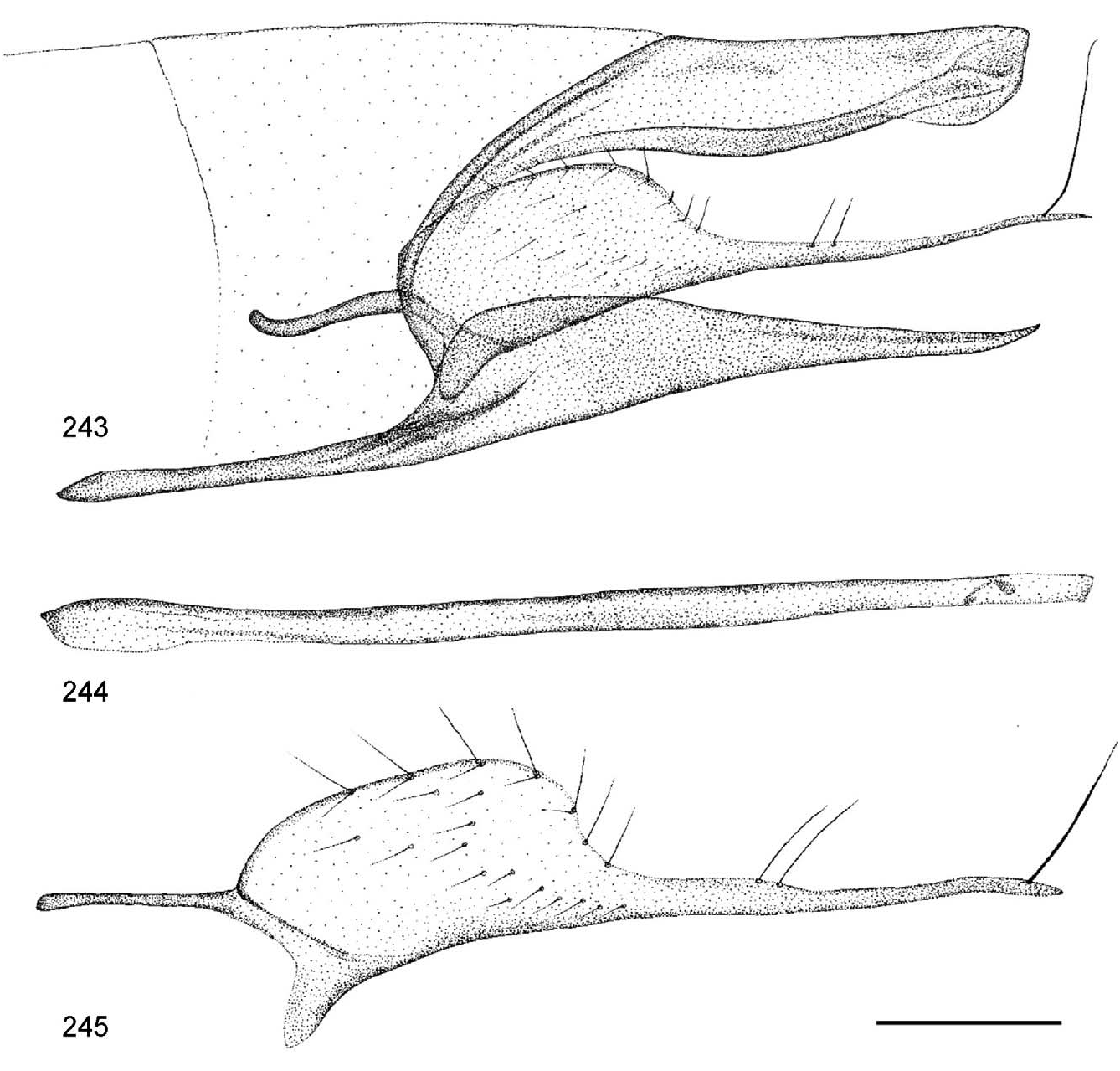
15. Saccus slender, extended, cylindrical shaped ( Figs 240–251 View FIGURES 240–242 View FIGURES 243–245 View FIGURES 246–251 ).................................... melanosparta View in CoL group
– Vinculum broad, saccus is not differented from vinculum ( Fig. 217 View FIGURES 217–223 )............................... jabalshamsi View in CoL group
* Males of the gato , hibiscola , mida , silvicola and umukarus groups are unknown.
Key to the species groups of Afrotropical Phyllonorycter based on female genitalia*
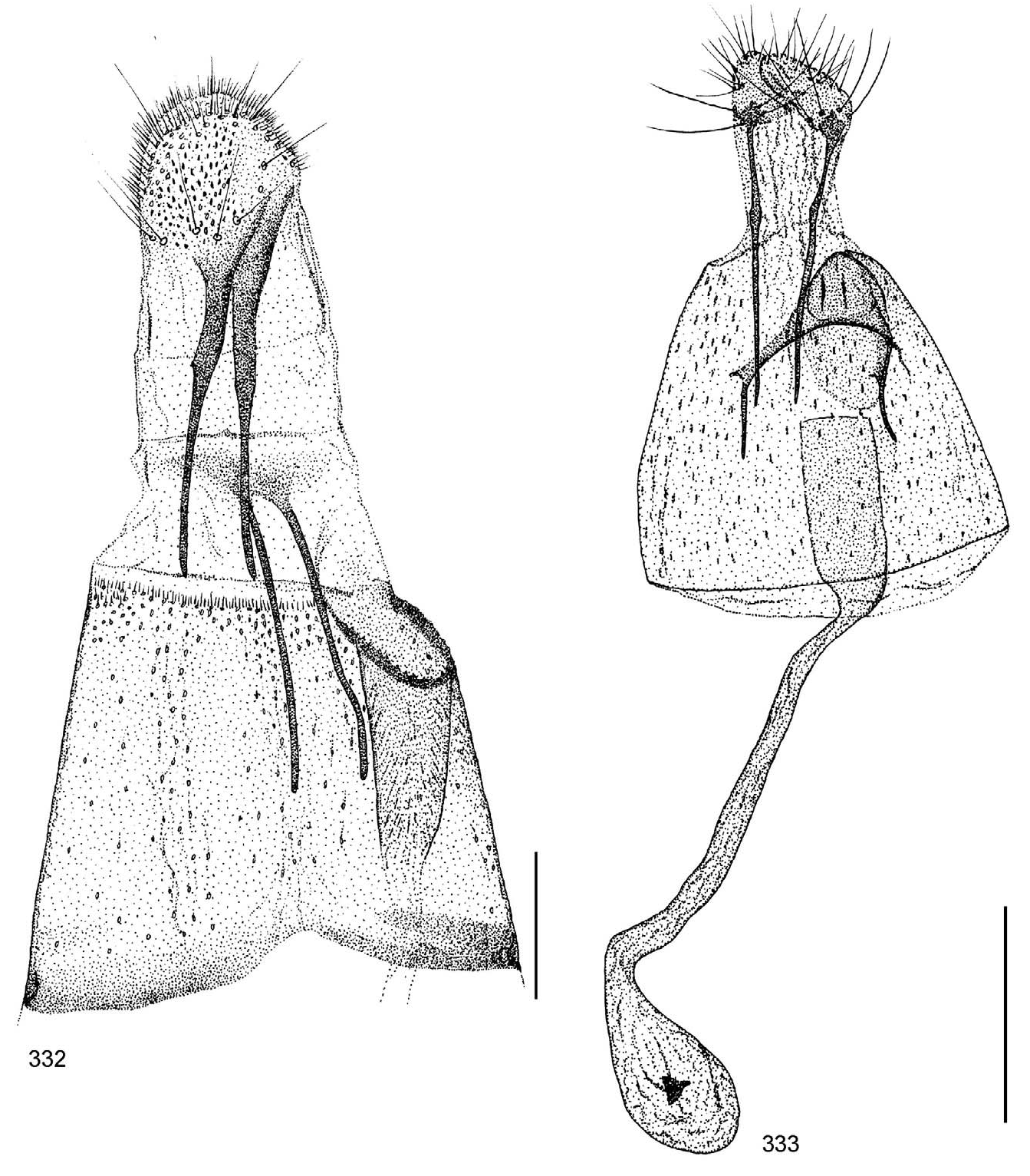
1. Anterior apophyses replaced by sterigmatic appendices ( Figs 333–335 View FIGURES 332–333 View FIGURES 334–335 )............................ melanosparta View in CoL group
– Anterior apophyses present.............................................................................. 2
2. Posterior, anterior apophyses and sterigmatic appendices present ( Figs 312, 313 View FIGURES 312–313 )..................... grewiaecola View in CoL group
– Posterior and anterior apophyses present, sterigmatic appendices absent.......................................... 3
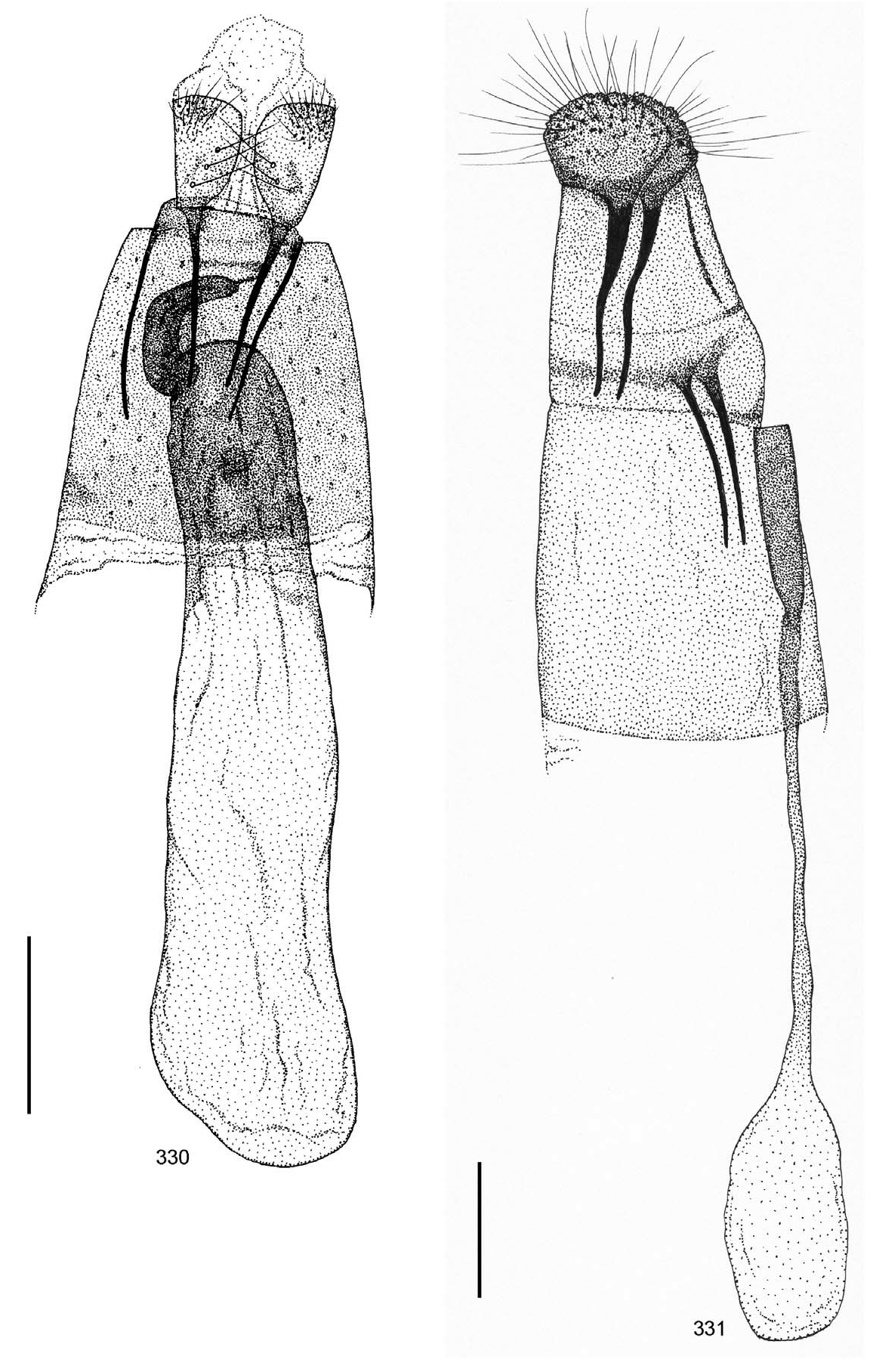
3. Ductus bursae sharply sinuoid at initial part, corpus bursae, big, long, broad, cylindrical, without signum ( Figs 328–330 View FIGURES 328–329 View FIGURES 330–331 )............................................................................................ leucaspis View in CoL group
– Ductus bursae without sharply sinoid curve at initial part, but straight, corpus bursae of different shapes, with or without signum................................................................................................ 4
4. Sterigmatic cuticle sclerotization on segment VII fold-shaped or arch-shaped...................................... 5
– Sterigmatic cuticle sclerotization on segment VII absent or tube-shaped (antrum appressed to segment VII)............. 12
5. Corpus bursae without signum........................................................................... 6
– Corpus bursae with signum.............................................................................. 8
6. Anterior margin of segment VII ringed with strong sclerotization ( Fig. 323 View FIGURES 322–323 )........................... hibiscola View in CoL group
– Anterior margin of segment VII without sclerotized ring....................................................... 7
7. Cuticle heavily wrinkled at subposterior sector of segment VII ( Fig. 311 View FIGURES 310–311 )................................. gato group
– Cuticle smooth at subposterior sector of segment VII ( Figs 307–310 View FIGURES 306–307 View FIGURES 308–309 View FIGURES 310–311 ).................................. encaeria View in CoL group
8. Anterior margin of sterigmatic fold convex, signum spine-like, located on corpus bursae close to anterior margin of segment VII ( Fig. 350 View FIGURES 350–351 )............................................................................. silvicola View in CoL group
– Anterior margin of sterigmatic fold not separated from cuticle of segment VII, signum band, or stellate located in the median part of corpurs bursae or caudally......................................................................... 9
9. Lamella post-vaginalis attain a complex, highly sclerotized structure, covered with aggregation of spines ( Figs 338, 339 View FIGURES 338–339 )............................................................................................... mida View in CoL group
– Lamella post-vaginalis small, contains other structure than aggregation of spines or imperceptible..................... 10
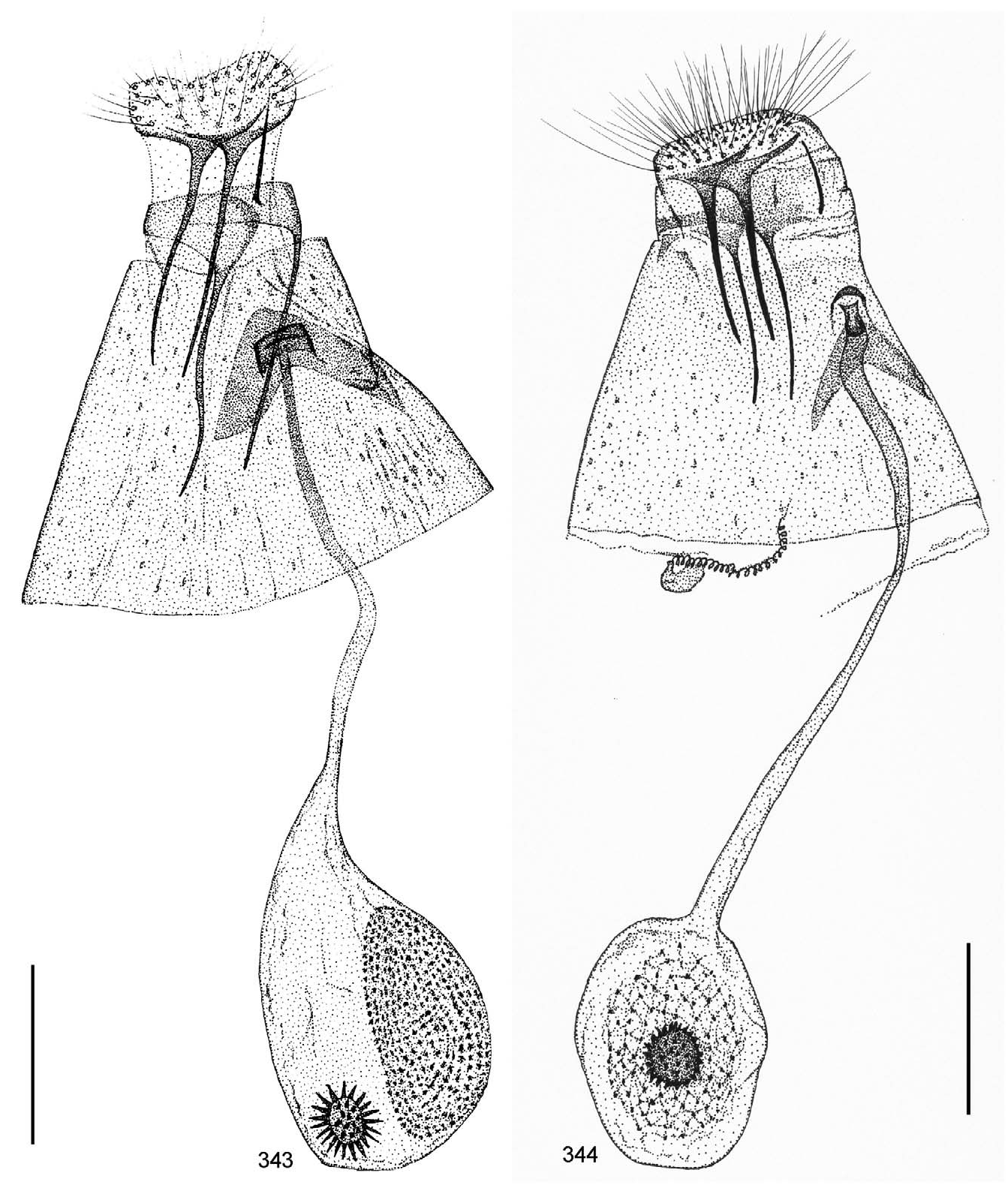
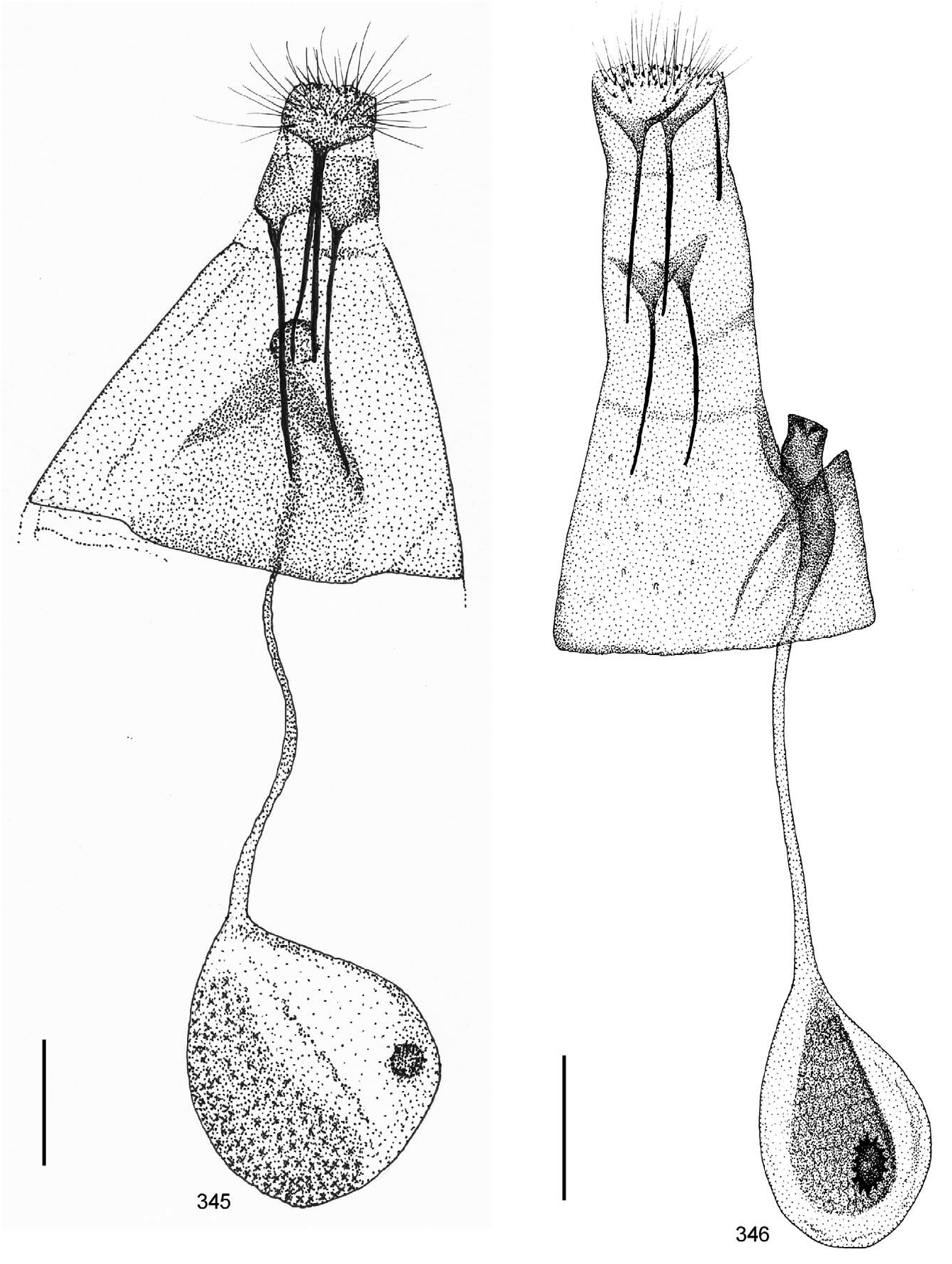
10. Ostium bursae with highly sclerotized margin; corpus bursae with signum area covered with fine short spines and a stellate signum ( Figs 342–348 View FIGURES 340–342 View FIGURES 343–344 View FIGURES 345–346 View FIGURES 347–349 )..................................................................... rhynchosiae View in CoL group
– Ostium bursae without sclerotized margin, corpus bursae with long (bar-, rod-, needle-shaped) signum or no signum...... 11
11. Sterigma enlarged and thick posteriorly, smooth signum area diamond shaped, with a needle-like sclerotized signum crossing the signum area ( Fig. 351 View FIGURES 350–351 )................................................................... umukarus View in CoL group
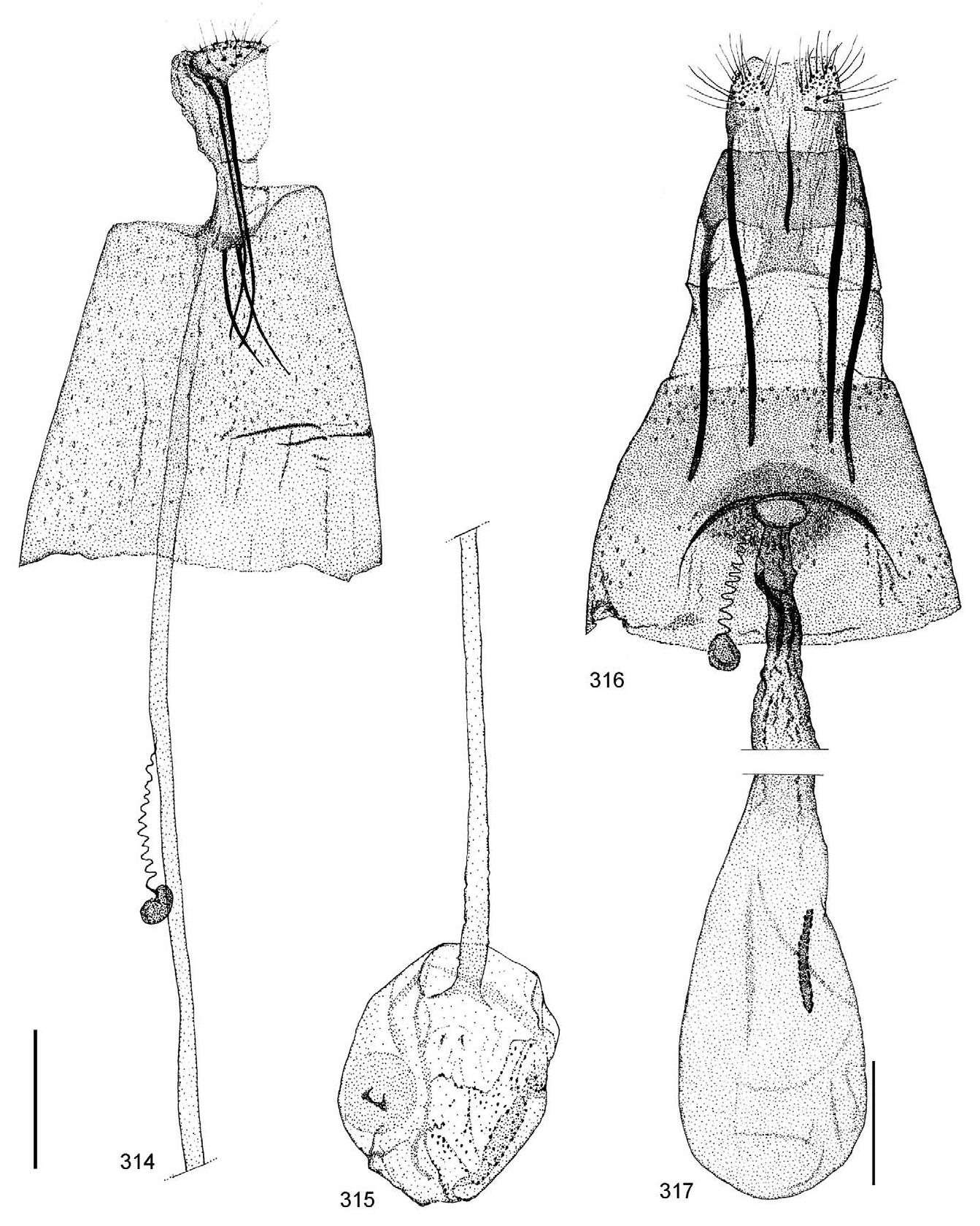
– Sterigma narrow but strongly sclerotized arc-shaped suture, corpus bursae with band-like signum covered with short spines ( P. dombeyae View in CoL without signum) ( Figs 316–318 View FIGURES 314–317 View FIGURES 318–319 , 320–322 View FIGURES 320–321 View FIGURES 322–323 )............................................. hibiscina View in CoL group
12. Ostium bursae opens at or close to posterior margin of segment VII............................................. 14
– Ostium bursae opens close to anterior margin of segment VII.................................................. 13
13. Sterigma small, M-shaped situated at subanterior sector of segment VII, ductus bursae very long running along entire abdomen of moth, corpus bursae mall, slender without signum ( Figs 340, 341 View FIGURES 340–342 ).................................. obandai View in CoL group
– Anterior apophyses very short, initiate at anterior margin of segment VIII, ostium bursae opens at anterior margin of segment VII, sterigmatic cuticle sclerotization on segment VII absent ( Fig. 305 View FIGURES 303–305 )............................... achilleus View in CoL group
14. Signum located at posterior sector of corpus bursae close to incerption of ductus bursae to corpus bursae............... 15
– Signum located at median/caudal sector of corpus bursae or no signum on corpus bursae............................ 17
15. Posterior part of sterigmatic appendage loose, appresed but not fused with cuticle of segment VII ( Figs 336, 337 View FIGURES 336–337 )................................................................................................. melhaniae View in CoL group
– Sterigmatic plate or cuticle aberrations absent.............................................................. 16
16. Signum plate round, crossed by slender, dentate signum ( Fig. 324 View FIGURES 324–327 )................................. jabalshamsi View in CoL group
– Signum heavily sclerotised area with sharp and thick small spines ( Fig. 349 View FIGURES 347–349 )........................... ruwenzori View in CoL group
17. Ductus bursae short, corpus bursae located in segment VI ( Figs 325, 326 View FIGURES 324–327 ).......................... lemarchandi group
– Ductus bursae long, corpus bursae located anterad segment VI................................................. 18
18. Antrum well developed, melanized, tube shaped, broader than girth of ductus bursae ( Figs 331 View FIGURES 330–331 , 332 View FIGURES 332–333 )....... loxozona View in CoL group
– Antrum not differentiated from ductus bursae.............................................................. 19
20. Posterior apophyses ca. 2× longer than anterior apophyses ( Fig. 314 View FIGURES 314–317 )................................. grewiella View in CoL group
– Posterior apophyses ca. as long as anterior apophyses ( Fig. 306 View FIGURES 306–307 ).................................... chionopa View in CoL group
















No known copyright restrictions apply. See Agosti, D., Egloff, W., 2009. Taxonomic information exchange and copyright: the Plazi approach. BMC Research Notes 2009, 2:53 for further explanation.
|
Kingdom |
|
|
Phylum |
|
|
Class |
|
|
Order |
|
|
Family |