
Lithostege fissurata subsp. inanis, Prout
|
publication ID |
https://doi.org/10.5281/zenodo.279200 |
|
DOI |
https://doi.org/10.5281/zenodo.6186943 |
|
persistent identifier |
https://treatment.plazi.org/id/C63187EF-FFCD-FFD8-BF93-3507FB7AFD7E |
|
treatment provided by |
Plazi |
|
scientific name |
Lithostege fissurata subsp. inanis |
| status |
|
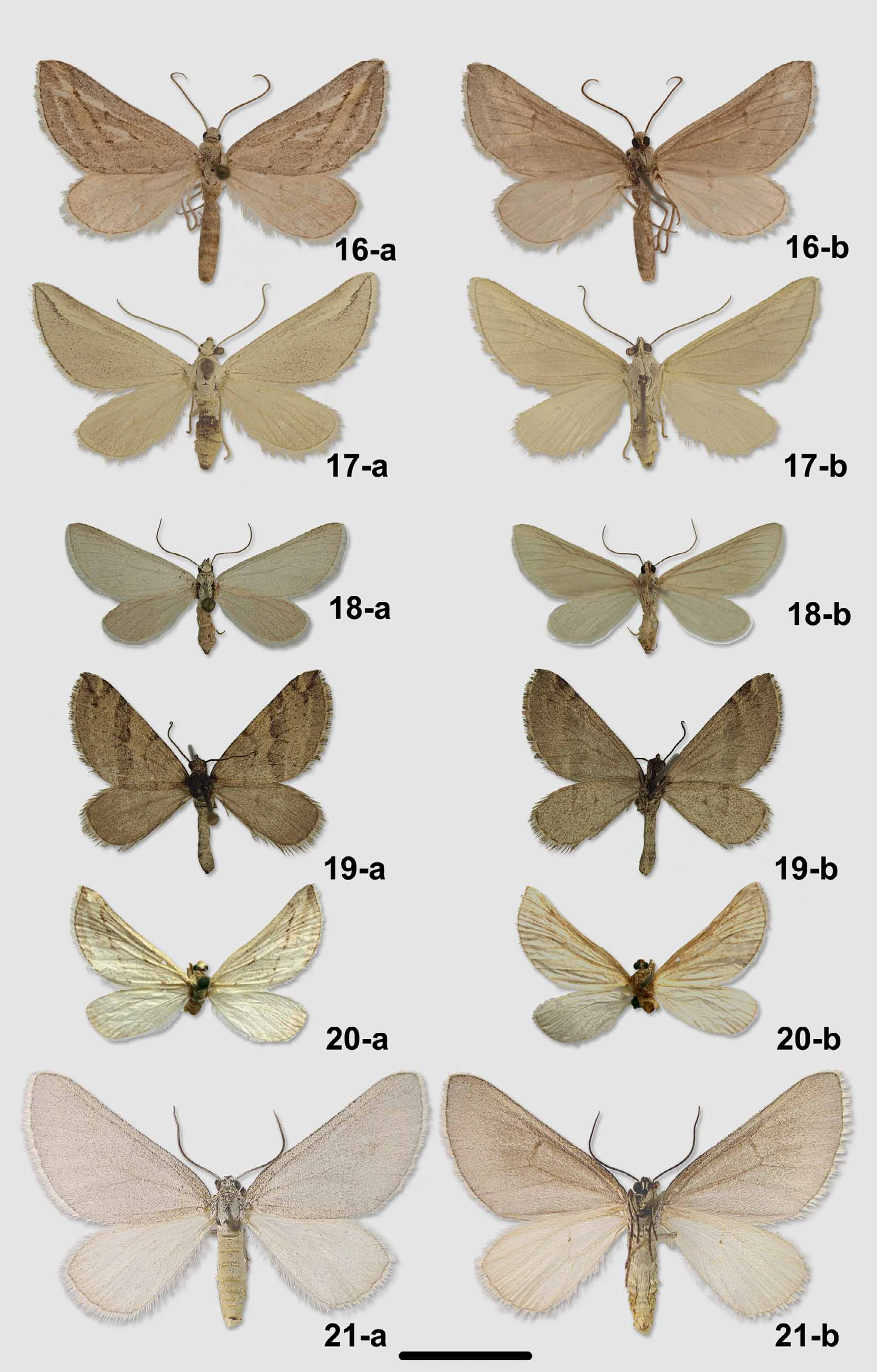
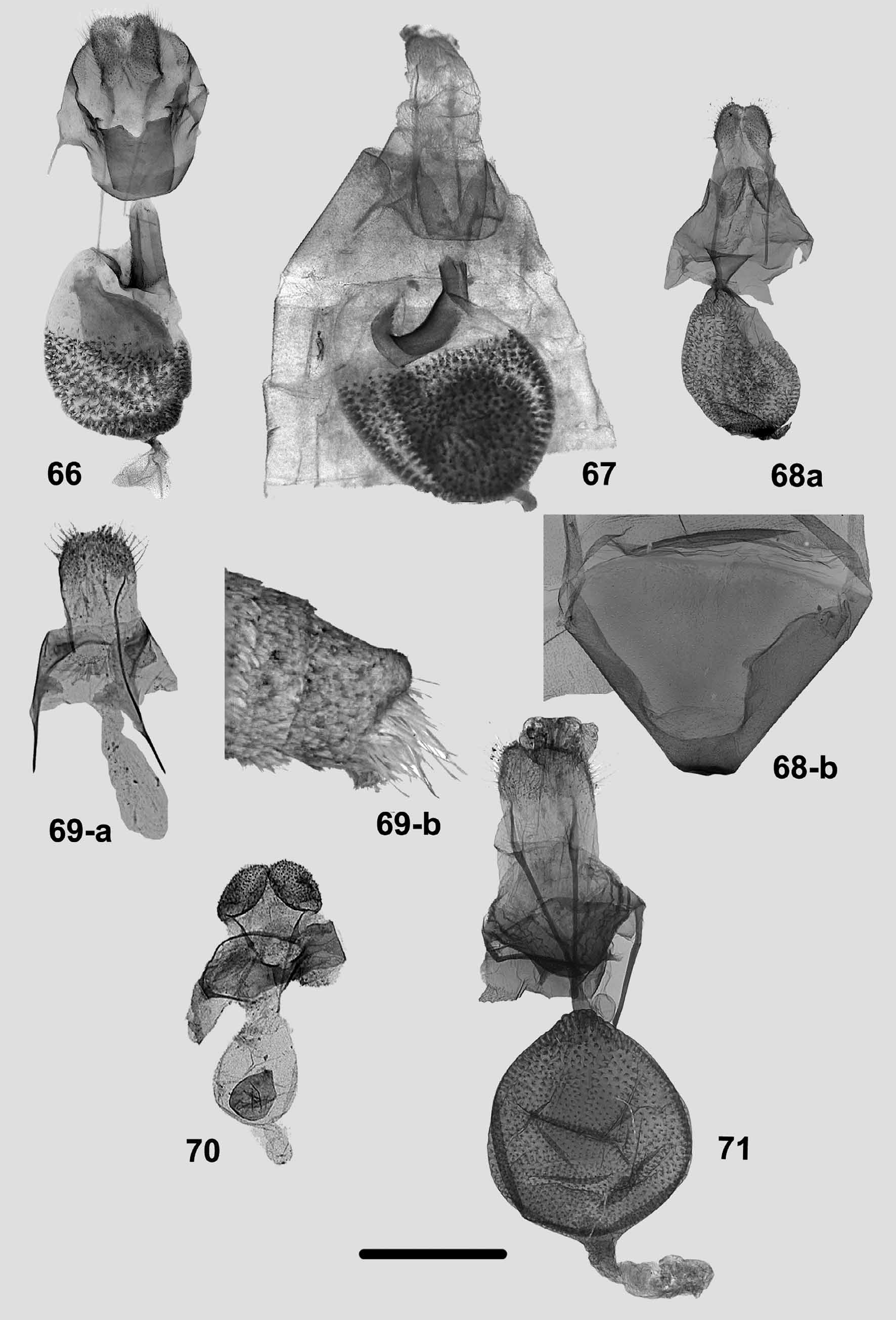
( Figs. 18 View FIGURES 16 – 21 , 68 View FIGURES 66 – 71 ; Map 4)
Lithostege inanis Prout, 1941: 331 , pl. 34: i. Holotype 3, allotype Ƥ, BMNH (examined by photo). Type locality: Saudi-Arabia: Khafs.
Lithostege fitzgeraldi Wiltshire, 1947: 10, pl. Fig. 15 View FIGURES 11 – 15 ; text-fig. 10. Holotype 3, BMNH (not examined). Type locality: Saudi- Arabia: Artawiya.
Lithostege fissurata inanis : Wiltshire, 1990: 125, fig 81.
Lithostege inanis: Parsons et al., 1999 .
Lithostege fissurata inanis: Hausmann & Seguna, 2005: 11 –15.
Material examined. Type material: Holotype 3: ‘Arabia: Khafs. 26.ii. 1935. H. St. J. B. Philby, B. M. 1935 – 222 ’, ‘Type’, ‘ Lithostege inanis Prout Holotype 3 ’; allotype Ƥ: same data; coll. BMNH.
Additional material: 1 Ƥ: Iran, Belutschistan, Iranshahr, 800 m, 1.- 10.III. 1954, [leg.] Richter u. Schäuffele, gen. prep. 1012 / 2010 H. R. Preparations of genitalia: 1 3, 2 Ƥ.
Description & Diagnosis. Wingspan of the single specimen from Iran: 22 mm. Wings similar to L. fissurata , but without apical dark grey line on forewing ( Fig. 18 View FIGURES 16 – 21 ). Female genitalia ( Fig. 68 View FIGURES 66 – 71 ) with very short apophyses anteriores (0.1 of apophyses posteriores) and a short funnel-shaped antrum; the pear-shaped corpus bursae fully spinulate, with a small anterior diverticulum. Female genitalia of fissurata without distinct differences. Also the male genitalia of the holotype (studied) almost identical.
Taxonomic note. Wiltshire ( 1990) synonymised L. fitzgeraldi Wiltshire, 1947 with L. inanis Prout, 1941 and simultaneously downgraded this taxon to a subspecies of L. fissurata Mabille, 1888 . The single examined specimen from Iran was recorded by Hausmann & Seguna ( 2005) as L. fissurata inanis Prout, 1941 . The female genitalia of this specimen are highly similar to those of L. fissurata (figured in Hausmann & Seguna ( 2005)). Also the male genitalia of the holotype of L. inanis Prout fit well with those of L. fissurata Mabille. On the other hand, a separation on species-level of inanis and fissurata is supported by genetic differentiation between these two taxa. DNAbarcoding of 5 specimens of fissurata from a wide area of distribution ( Mauretania: 2; Tunisia: 2; Israel: 1) does not show any intraspecific variation, but comparing these with three barcodes of inanis (from United Arab Emirates) reveals a distance of 2.35%, suggesting inanis to be a distinct species. Conventionally, a barcode difference exceeding 2 % is understood as an argument of a species-level difference. It seems not unlikely that long-term isolation between Iranian and Arab populations led to a cryptic species (“in statu nascendi”) in Iran, but without further studies of more material we are not able to decide this question. So here we follow Hausmann & Seguna ( 2005), regarding inanis as a subspecies of L. fissurata .
Bionomics. Specimens studied are collected in January and February.
Distribution. Saudi Arabia, Iraq and SE of Iran ( Hausmann & Seguna, 2005) (Map 4).

No known copyright restrictions apply. See Agosti, D., Egloff, W., 2009. Taxonomic information exchange and copyright: the Plazi approach. BMC Research Notes 2009, 2:53 for further explanation.
|
Kingdom |
|
|
Phylum |
|
|
Class |
|
|
Order |
|
|
Family |
|
|
Genus |

Lithostege fissurata subsp. inanis
| Sh, Hossein Rajaei, Stüning, Dieter & Viidalepp, Jaan 2011 |
Lithostege fissurata inanis :
| Hausmann 2005: 11 |
Lithostege fissurata inanis
| Wiltshire 1990: 125 |
Lithostege fitzgeraldi
| Wiltshire 1947: 10 |