
Scirtothrips
|
publication ID |
https://doi.org/10.5281/zenodo.178140 |
|
publication LSID |
lsid:zoobank.org:pub:778880C1-E265-4972-A327-A90A070B9275 |
|
persistent identifier |
https://treatment.plazi.org/id/B67DB75A-0264-FFD0-809F-E8936DF3FC3F |
|
treatment provided by |
ImsDioSync |
|
scientific name |
Scirtothrips |
| status |
|
Key to genera of Scirtothrips -genus group in Japan
1. Antennae 6 -segmented (Fig. 4 B) ....................................................................................... Drepanothrips
-. Antennae 7 - or 8 -segmented (cf. Figs. 1 View FIGURE 1 B, 11 B–C)................................................................................. 2
2 ( 1) Antennae 8 -segmented ............................................................................................................ Scirtothrips
-. Antennae 7 -segmented ............................................................................................................................. 3
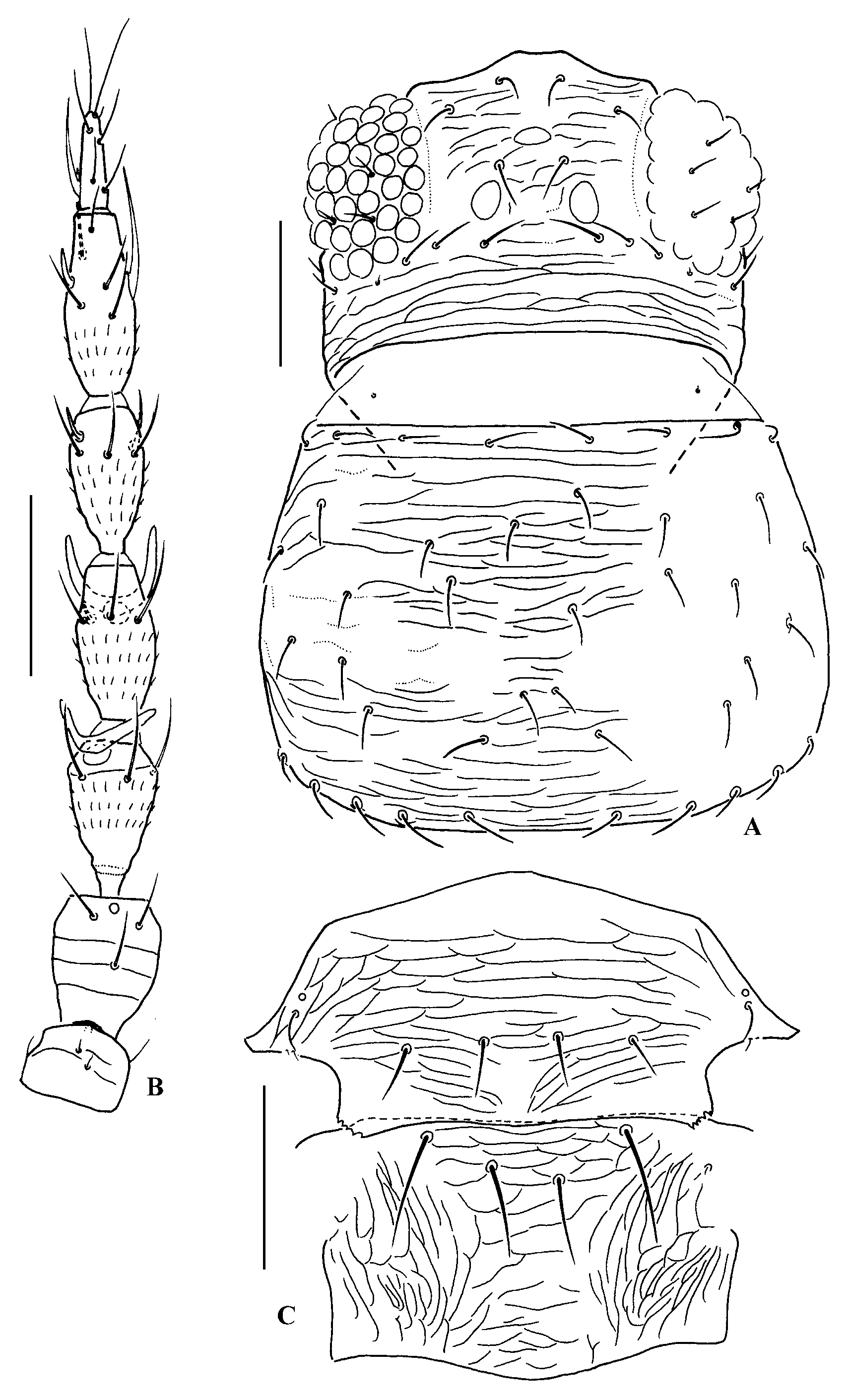
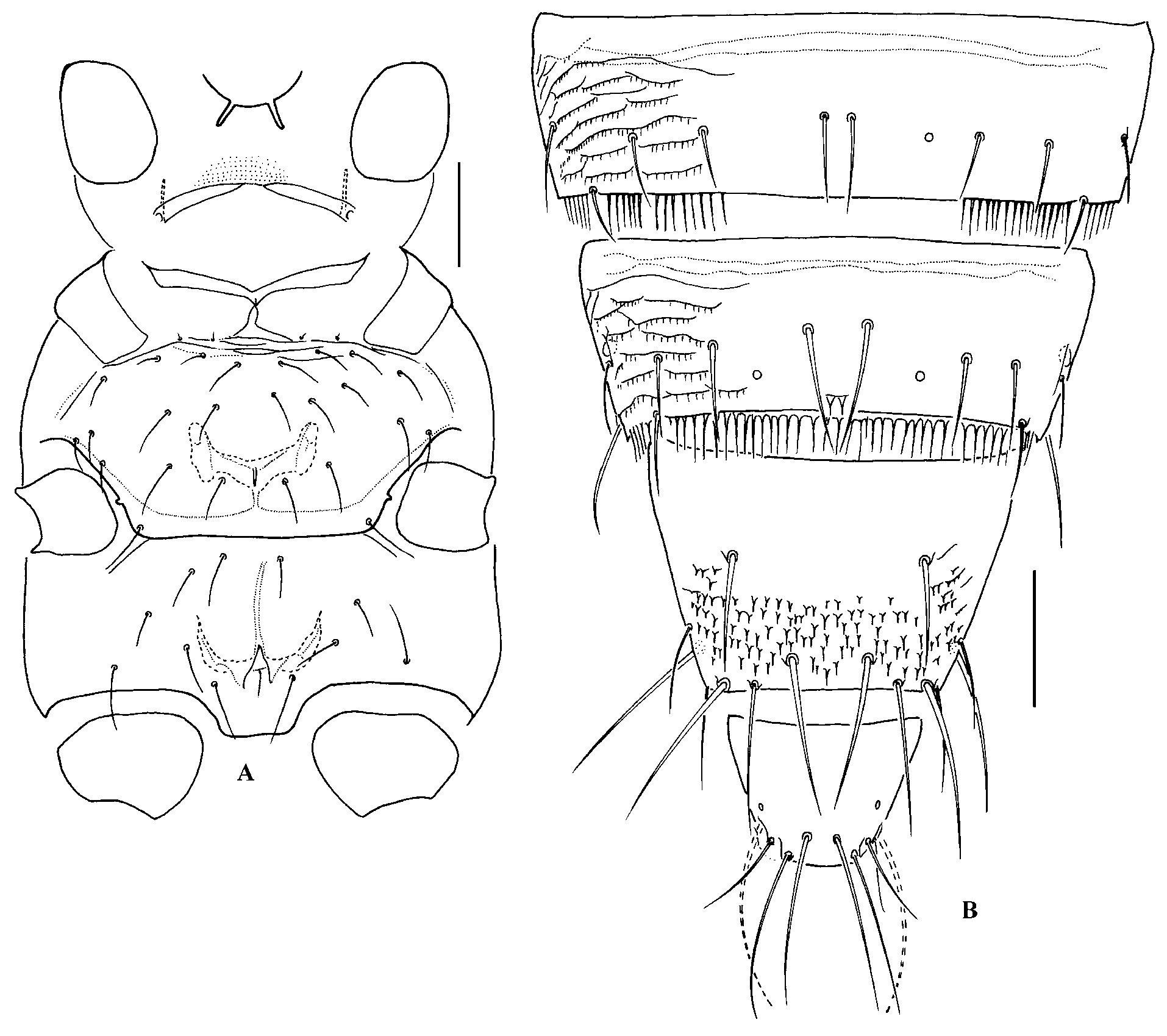
3 ( 2) Abdominal terga and sterna with numerous ciliate microtrichia along lines of sculpture; tergal B 1 setae much longer than distance between their bases ( Fig. 2 View FIGURE 2 B); antennal segment II with two apical distal setae equal in size ( Fig. 1 View FIGURE 1 B); mesonotum with median and submedian setae situated in front of posterior margin ( Fig. 1 View FIGURE 1 C); mesospinasternum narrow but complete ( Fig. 2 View FIGURE 2 A).............................. Anascirtothrips
-. Abdominal terga and sterna without numerous ciliate microtrichia; tergal B 1 setae much shorter than distance between their bases ( Figs. 7 View FIGURE 7 B & 8 A); antennal segment II with inner dorsal apical seta much longer than outer seta ( Figs. 6 View FIGURE 6 B–C); mesonotum with submedian setae situated near posterior margin ( Fig. 6 View FIGURE 6 D); mesospinasternum eroded at middle ( Fig. 7 View FIGURE 7 A)...................................... Parascirtothrips nov.


No known copyright restrictions apply. See Agosti, D., Egloff, W., 2009. Taxonomic information exchange and copyright: the Plazi approach. BMC Research Notes 2009, 2:53 for further explanation.