
Podacanthophorus alas Naskrecki
|
publication ID |
https://doi.org/10.5281/zenodo.270035 |
|
persistent identifier |
https://treatment.plazi.org/id/634387D1-A3A8-FF4D-16ED-FB71FD2238A0 |
|
treatment provided by |
Plazi |
|
scientific name |
Podacanthophorus alas Naskrecki |
| status |
sp. n. |
Podacanthophorus alas Naskrecki , sp. n.
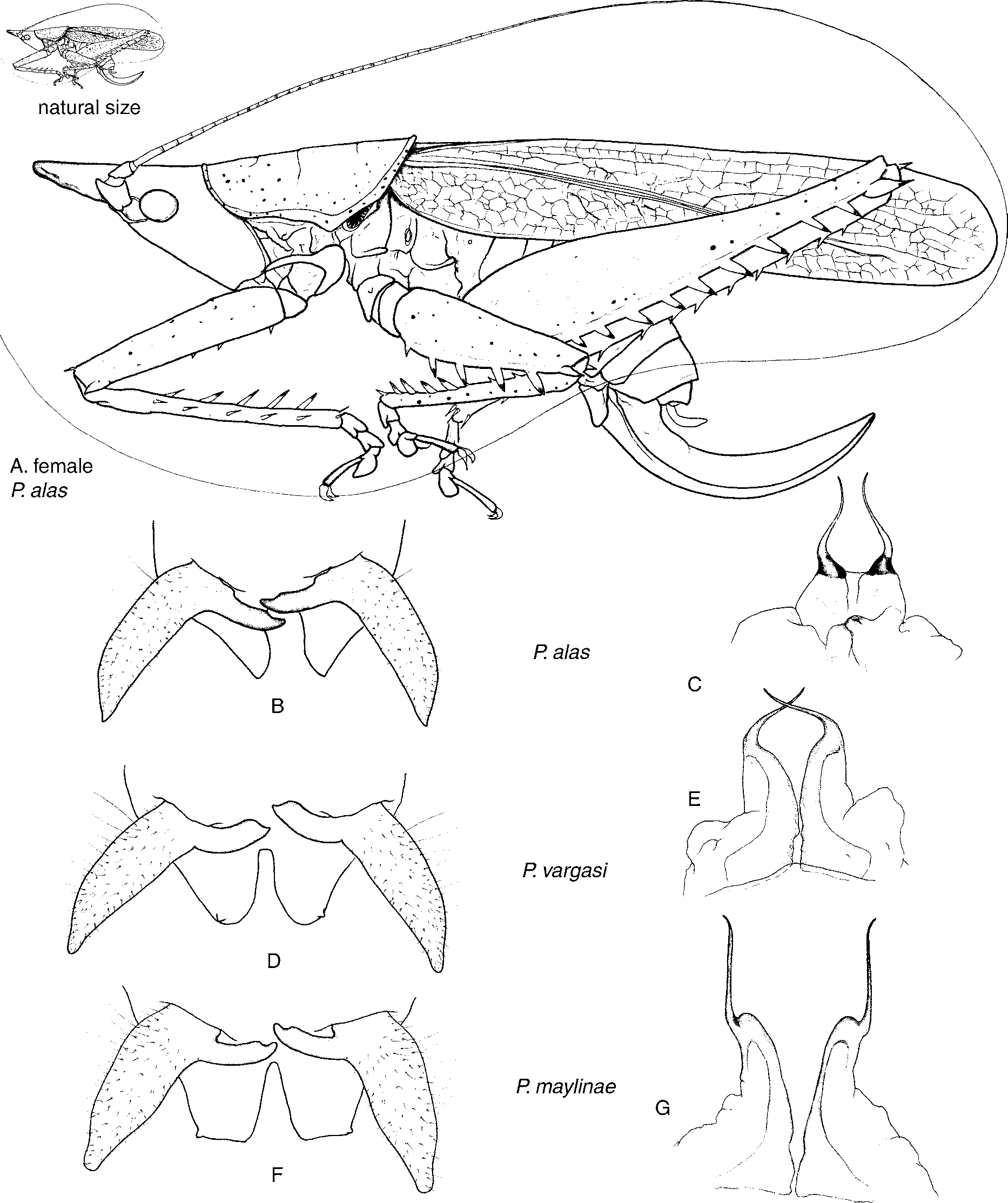
Figs. 34 View FIG. 34 A-C, 35A-C, 35K, 51C, 58G, Map 18 View MAPS 13 - 18
Type locality: Costa Rica, Heredia Prov., La Selva Biological Station; type depository: Academy of Natural Sciences, Philadelphia – holotype male
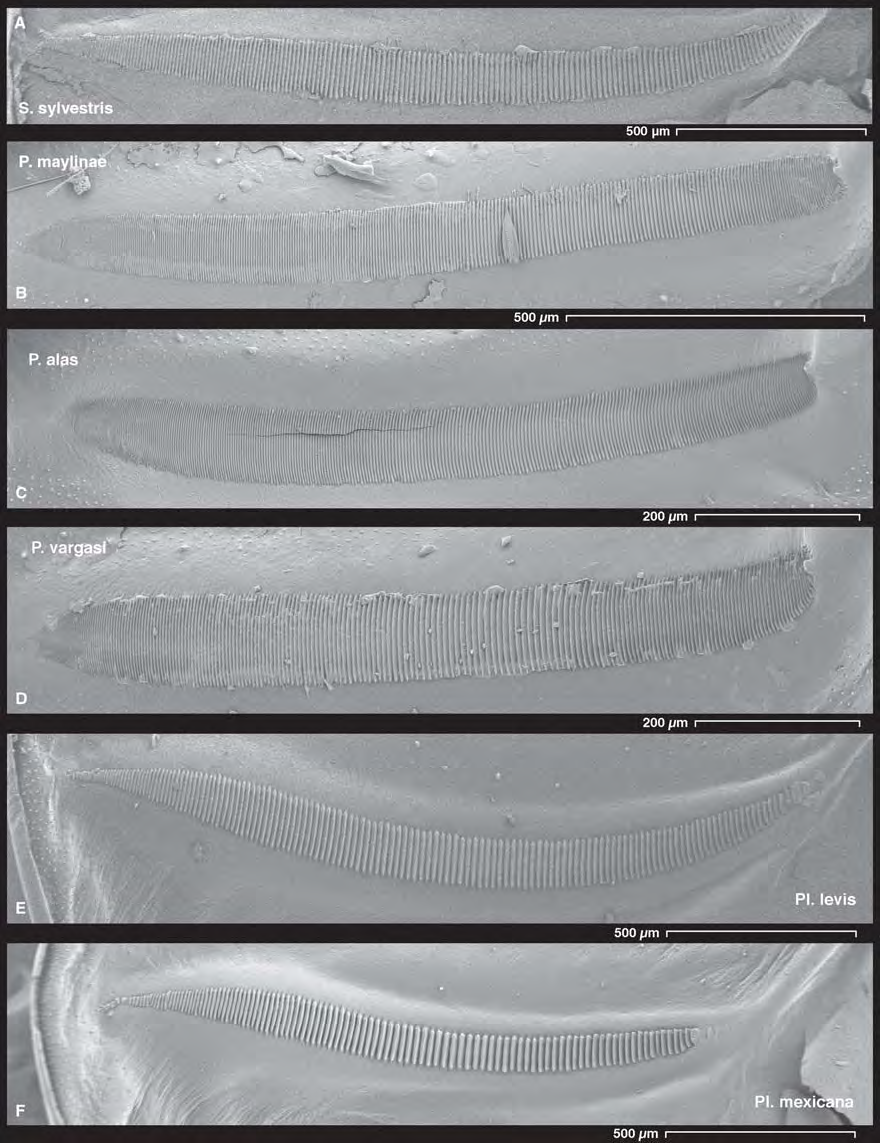
Diagnostic description.— The smallest species of the genus; general characteristics as described above; wings in both sexes hardly reaching apices of hind femora or slightly surpassing them ( Fig. 34 View FIG. 34 A). Fastigium of vertex 2.5-3 times as long as eye diameter, narrowly rounded apically, with distinct dorsal furrow dorsally; ventral keel of fastigium somewhat undulant ( Figs. 35 View FIG. 35 A-C). Male stridulatory file weakly curved, 0.9 mm long, 89 μm wide, with 284 closely spaced and relatively very wide teeth ( Fig. 51 View FIG. 51 C); stridulatory area on male without secondary venation; mirror square; secondary veinlet next to AA1 present, divergent from AA
1
. Ventral anterior spines of hind femora as long as width of hind femur below knee ( Fig. 35 View FIG. 35 K).
Tenth tergite of male with two somewhat divergent, wide lobes; female 10th tergite with lobes much narrower, pointed; male cercus straight, basal internal spine nearly straight, distinctly constricted apically ( Fig. 34 View FIG. 34 B); female cercus simple, elongately conical, somewhat curved. Male titillators needle-like, sinusoidal ( Fig. 34 View FIG. 34 C). Ovipositor short, sickle-shaped, about as long as half of hind femur (ratio ovipositor/hind femur 0.50-0.60) ( Fig. 34 View FIG. 34 A).
Coloration.— General coloration light green; face creamy white; fastigium reddish-brown; clypeus and mandibles dark purple; metazona of pronotum in male with large, brown, usually heart-shaped spot; venation of tegmina and posterior edge of tegmina contrastingly yellow.
Measurements.— Table 27.
Bioacoustics.— The call of P. alas is low Q and low duty. Most of the energy is probably allocated in the ultrasonic frequencies, which unfortunately I was unable to record. The audible portion of the call consists of irregularly produced, paired lisps, with each lisp lasting 8.2- 14.5 ms (n=20) at 28°C ( Fig. 58 View FIG. 58 G). The interval between the lisps ranged from 168 to 763 ms. The audible portion of the call does not have a clearly defined frequency peak, although frequencies between 9-12 kHz seem to have more energy.
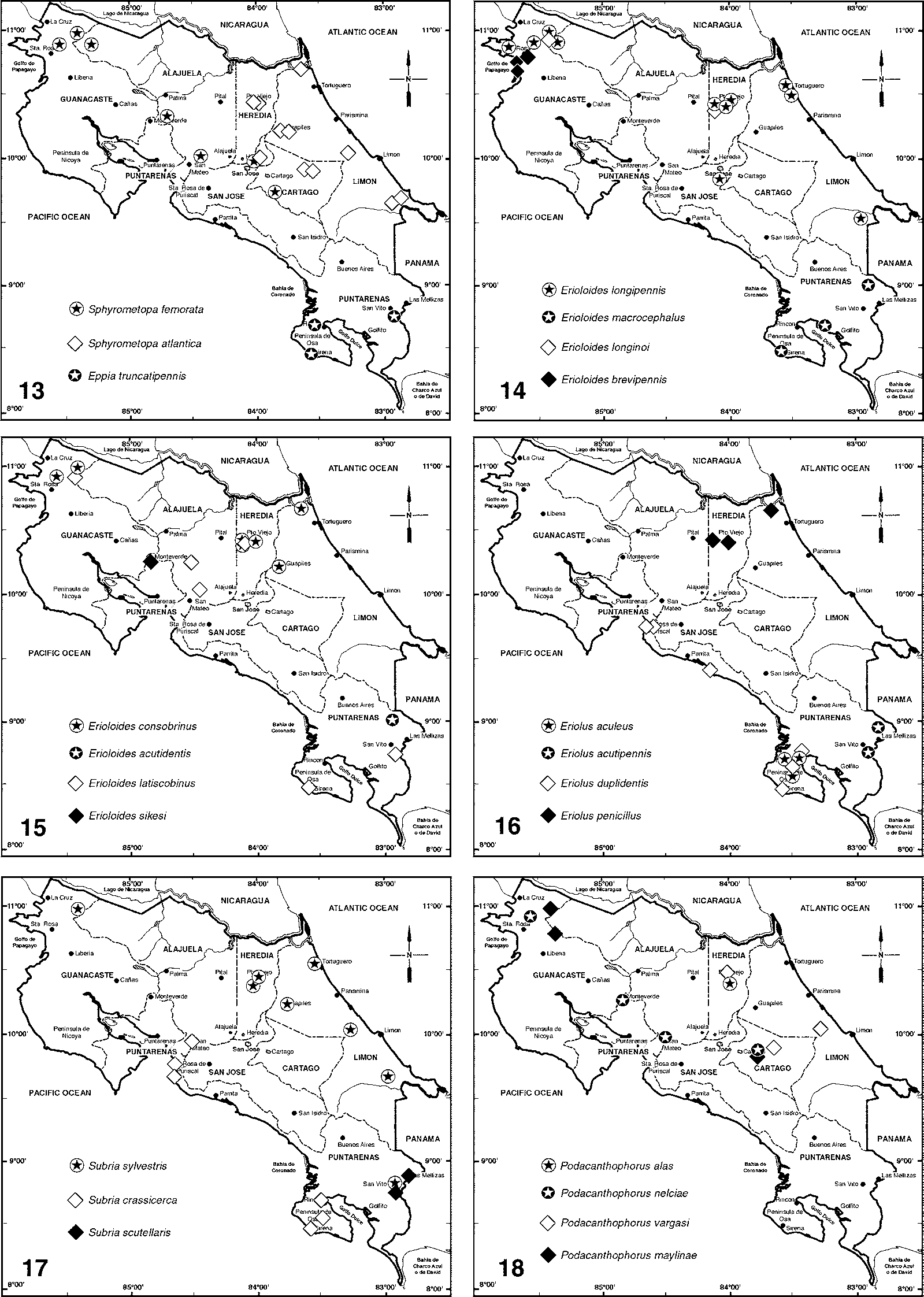
Distribution.— This new species been collected so far only at La Selva Biological Station, Heredia Prov. ( Map 18 View MAPS 13 - 18 ).
(all measurements are lengths in mm: range, mean±SD)
Material examined.— COSTA RICA: Heredia Prov., Puerto Viejo, La Selva Biological Station, elev. 50 - 150 m, 10° 26' N, 84° 1' W, 1 October 1995 (coll. P. Naskrecki) - 1 nymph ( ALAS ); same locality, 4 October 1995 (coll. P. Naskrecki) - 1 female ( allotype) ( ANSP); same locality, 10 - 15 November 1995 (coll. P. Naskrecki) - 1 male ( holotype) ( ANSP); same locality, 7 - 10 December 1995 (coll. P. Naskrecki) - 1 male, 1 female ( paratypes) ( PN collection); same locality, 13 April - 10 May 1998 (coll. P. Naskrecki) - 1 female ( paratype) ( PN collection).
Etymology.— This species is named after the project ALAS (Arthropoda of La Selva) – the first large scale inventory of the Arthropoda of the tropical rainforest.


| ANSP |
Academy of Natural Sciences of Philadelphia |
No known copyright restrictions apply. See Agosti, D., Egloff, W., 2009. Taxonomic information exchange and copyright: the Plazi approach. BMC Research Notes 2009, 2:53 for further explanation.
|
Kingdom |
|
|
Phylum |
|
|
Class |
|
|
Order |
|
|
Family |
|
|
Genus |