
Notiocoelotes, Wang, Xu and Li, 2008
|
publication ID |
https://doi.org/10.11646/zootaxa.2561.1.2 |
|
DOI |
https://doi.org/10.5281/zenodo.5309632 |
|
persistent identifier |
https://treatment.plazi.org/id/29588787-2E7B-9C7A-7B80-F8934BC9FDF1 |
|
treatment provided by |
Felipe |
|
scientific name |
Notiocoelotes |
| status |
|
Key to species of Notiocoelotes known from Hainan Island
1. Males (those of N. lingulatus and N. pseudolingulatus sp. nov. unknown) ................................................................2
- Females (those of N. membranaceus sp. nov. unknown) ............................................................................................. 5
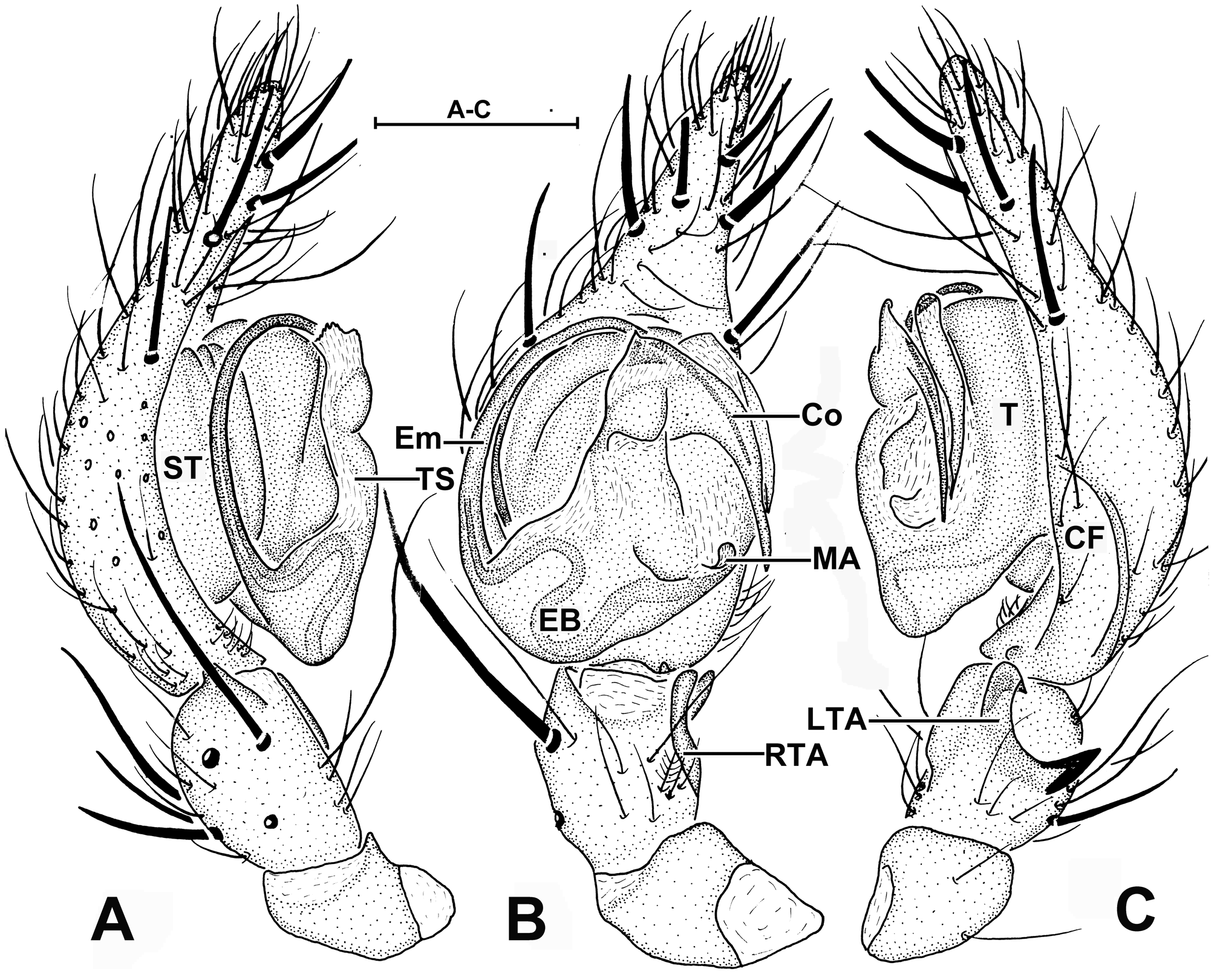
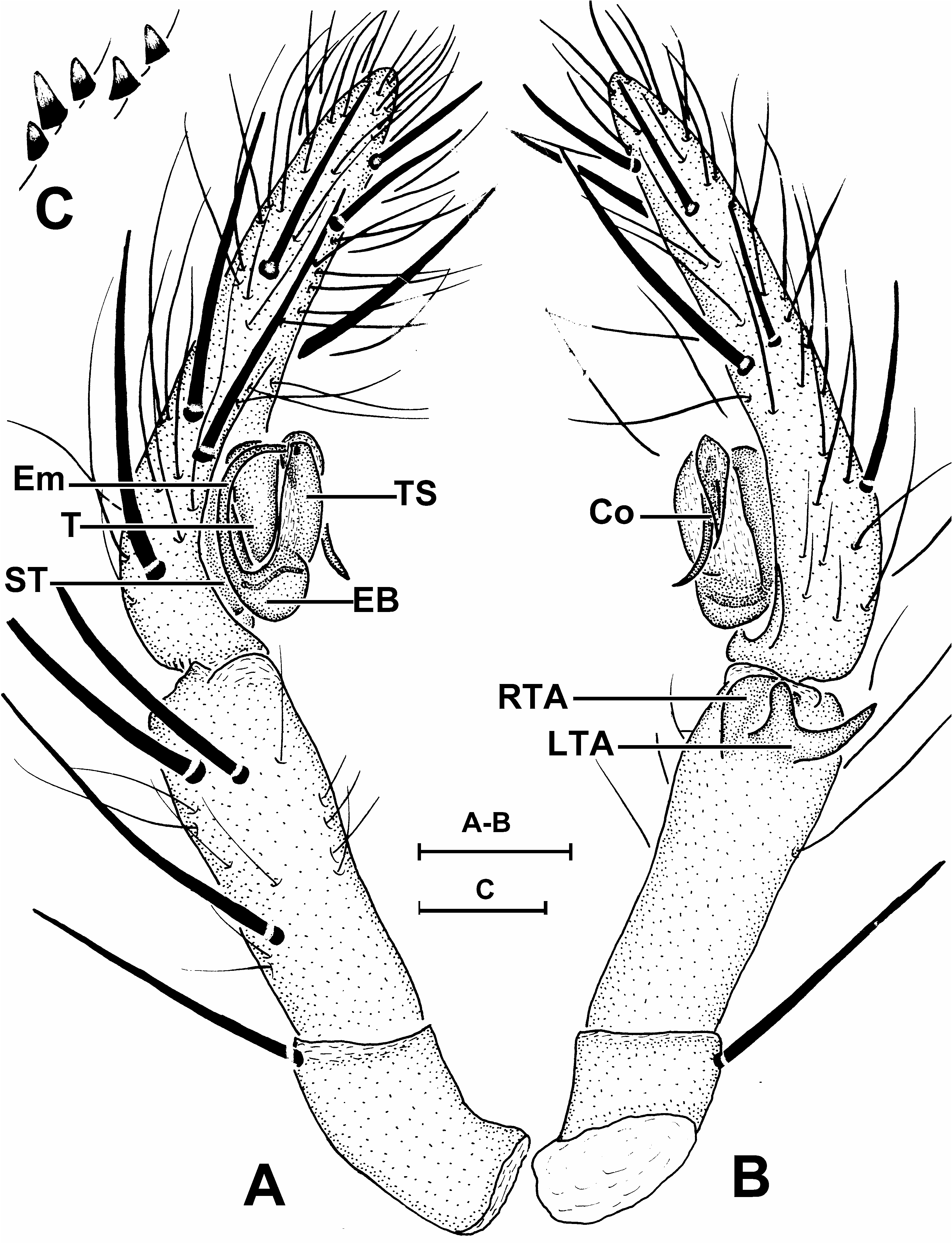
2. Median apophysis absent ( Figs 5A View FIGURE 5 , 13A View FIGURE 13 )..................................................................................................................... 3 - Median apophysis present ( Fig. 2B View FIGURE 2 ).................................................................................... N. membranaceus sp. nov.
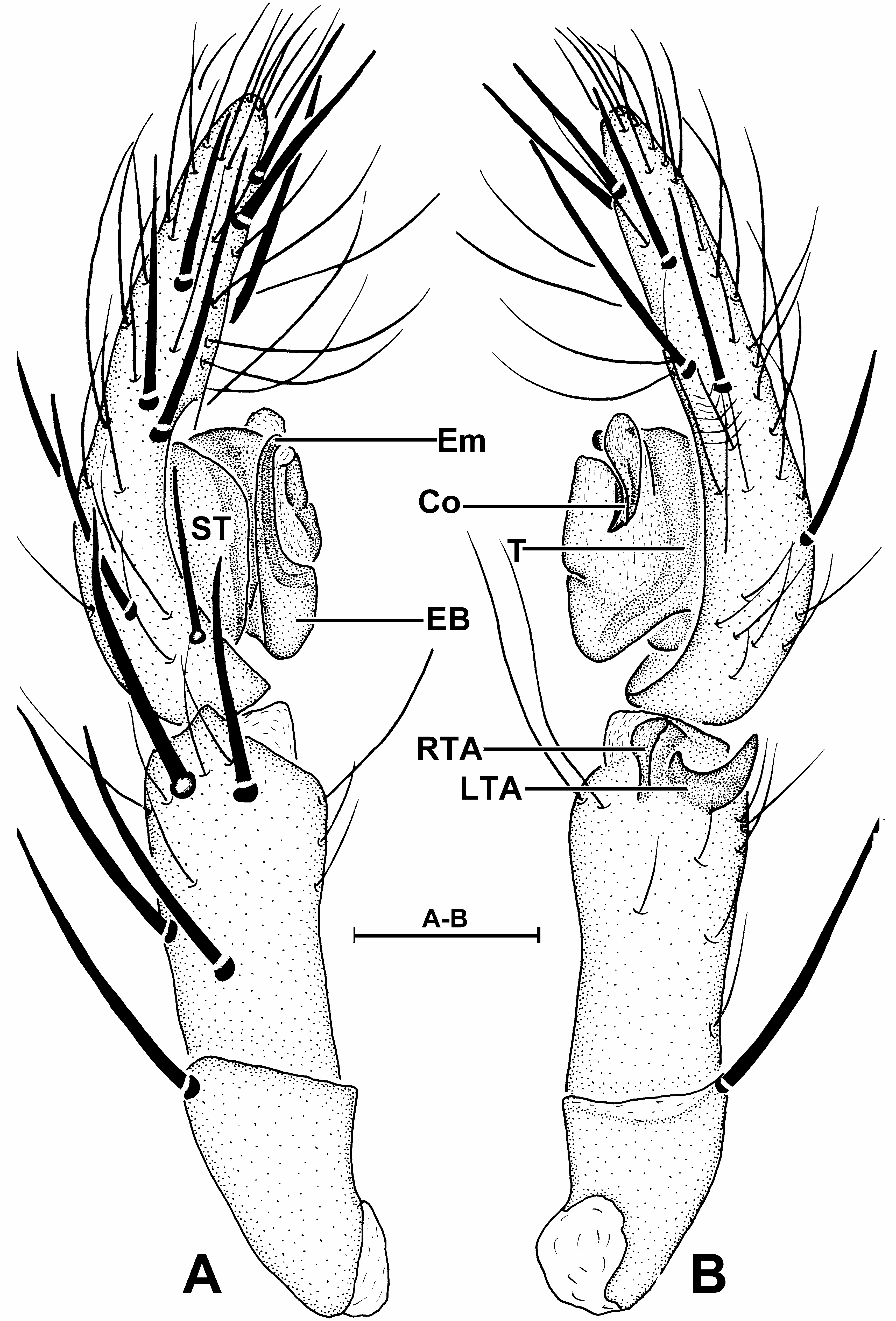
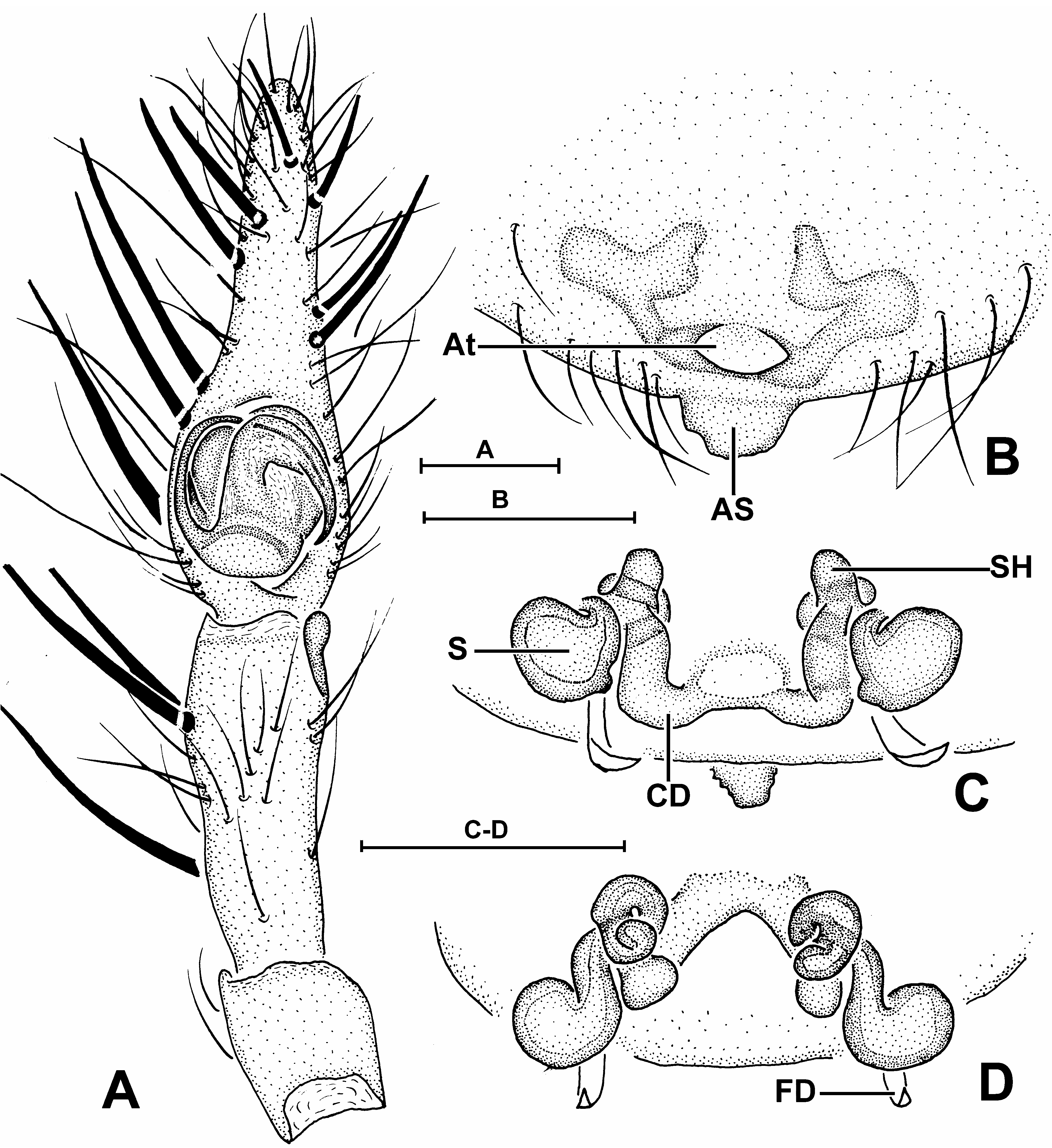
3. Cymbial furrow absent ( Figs 4B View FIGURE 4 , 12B View FIGURE 12 ) ........................................................................................................................ 4
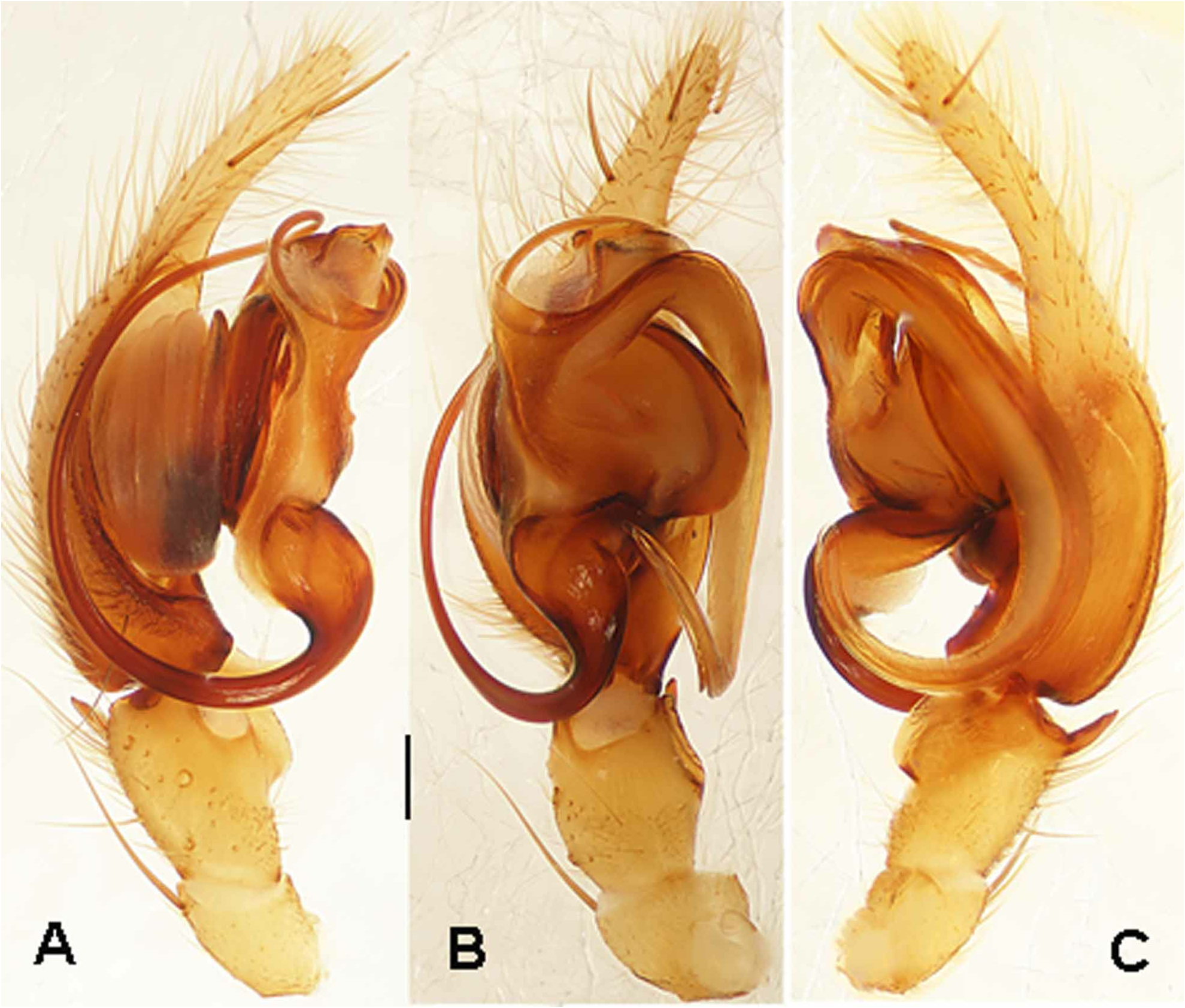
- Cymbial furrow present ( Fig. 8C View FIGURE 8 )................................................................................................................ palinitropus
4. Conductor short, not reaching the base of embolus ( Figs 4B View FIGURE 4 , 5A View FIGURE 5 )................................................. orbiculatus sp. nov.
- Conductor relatively long, reaching the base of embolus ( Figs 12B View FIGURE 12 , 13A View FIGURE 13 )........................................ spirellus sp. nov.
5. Atrium length at least four times width ( Fig. 9B View FIGURE 9 )........................................................................................ palinitropus
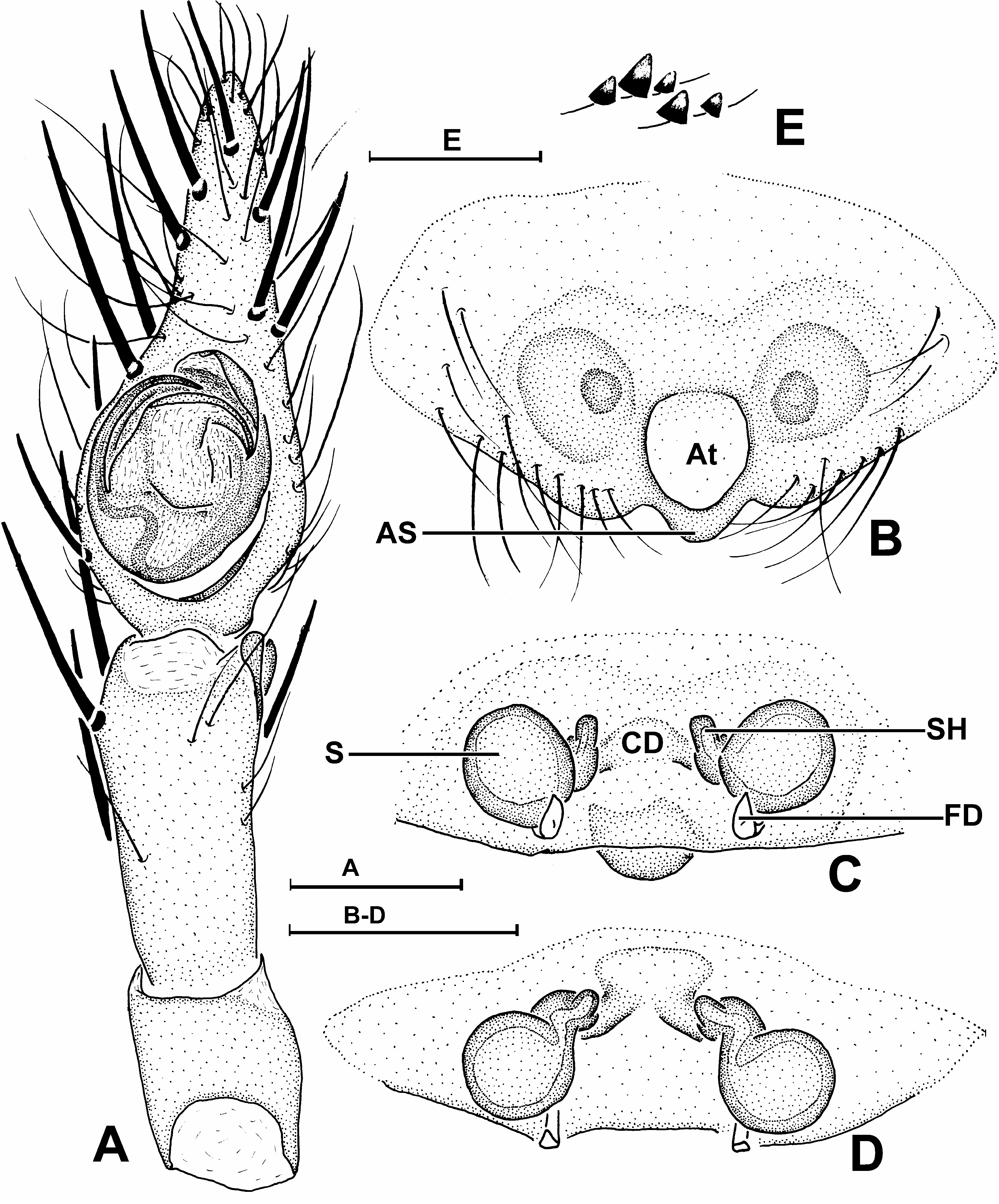
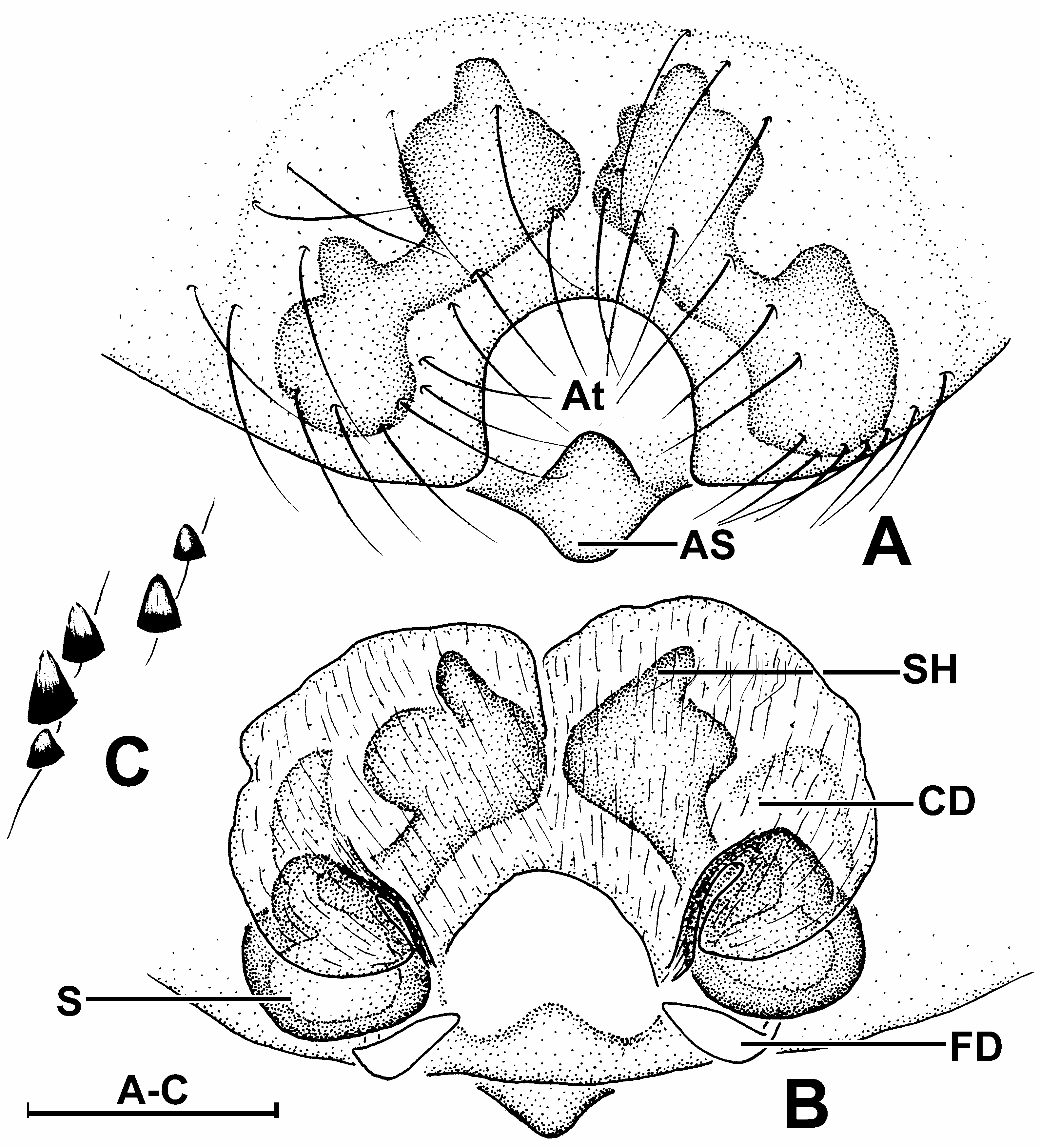
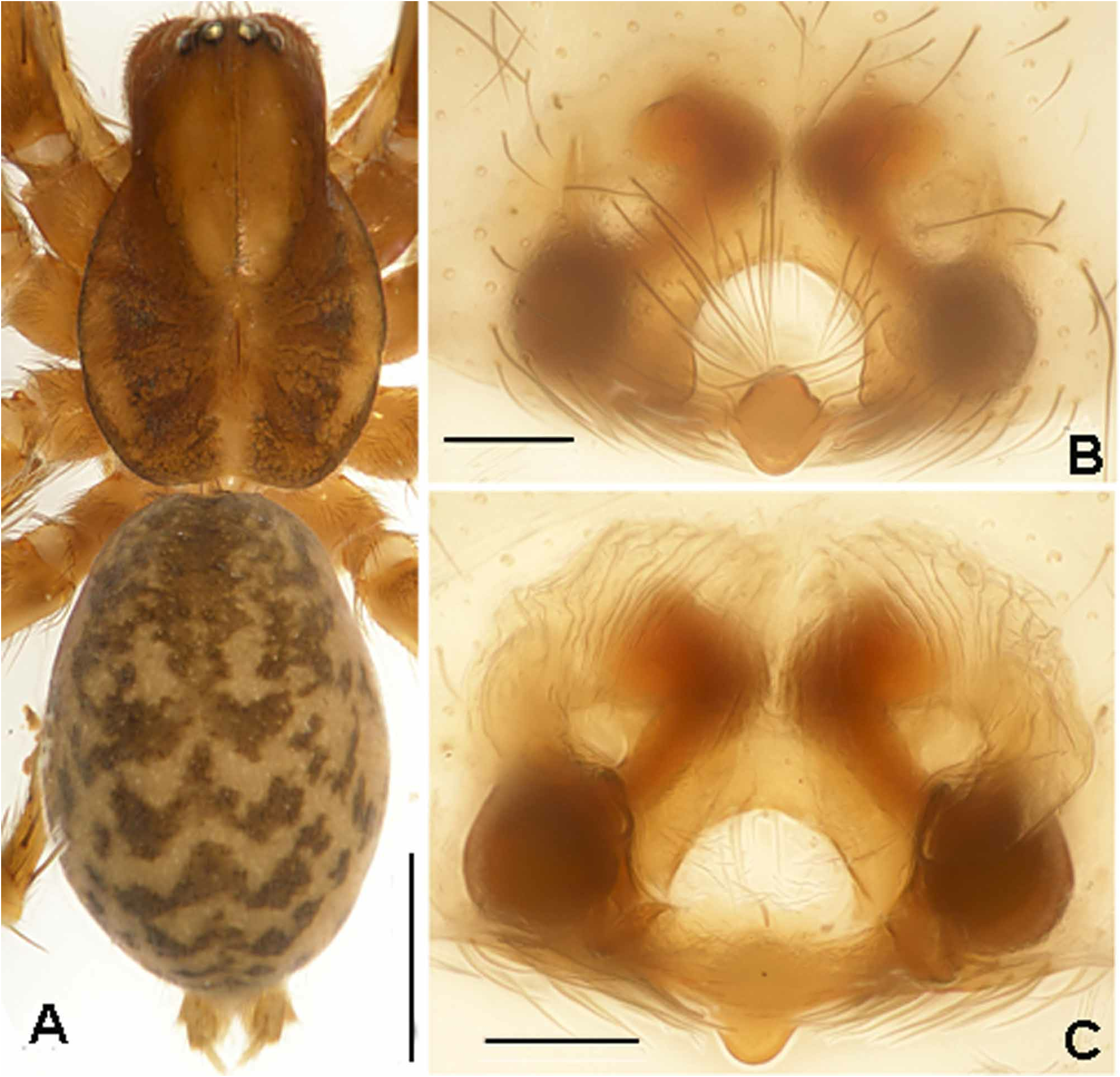
- Atrium with length at most two times its width ( Figs 1B View FIGURE 1 , 5B View FIGURE 5 , 7B View FIGURE 7 , 10A View FIGURE 10 , 11B View FIGURE 11 , 13B View FIGURE 13 , 15B View FIGURE 15 ) ...........................................6
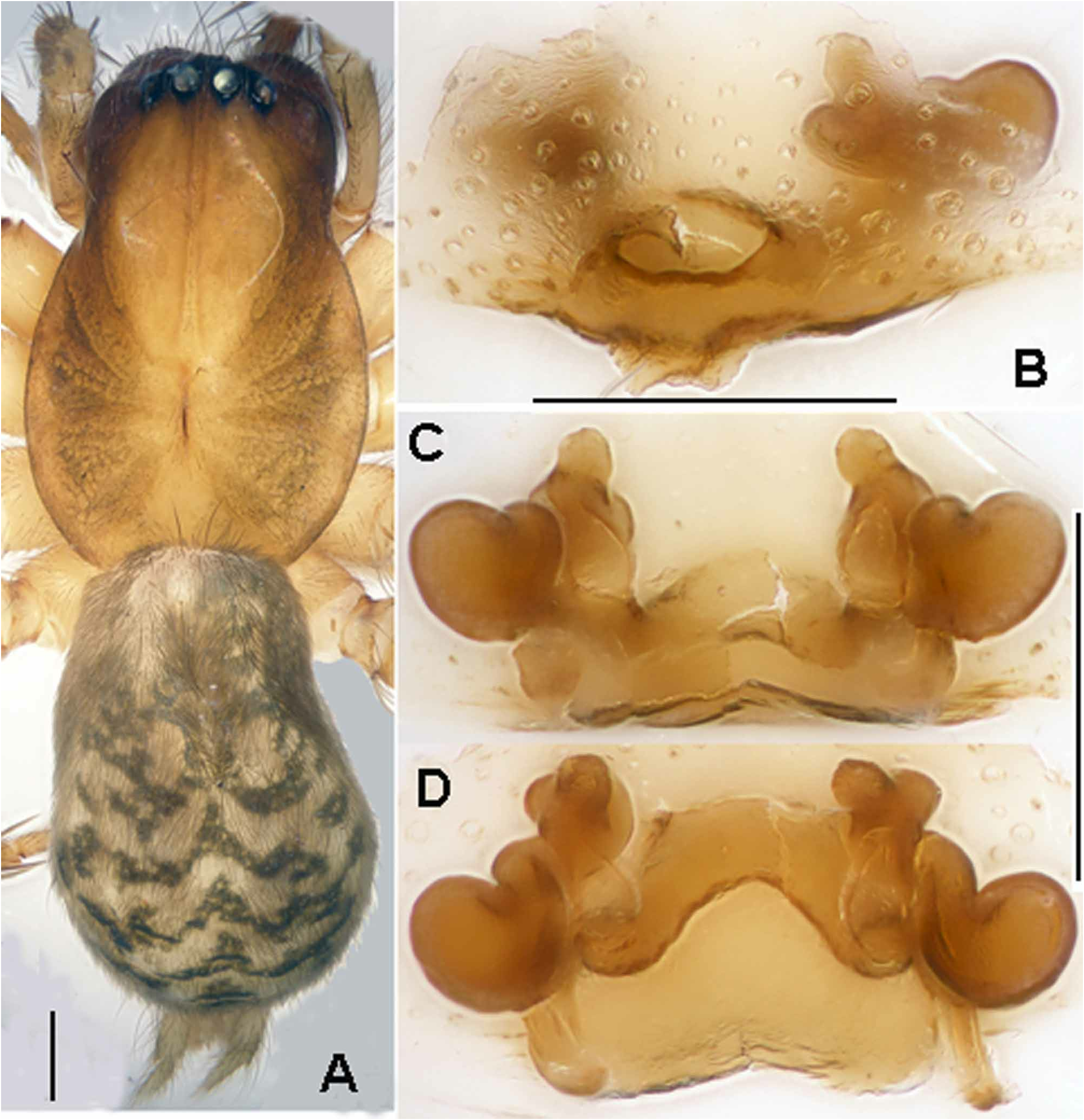
6. Atrium square-shaped, copulatory ducts broad, covering part of spermathecae ( Figs 1B–C View FIGURE 1 , 10A–B View FIGURE 10 , 11B–C View FIGURE 11 ) ......... 7
- Atrium not square-shaped, copulatory ducts narrow, not covering spermathecae ( Figs 5B–D View FIGURE 5 , 7B–D View FIGURE 7 , 13B–D View FIGURE 13 , 15B– D View FIGURE 15 )................................................................................................................................................................................. 8
7. Atrium scape tongue-shaped, copulatory ducts anteriorly separated ( Figs 1B–C View FIGURE 1 )......................................... lingulatus
- Atrium scape diamond-shaped, copulatory ducts anteriorly adjacent ( Figs 10A–B View FIGURE 10 , 11B–C View FIGURE 11 )...................................................................................................................................................................................... pseudolingulatus sp. nov.
8. Atrium shield-shaped, longer than wide ( Figs 5B View FIGURE 5 , 7B View FIGURE 7 ).................................................................. orbiculatus sp. nov.
- Atrium ovate, wider than long ( Figs 13B View FIGURE 13 , 15B View FIGURE 15 )................................................................................. spirellus sp. nov.



No known copyright restrictions apply. See Agosti, D., Egloff, W., 2009. Taxonomic information exchange and copyright: the Plazi approach. BMC Research Notes 2009, 2:53 for further explanation.