
Dusungwua strictivinculum Ren & Li, 2020
|
publication ID |
https://doi.org/10.11646/zootaxa.4894.3.3 |
|
publication LSID |
lsid:zoobank.org:pub:4E895EDB-98C5-4ADD-996B-183B7145C764 |
|
DOI |
https://doi.org/10.5281/zenodo.4331864 |
|
persistent identifier |
https://treatment.plazi.org/id/A88C7AD3-BA39-4558-A31C-4025347EA7CC |
|
taxon LSID |
lsid:zoobank.org:act:A88C7AD3-BA39-4558-A31C-4025347EA7CC |
|
treatment provided by |
Plazi |
|
scientific name |
Dusungwua strictivinculum Ren & Li |
| status |
sp. nov. |
Dusungwua strictivinculum Ren & Li , sp. nov.
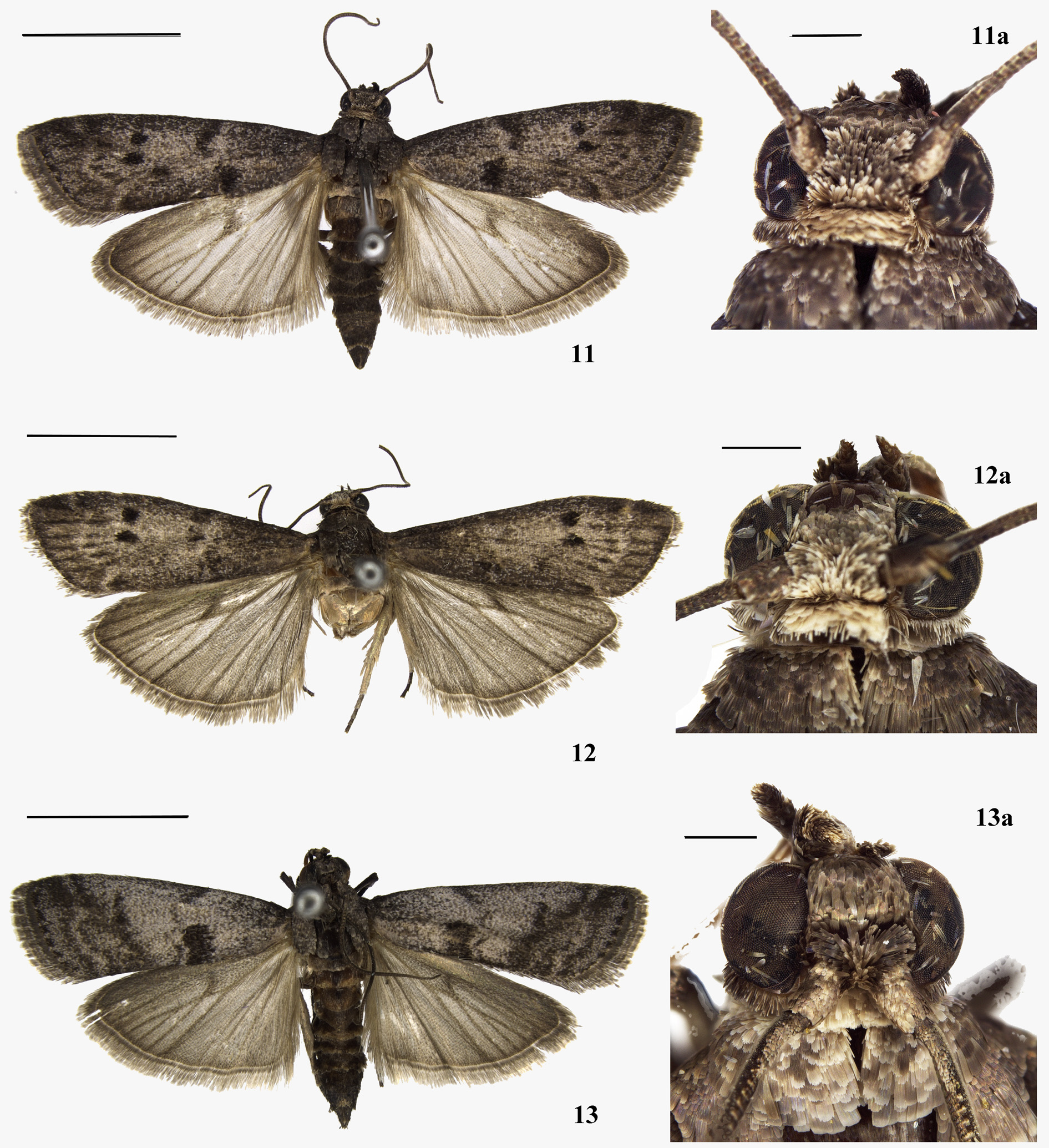
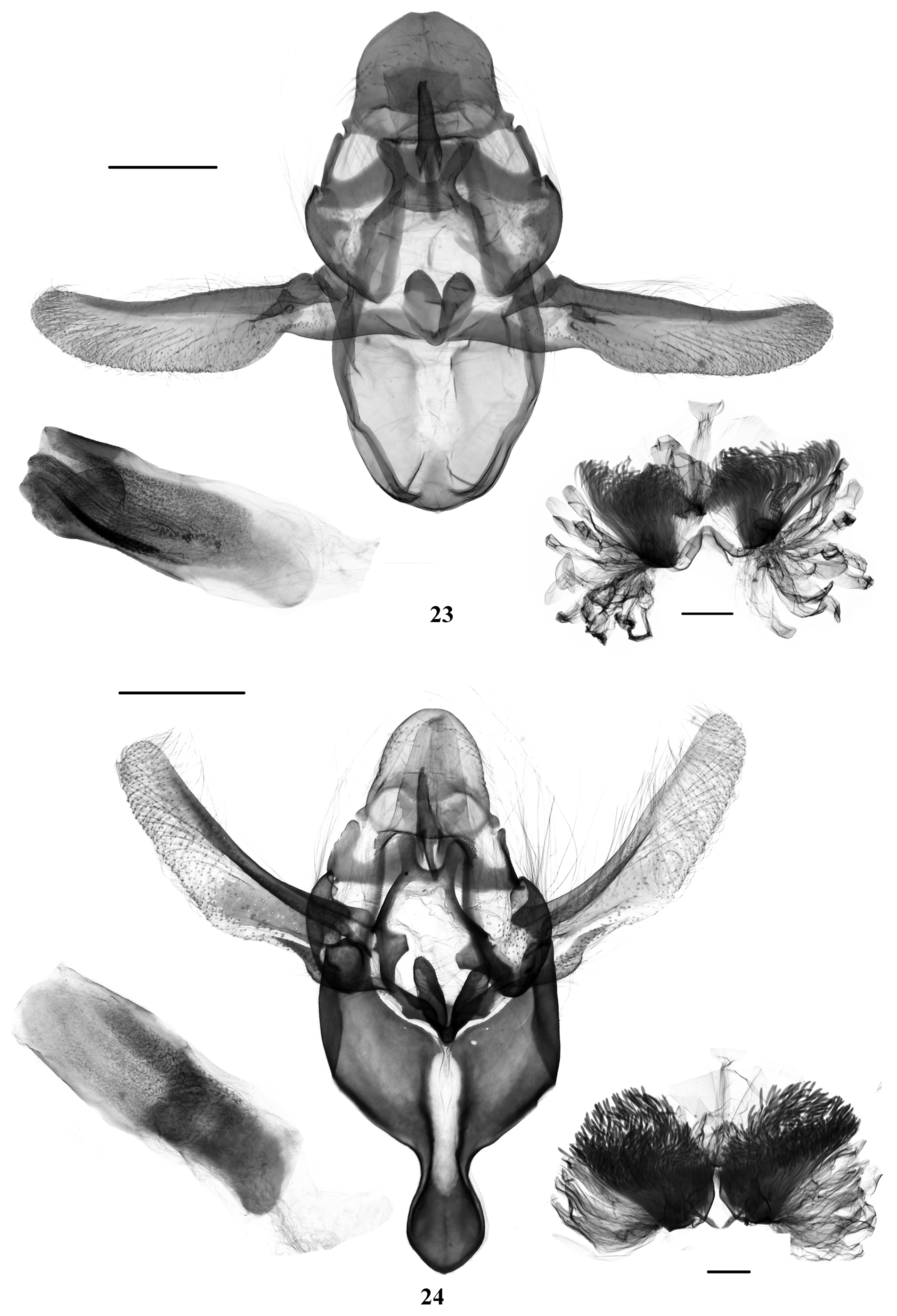
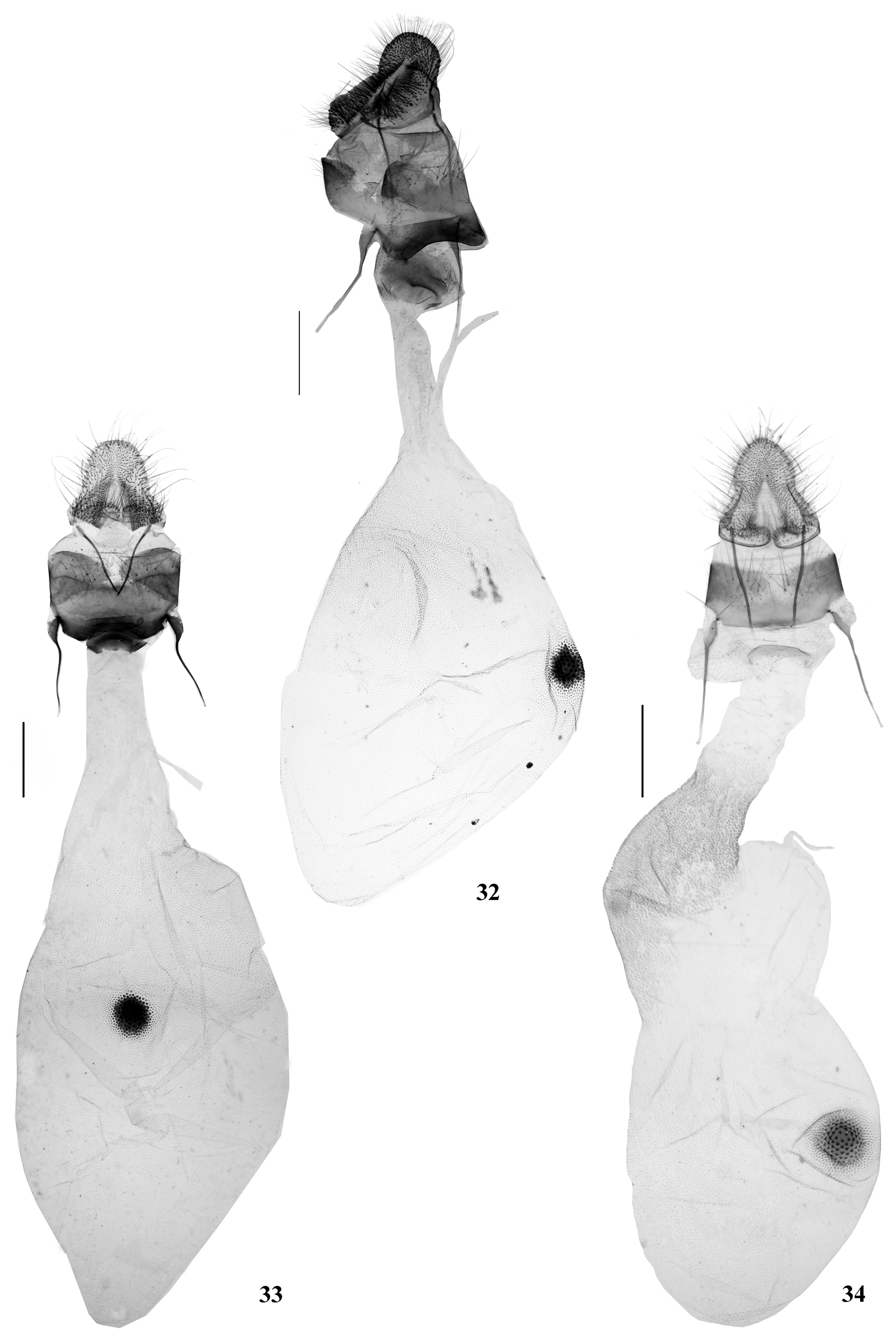
( Figs 1 View FIGURE 1 , 13 View FIGURES 11–13 , 24 View FIGURES 23–24 , 34 View FIGURES 32–34 )
Type material. Holotype. [ CHINA] ♂, Mt. Tianzhu, Xiamen (24°36’N 117°57’E), Fujian, 220 m, 24-VIII-2010, coll. Bingbing Hu & Jing Zhang. Paratypes. [ CHINA] Fujian: 84 ♂♂ , 83 ♀♀, same data as for holotype, except dated 13-VII̅ 24-VIII-2010, gen. slide Nos. LJY 10862m, LJY 10493 m, TKJ 14080 m, TKJ14079 f, LJY11372 f, TKJ 14091 m, LHX14176f; 2 ♀♀, Xiamen University (24°26’N 118°07’E), 85 m, 30-V-2010, 19-VI-2010, coll. Jing Zhang, gen. slide No. LLX11289 f; Guangxi: 1 ♂, 1 ♀, Jiman, Anchui (25°20’N 109°19’E), Rongshui County, 650 m, 2004-VII-16, coll. Jiasheng Xu, gen. slide Nos. LJY09168 m, LJY09167 f; 1 ♂, 1 ♀, Huaping , 950 m, 8- VIII-2006, coll. Weichun Li; 10 ♂♂ , 8 ♀♀, Mt. Yuanbao , 700 m, 11̅ 12-VIII-2006, coll. Weichun Li, gen. slide No. LJY 10524m; Hunan: 2 ♂♂, 3 ♀♀, Chengguan Town (28°31’N 112°09’E), Taojiang County, 26-VII-2004, coll. Yunli Xiao; 2 ♂♂ , 4 ♀♀, Maqiao, Baituo (27°49’N 112°56’E), Xiangtan city, 30-VII-2004, coll. Yunli Xiao, gen. slide Nos. RYD04819 m, RYD04820 f; 1 ♀, Yantang, Weishan , Xinhua County (27°36’N 111°18’E), 6-VIII- 2004, coll. Yunli Xiao; 2 ♂♂ , 3 ♀♀, Cangxi town , Xinhua County, 8-VIII-2004, coll. Yunli Xiao, gen. slide No. RYD04291 m; 1 ♀, Mt. Jinpen (25°00’N 114°51’E) , Jiangxi, 18-VII-2006, coll. Jiasheng Xu & Weichun Li.
Diagnosis. This new species can be differentiated from its allies by the viculum conspicuously constricted on anterior 1/ 3 in the male genitalia. It resembles D. paradichromella superficially, but differ in the male scape is 1.5 times as long as wide, the bell-shaped uncus, the finger-like postero-lateral lobe of the transtilla in the male genitalia, and the corpus bursae is double-kerneled peanut shaped in the female genitalia. In D. paradichromella , the male scape is 2.5 times as long as wide, the uncus is triangular, the postero-lateral lobe of the transtilla is right-angled triangle shaped, and the corpus bursae is elongate bag-shaped.
Description. Adult ( Fig. 13 View FIGURES 11–13 ) with wingspan 16.5̅22.0 mm. Head fuscous brown. Antenna brown, scape about 1.5 times as long as wide; male flagellum shallowly incurved basally, with a cluster of smaller scales. Labial palpus upturned just beyond vertex; first segment grayish white, second and third segments fuscous brown except whitetipped; second segment 1.7 times as long as third segment. Maxillary palpus brown. Patagium, tegula and thorax grayish brown. Forewing grayish brown, mottled with grayish white; antemedial line grayish white, from costal 1/3 from slightly oblique outward to dorsal 2/5, incurved at A, bordered outwardly by a black line and inwardly by an ovate, blackish brown patch near dorsum; discal spots blackish brown, fused, crescent; postmedial line grayish white, incurved at M 1 and CuA 2, edged outwardly with a grayish brown line and inwardly an indistinct broader band; terminal line black; cilia brown. Hindwing brown, cilia grayish brown. Foreleg blackish brown, mid and hindleg grayish brown mottled grayish white. Abdomen blackish brown, each segment darker in base than apex.
Male genitalia ( Fig. 24 View FIGURES 23–24 ). Uncus bell-shaped, about same length as width at proximal base. Gnathos about 5/8 length of uncus, tapered, apex slightly hooked. Transtilla produced in U shape posteriorly, postero-lateral lobe fingerlike, uniform in width, twice as long as width. Valva four times as long as wide, slightly narrower distally; clasper short and stout; costa clubbed, about 5/6 length of valva, apical 1/3 narrowed; sacculus 2/7 length of valva, sinuate in S shape, sharp at end. Juxta V-shaped; lateral lobe short, clubbed, as long as gnathos, three times as long as wide. Vinculum somewhat goblet-shaped, 1.4 times as long as maximum width, conspicuously constricted on anterior 1/3. Phallus stout, about same length as valva, with fascicle-shaped crimples.
Female genitalia ( Fig. 34 View FIGURES 32–34 ). Papillae anales large and wide, rounded at apex, with dense setae. Apophyses posteriores expanded at base, as long as apophyses anteriores. Eighth segment 1/3 as long as width. Antrum bowl-like, weakly sclerotized. Ductus bursae about half length of corpus bursae, smooth in posterior half, slightly broadened and granulated in anterior half. Corpus bursae twice as long as maximum width, double-kerneled peanut shaped, granulated near junction with ductus bursae; signum a rounded, invaginated cup consisting of concentrically arranged granules, situated at anterior 2/5 of corpus bursae. Ductus seminalis posterior margin of corpus bursae.
Distribution. China ( Fujian, Guangxi, Hunan, Jiangxi).
Etymology. The specific name is derived from the Latin prefix strict-, meaning constricted, and the terminology vinculum, referring to the vinculum of this species is conspicuously constricted on anterior 1/3.

No known copyright restrictions apply. See Agosti, D., Egloff, W., 2009. Taxonomic information exchange and copyright: the Plazi approach. BMC Research Notes 2009, 2:53 for further explanation.
|
Kingdom |
|
|
Phylum |
|
|
Class |
|
|
Order |
|
|
Family |
|
|
Genus |