
Rhagoletis, Loew, 1862
|
publication ID |
https://doi.org/10.2478/vzoo-2017-0056 |
|
DOI |
https://doi.org/10.5281/zenodo.6454470 |
|
persistent identifier |
https://treatment.plazi.org/id/110D2B02-3546-FFE6-FF71-8D7151CCD26E |
|
treatment provided by |
Felipe |
|
scientific name |
Rhagoletis |
| status |
|
Key to species of Rhagoletis of western Palearctic Region
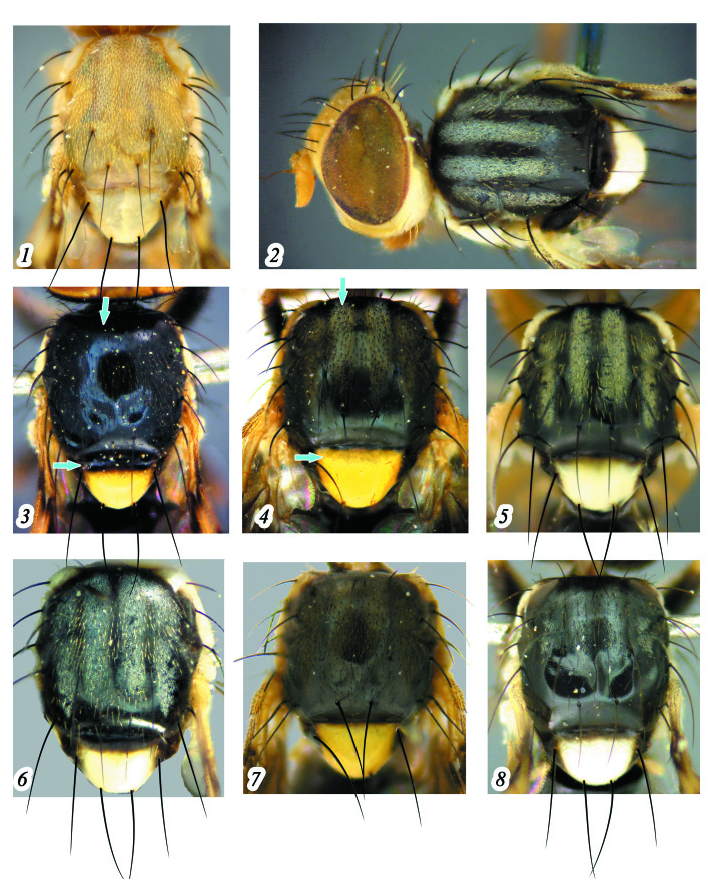
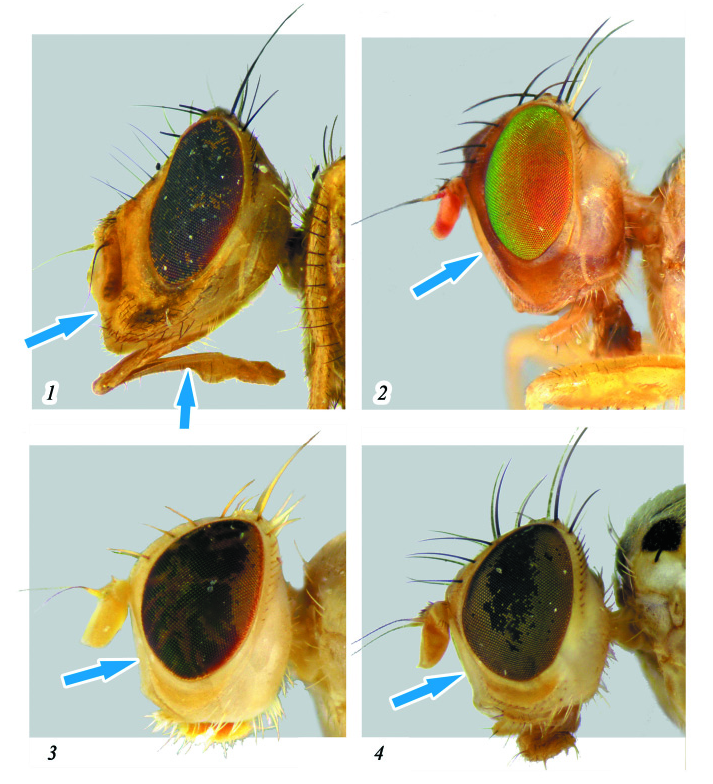
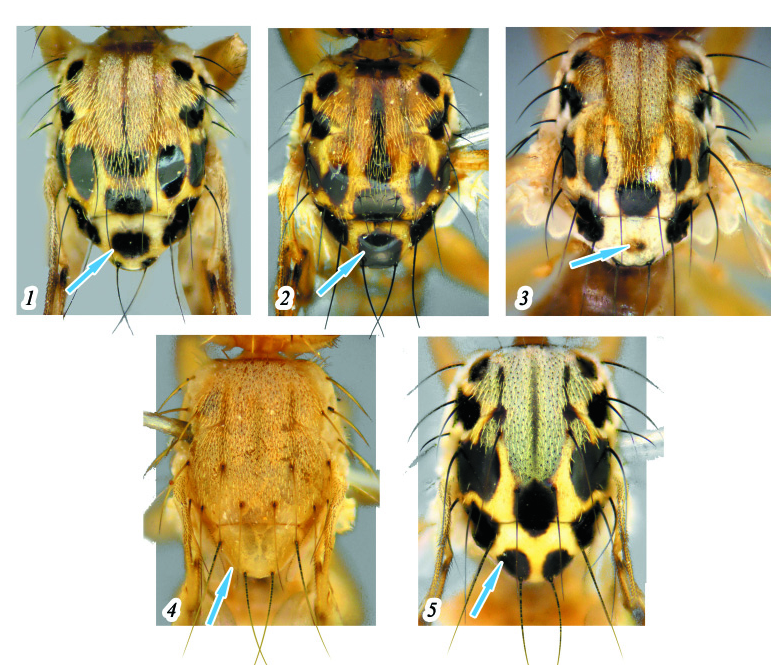
1. Mesonotum uniformly reddish-yellow (as on fig. 5 View Fig , 1 View Fig ), rarely brown posteriorly. ................................... 2.
— Scutum black; postpronotal lobe, sides and scutellum yellow or whitish (as on figs 5 View Fig , 2 View Fig –8)...................5.
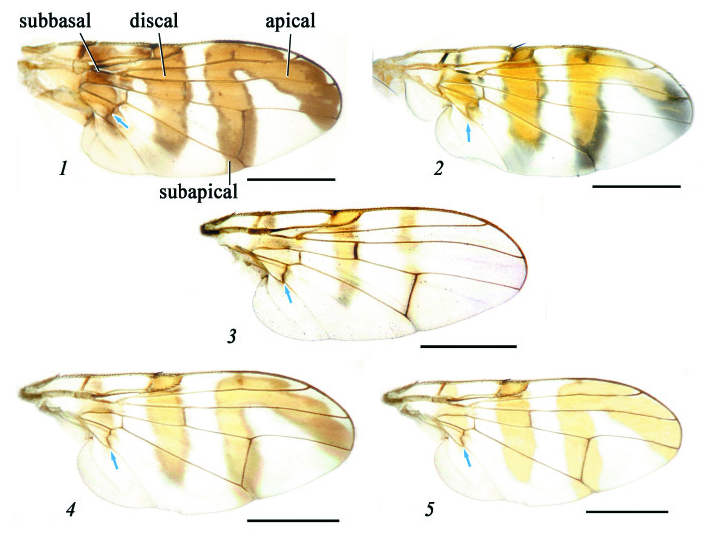
2. Wing with short accessory crossband in cell r 1 (figs 6, 1–3). ....................................................................... 3.
— Wing without accessory crossband in cell r 1 ( fig. 7 View Fig , 3 View Fig ). Larvae in walnut ( Juglans ) husk ............................`............................................................................................................................................. R. completa Cresson
3. Subapical band not extending anterior of vein R 2+3 (usually not beyond R 4+5) (fig. 6, 1). Larvae in Berberis ..................................................................................................................................................................... ................................................................................................................................................. R. meigenii (Loew)
— Subapical band reaching anterior wing margin (figs 6, 2–7). ...................................................................... 4.
4. Abdominal tergites 1–5 entirely reddish-yellow. Larvae in Rosa . ................................ R. alternata (Fallén)
— Abdominal tergites 1–5 black basally or entirely. Larvae in Berberis .. R. caucasica Kandybina & Richter
5. Wing with short accessory crossband in cells r 1 and r 2+3 (figs 6, 4–6). ........................................................ 6.
— Wing without accessory crossband in cell r 1 and r 2+3 ( figs 7 View Fig , 1 View Fig –8). .............................................................. 7.
6. Scutum with four silvery tomentose vittae; scutellum entirely yellow, except faint anterior band ( fig. 5 View Fig , 4 View Fig ). Wing with apical crossband crossing vein M and entering into cell m (figs 6, 5–6). Larvae in Lonicera and cherry fruits. ................................................................................................................ R. cerasi (Linnaeus)
— Scutum shining black; anterior margin of scutellum black ( fig. 5 View Fig , 3 View Fig ). Wing with apical crossband touching M apex, but not entering into cell m (fig. 6, 4). Larvae in Berberis seeds..... R. berberidis Jermy
7. Apical crossband simple, not bifurcated ( fig. 7 View Fig ). [Fore femur colouration variable.] Larvae not in cherries. .. 8.
— Apical crossband bifurcated posteriorly, usually with distal branch isolated as separate spot (fig. 6, 7). [Fore femur usually entirely yellow.] Larvae in cherries ................................................................................................................................................ R. cingulata (Loew)
8. Apical crossband entirely contiguous with apical wing margin ( figs 7 View Fig , 1–2 View Fig View Fig , 4 View Fig ). ........................................ 9.
— Apical crossband separated from apical wing margin by crescentic marginal hyaline area ( figs 7 View Fig , 5 View Fig –8)...............................................................................................................................................................................10.
9. Femora yellow. Larvae in Lonicera . ............................................................................ R. flavicincta Enderlein
— Femora black. ............................................................................... R. obsoleta Hering and R. sp. near obsoleta
10. Femora yellow. Larvae in Juniperus ................................................................................................................ 11.
— Femora black..................................................................................................................................................... 12.
11. Discal and subapical crossbands widely connected at least in cell r 2+3 ( fig. 7 View Fig , 5 View Fig ). ........... R. zernyi Hendel
— Discal and subapical crossbands entirely separated ( fig. 7 View Fig , 6). ............................... R. flavigenualis Hering
12. Smaller: WL ♂ <2.45mm (2.0–2.4mm), WL ♀ <2.55mm (2.2–2.5 mm). Larvae in Rhamnus ................ ........................................................................................................................ R. bagheera Richter & Kandybina
— Larger: WL ♂ > 2.45mm (2.5–3.2mm), WL ♀ > 2.55mm (2.6–3.2mm).................................................. 13.
13. Fore femur mostly black, except yellowish ventral side. Larvae in Hippophae . .............. R. batava Hering
— Fore femur mostly yellow, except brownish dorsal band. Larvae in Juniperus ..... R. sp. near flavigenualis


No known copyright restrictions apply. See Agosti, D., Egloff, W., 2009. Taxonomic information exchange and copyright: the Plazi approach. BMC Research Notes 2009, 2:53 for further explanation.