
Agrotis elegans ( Köhler, 1945 ), Kohler, 1945
|
publication ID |
https://dx.doi.org/10.11646/zootaxa.3771.1.1 |
|
publication LSID |
lsid:zoobank.org:pub:7C4129A9-DE4F-4CAE-AD88-EE14195A3E64 |
|
persistent identifier |
https://treatment.plazi.org/id/03F3FD57-FFFE-FFA3-58C0-FD21FA91FD9D |
|
treatment provided by |
Plazi |
|
scientific name |
Agrotis elegans ( Köhler, 1945 ) |
| status |
|
Agrotis elegans ( Köhler, 1945)
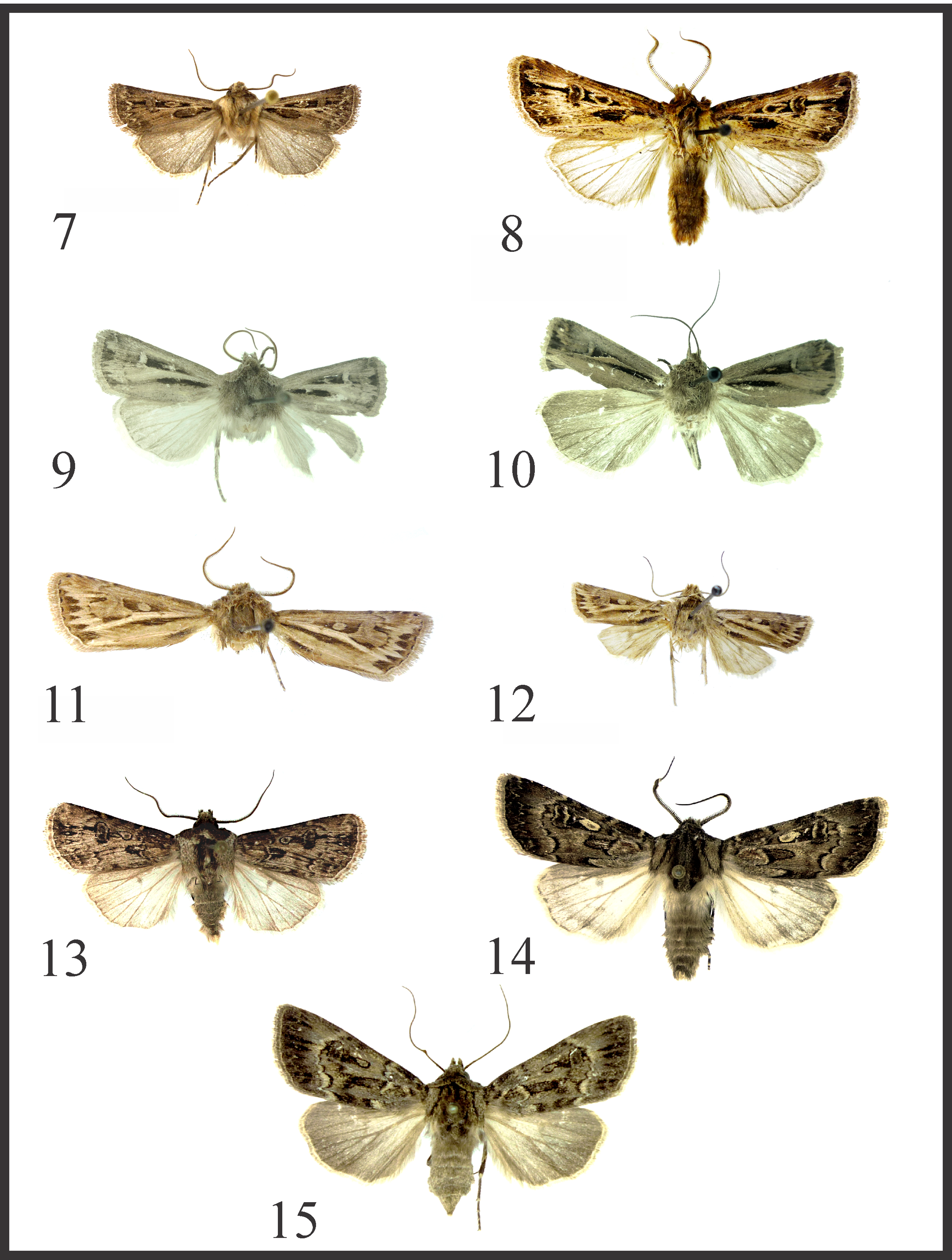
( Figs 14, 15 View FIGURES 7 – 15 , 51 View FIGURES 46 – 55 , 69 View FIGURES 64 – 73 , 82 View FIGURES 81 – 86 , 99 View FIGURES 94 – 99 )
Euxoa elegans Köhler, 1945: 89 , fig. 7 a. Holotype: ♂ [ Argentina ] Tierra del Fuego ( ZSM). Image examined. Allotype: ♀ same locality ( MACN). Examined.
Scotia elegans ( Köhler): Köhler, 1967 : 302 (new combination).
Agrotis elegans (Köhler) : Poole, 1989: 47 (new combination).
Diagnosis. Agrotis elegans differs from other South American species of Agrotis by the following combination of characters: 1) patagium concolorous with thorax and tegulum lighter than thorax; 2) claviform spot wide; 3) posterior margin of reniform spot prolonged basally through medial vein; 4) in male genitalia vesica 6–7 × as long as aedeagus; 5) in female genitalia posterior apophysis 2 × as long as anterior apophysis; and 6) corpus bursae 8 × as long as anterior apophysis.
Redescription. Male ( Fig. 14 View FIGURES 7 – 15 ). Head. Palpus whitish ventrally; frons central projection small, with raised edge of rough surface, projected anteriorly into a point, some specimens without this projection. Antenna basal 2 / 3 biserrate, widest at 1 / 5 its length, gradually tapering to apex, widest segment 2 × as wide as central shaft, anterior process 2 × as wide as posterior process. Thorax. Patagium with black medial line, some specimens with light gray submarginal line; tegulum gray, with black basal and submarginal lines. Forewing length 15.7–17.8 mm; ground color grayish brown to dark grayish brown; veins undifferentiated; subcostal band undifferentiated; basal area diffuse gray; basal line black, double, convex between veins; antemedial line black, double, basal margin diffuse, convex between veins, strongly extended as a sharp tooth between 1 A+ 2 A vein and posterior margin, coming near to medial line; claviform spot wide, dark grayish brown and black edged; orbicular spot variable in size, strongly oval, extending toward reniform spot, never contiguous, light brown, black edged with grayish brown center; reniform spot concolorous with orbicular spot, posterior margin prolonged basally through medial vein, distal margin never attached to postmedial line, with a streak extending between M 1 –M 2 veins to postmedial line; discal cell concolorous with ground color, with a black streak of variable width joining both spots; medial line faint, as a dark thick waved band; postmedial line black, single, concave between veins, distally edged by a light shade; subterminal line light brown and black edged, concave between veins, extended basally as arrows, longest ones between M 1 –M 2 –M 3 veins, arrows never contiguous with reniform streak; terminal line a series of darkish lunulae between veins; fringe light brown. Hind wing from fully iridescent to iridescent with veins and margins diffuse light brown; fringe iridescent. Abdomen. Concolorous with forewing ground color. Genitalia ( Fig. 51 View FIGURES 46 – 55 ). Clavus barely differentiated as an area of piliform setae. Ampulla 1 / 5 × as long as valve, basal 1 / 3 expanded, then narrowed to 1 / 3 its widest diameter; saccus subtriangular. Vesica ( Fig. 69 View FIGURES 64 – 73 ) 6–7 × as long as aedeagus, consisting of 1 1 / 2 wide loop, right basal diverticulum subtriangular, basal spined band present, vesica gradually swollen on apical 1 / 4, in some specimens it duplicates minor diameter. Female ( Fig. 15 View FIGURES 7 – 15 ). Differences from male. Forewing length: 16.3–18.2 mm; antenna filiform; hind wing diffuse dark brown with light brown fringe. Genitalia ( Fig. 82 View FIGURES 81 – 86 ). Posterior apophysis 2 × as long as anterior apophysis; ductus bursae 4 × as long as anterior apophysis; corpus bursae 8 × as long as anterior apophysis, signum absent, apex globose; appendix bursae 4 × as long as corpus bursae, consisting of 1 1 / 2 wide loop, apex globose; ductus seminalis originating laterally very close to corpus bursae apex.
Distribution. Restricted to Argentinean Patagonia ( Fig. 99 View FIGURES 94 – 99 ).
Material examined. ( 47 ♂, 11 ♀). ARGENTINA : Neuquén. Arroyo Pantojo, 1100m, ♂ ♀ 12 -I- 1985 (M. y P. Gentili) (IADIZA); Chapelco, Refugio Graeff, 1750m, ♀ 12 -I- 1977 (M. Gentili) (IADIZA), ♂ 26 -XII- 1980 (M. Gentili) (IADIZA); Chapelco Lenga, 1700m, ♂ 11 -I- 1983 (M y P. Gentili) (IADIZA); Copahue, 1925m, ♂ ♀ 18 -I- 1964 (M. Gentili) (IADIZA), ♀ 24 -I- 1969 (M. Gentili) (IADIZA), ♀ 25 -I- 1969 (M. Gentili) (IADIZA), ♂ 20 -II- 1973 (M. Gentili) (IADIZA), ♂ ♀ 16 -I- 1980 (M. Gentili) (IADIZA); Cordón Chapelco, 1750m, 4 ♀ 3 -I- 1967 (M. Gentili) (IADIZA), ♂ 1 -I- 1982 (M. y P. Gentili) (IADIZA), 2 ♂ 12 -I- 1982 (M. y P. Gentili) (IADIZA), 15 ♂ ♀ 11 - I- 1983 (M. y P. Gentili) (IADIZA), 20 ♂ 22 -I- 1985 (M. y P. Gentili) (IADIZA); Moquehue Icalma, 1250m, 2 ♂ 2 - III- 1984 (M. y P. Gentili) (IADIZA); Pampa Quillen, 1250m, ♂ 12 -XII- 1967 (M. Gentili) (IADIZA).


No known copyright restrictions apply. See Agosti, D., Egloff, W., 2009. Taxonomic information exchange and copyright: the Plazi approach. BMC Research Notes 2009, 2:53 for further explanation.
|
Kingdom |
|
|
Phylum |
|
|
Class |
|
|
Order |
|
|
Family |
|
|
Genus |

Agrotis elegans ( Köhler, 1945 )
| Blas, Germán San 2014 |
Agrotis elegans (Köhler)
| Poole 1989: 47 |
Scotia elegans ( Köhler): Köhler, 1967
| Kohler 1967: 302 |
Euxoa elegans Köhler, 1945 : 89
| Kohler 1945: 89 |