
Micridium foveatum, Darby, Michael, 2017
|
publication ID |
https://doi.org/10.11646/zootaxa.4242.2.2 |
|
publication LSID |
lsid:zoobank.org:pub:0DD1868D-4EF5-4FB7-AEE9-372644800A79 |
|
persistent identifier |
https://treatment.plazi.org/id/03E64B08-E321-FFFD-8585-5B99FDE5EE87 |
|
treatment provided by |
Plazi |
|
scientific name |
Micridium foveatum |
| status |
sp.n. |
Micridium foveatum sp.n.
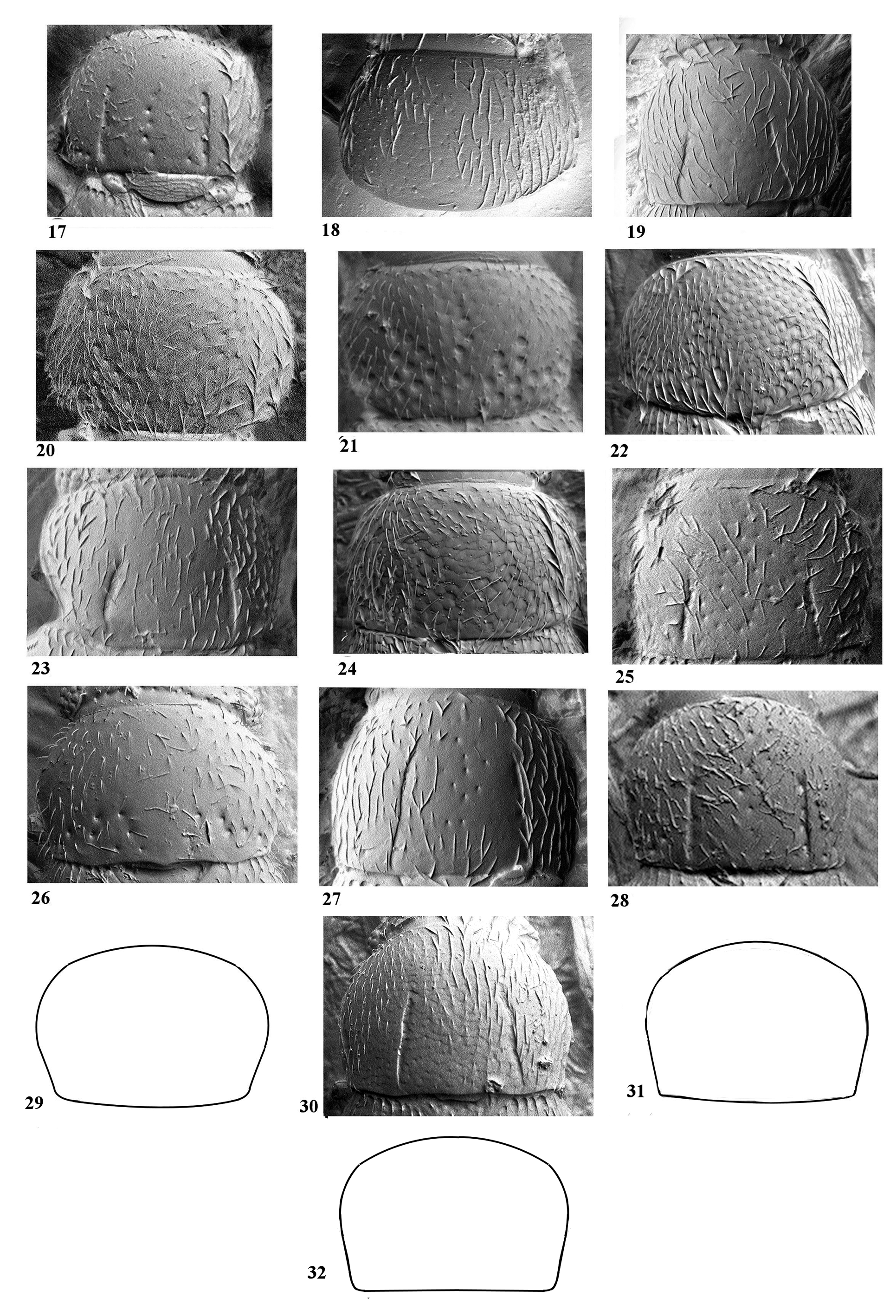
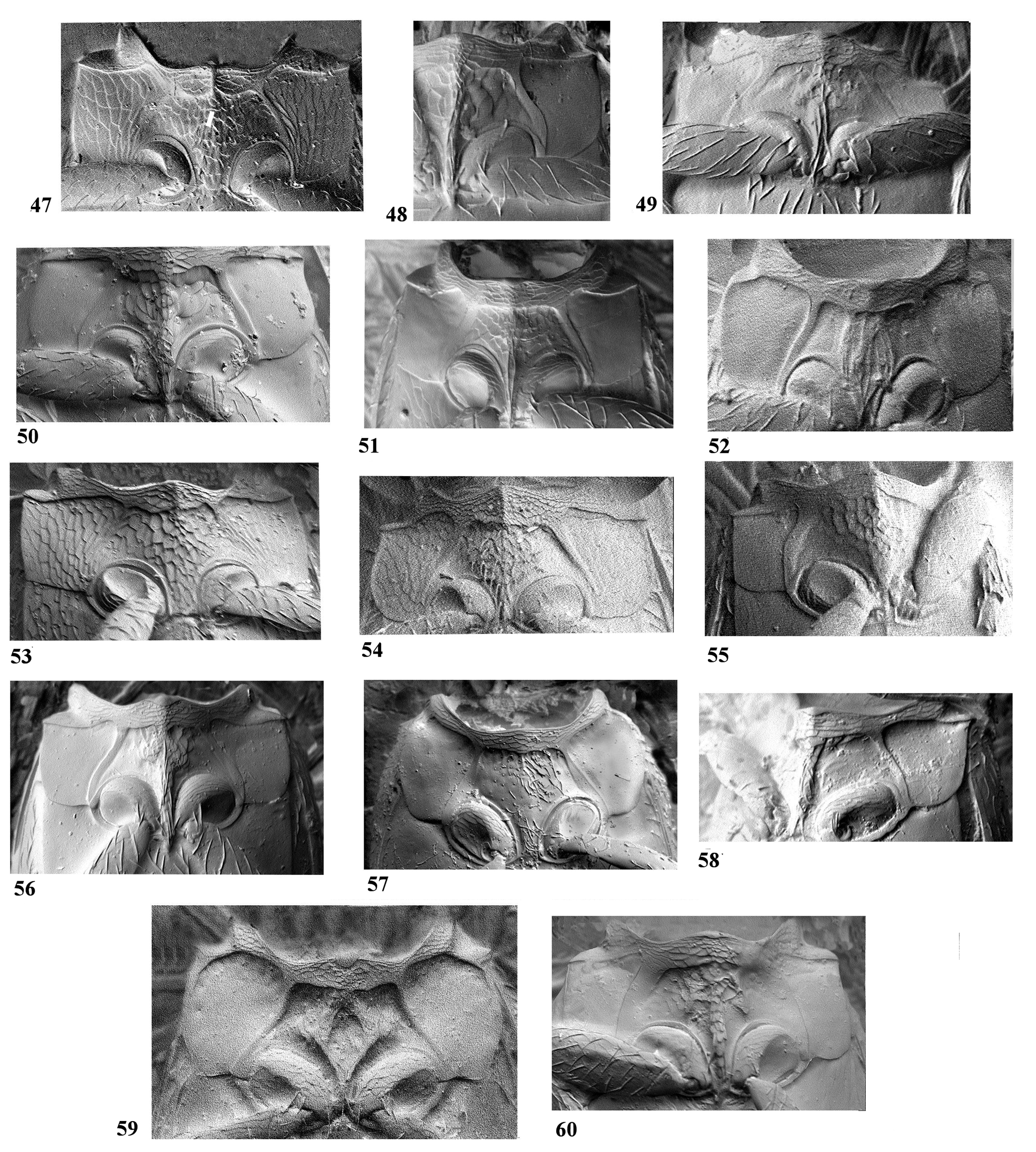
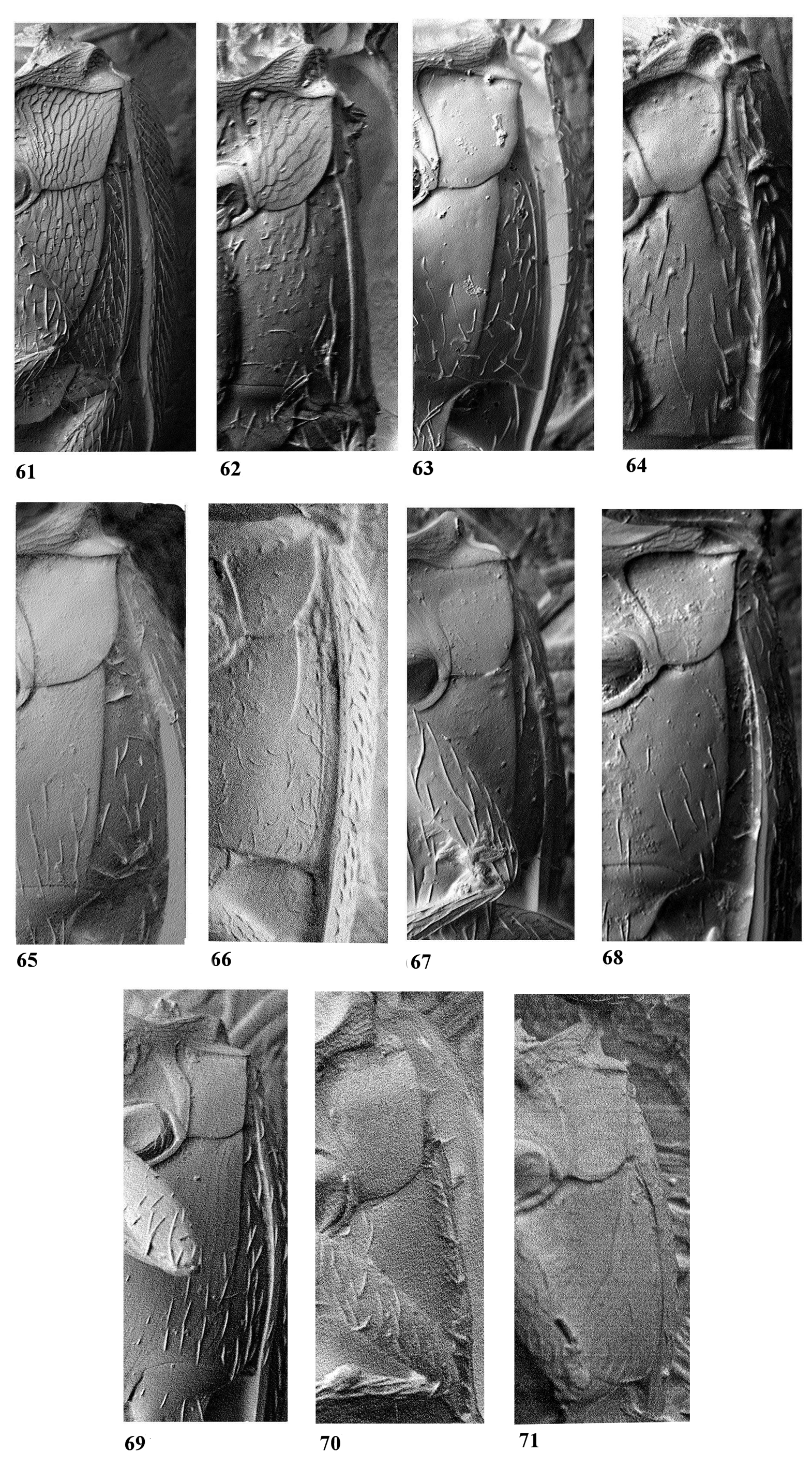
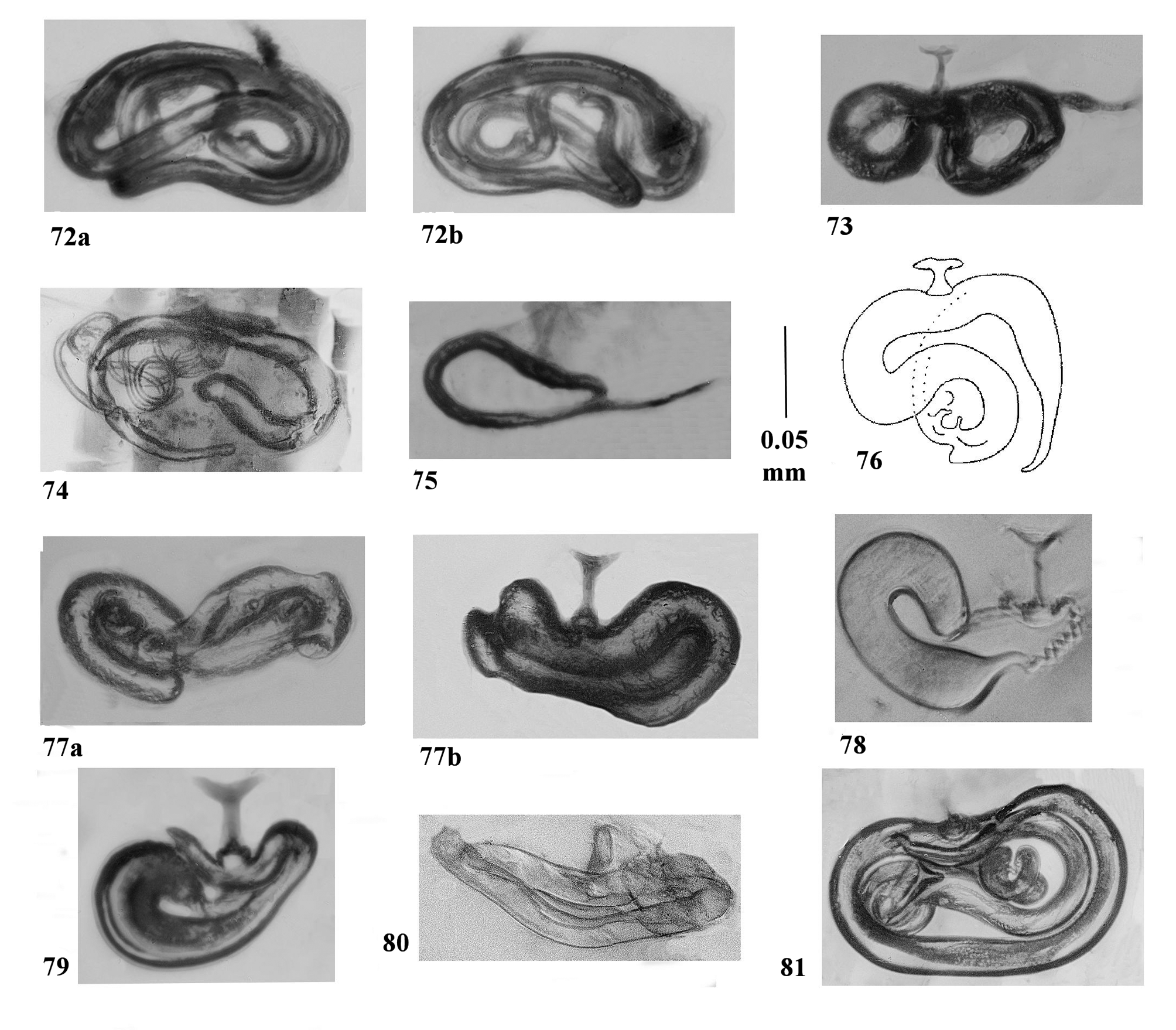
( Figs. 13 View FIGURES 1 – 14 , 21 View FIGURES 17 – 32 , 40 View FIGURES 33 – 41 , 46 View FIGURES 42 – 46 , 59 View FIGURES 47 – 60 , 64 View FIGURES 61 – 71 , 75 View FIGURES 72 – 81 , 85, 91, 102)
Habitus Fig. 13 View FIGURES 1 – 14 . Length 0.64 mm. Colour dark brown, pubescence, antennae and legs dusky yellow. Length of antennomeres 3–11 0.24 mm, antennomere 11 with branched sensillae, Fig. 46 View FIGURES 42 – 46 . Width across eyes 0.18 mm. Mentum: sides almost parallel expanded laterally at anterior corners, submentum with 3 setae, Fig. 40 View FIGURES 33 – 41 . Pronotum without linear depressions but with two groups of large setal depressions (numbers and positions slightly variable between specimens and some with a few scattered centrally) length 0.16 mm, width 0.22 mm, Fig. 21 View FIGURES 17 – 32 . Elytra length 0.42 mm, width 0.28 mm. Mesoventrum: keel narrow between mesocoxae, splitting anteriorly into two short projections which reach half way to the collar; collar with a small semicircular cap medially placed on the anterior margin and a medially placed bifid posterior projection, Fig. 59 View FIGURES 47 – 60 . Mesepiventra without reticulation, sinuate in posterior half with rounded hind angles. Metaventrum: metepiventral sutures short reaching +/– 1/4 length of the sclerite, Fig. 64 View FIGURES 61 – 71 . Pygidium with a sharp apical point Fig. 102. Wings of usual ptiliid type.
Male: posterior intercoxal process of metaventrum with a fringe of 8 flattened setae extending posteriorly beyond the metacoxal plates. Aedeagus: shape difficult to interpret, Fig. 85.
Female: spermatheca Fig. 75 View FIGURES 72 – 81 .
Etymology. Named after the pronotal depressions.
Diagnosis. The form of the mesoventrum quickly distinguishes this species from all others.
Type data: Holotype: ♀, Chile, Llanquihue Pr., Lago Chapo , 13.5 km E Correntoso, site 656, Valdivian rainfor., window trap, 310m, 16–27.xii.1982, A. Newton & M. Thayer ( FMNH) . Paratypes: 16 examples, same data as holotype ( FMNH, BMNH) ; 3 examples, Chile, Valdivia Pr., 4.1km W Anticura, trap site 663, Valdivian rainfor., window trap, 270m, 19–25.xii.1982, A. Newton & M. Thayer ( FMNH) ; 2 examples, Chile, Valdivia Pr., 4.1km W Anticura, trap site 663, Valdivian rain for., leaf litter on forest floor, 270m, 19–25.xii.1982, A. Newton & M. Thayer ( FMNH) ; 1 example, Chile, Osorno Pr., Parque Nac. Puyehue, Antillanca road, trap site 661, Valdivian rainfor., 690m, 18–24.xii.1982, A. Newton & M. Thayer ( FMNH) ; 11 examples, Chile, Osorno Pr., Parque Nac. Puyehue, 4.1 km E Anticura, trap site 662, Valdivian rainfor., forest leaf and log litter, 430m, 19–26.xii.1982, A. Newton & M. Thayer ( FMNH, BMNH) .



| FMNH |
Field Museum of Natural History |
No known copyright restrictions apply. See Agosti, D., Egloff, W., 2009. Taxonomic information exchange and copyright: the Plazi approach. BMC Research Notes 2009, 2:53 for further explanation.
|
Kingdom |
|
|
Phylum |
|
|
Class |
|
|
Order |
|
|
Family |
|
|
Genus |