
Pteroplatus, Buquet, 1840
|
publication ID |
https://doi.org/10.11646/zootaxa.4658.1.3 |
|
publication LSID |
lsid:zoobank.org:pub:66635A77-5404-4A2E-BCEC-EF60B3DDA24E |
|
persistent identifier |
https://treatment.plazi.org/id/03D887ED-FF8B-250C-FF5E-70F6FA265A2D |
|
treatment provided by |
Plazi |
|
scientific name |
Pteroplatus |
| status |
|
Key to species of Pteroplatus
1. Posterior area of the elytra without small gibbosities......................................................... 2
- Posterior area of the elytra with small, subcircular gibbosities.................................................. 6
2(1). Elytra reticulated ( Figs. 10, 14, 15, 17 View FIGURES 10–17 ). Bolivia........................................... P. anchora Belon, 1903
- Elytra not reticulated.................................................................................. 3
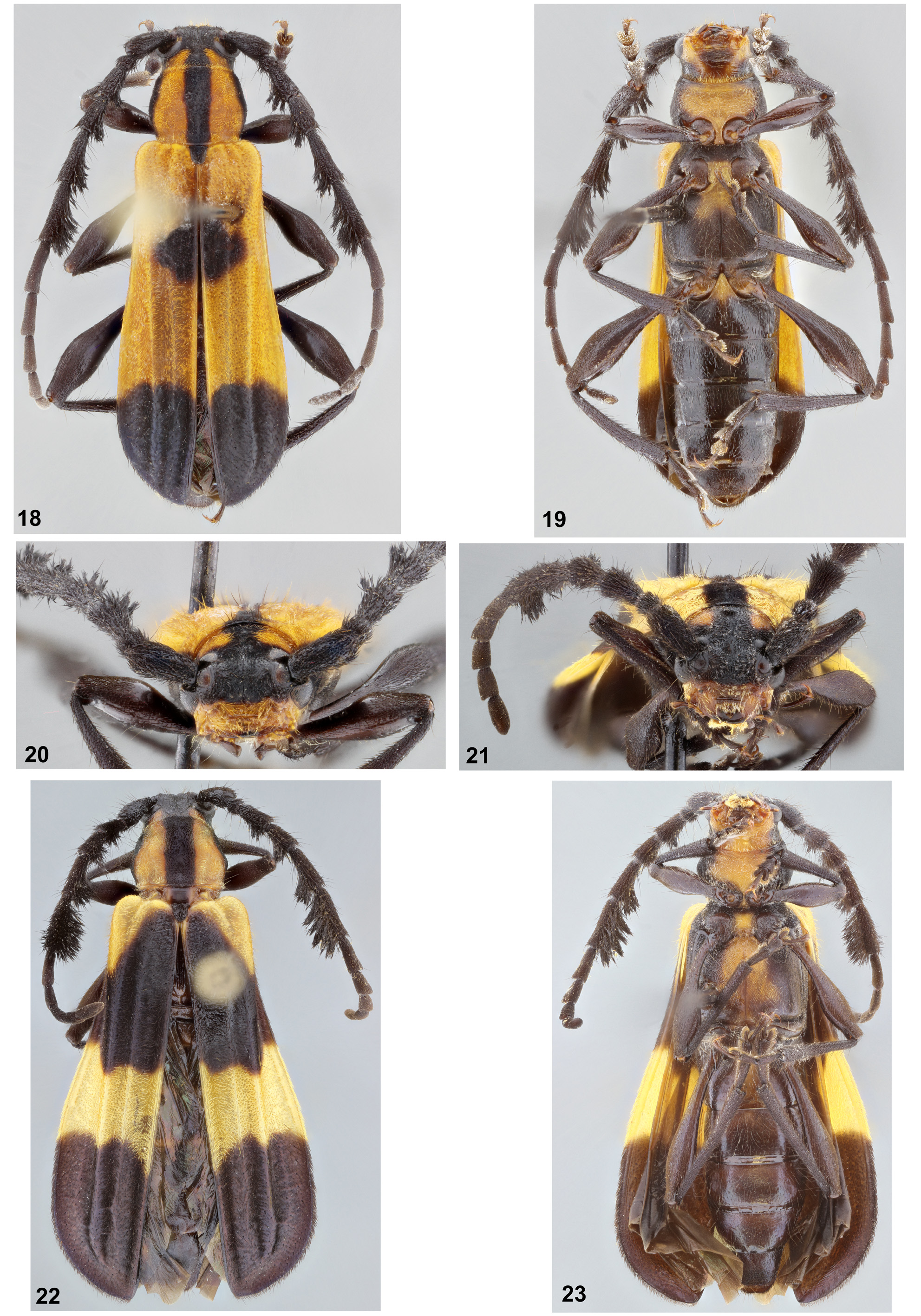
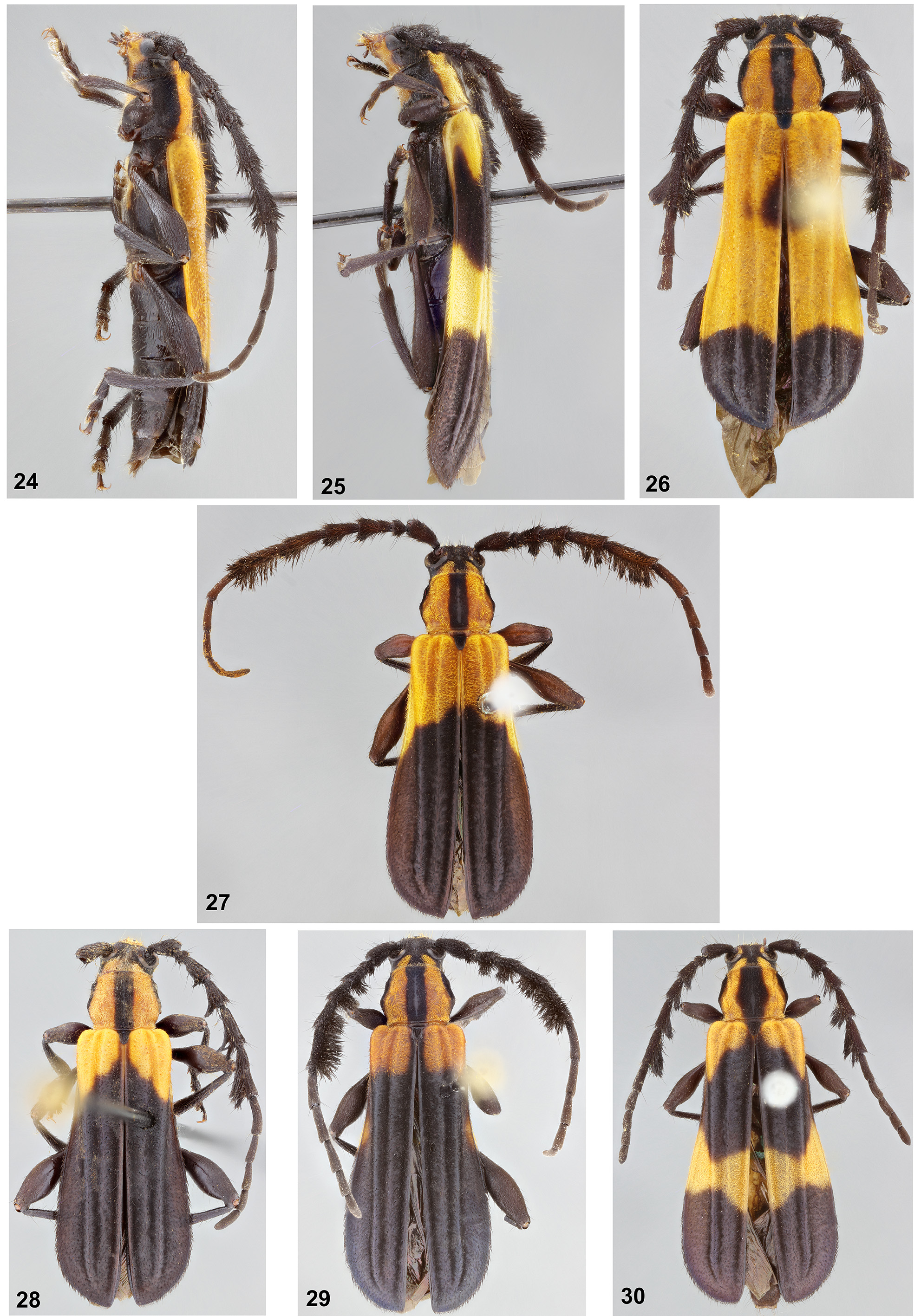
3(2). Antennomeres III–V with long tufts of setae ventrally, and antennomere VI with a long tuft along entire ventral surface ( Figs. 18–30 View FIGURES 18–23 View FIGURES 24–30 ). Mexico ( Veracruz, Tamaulipas, Chiapas), Guatemala, Honduras, Nicaragua....... P. quadriscopulatus Bates, 1880
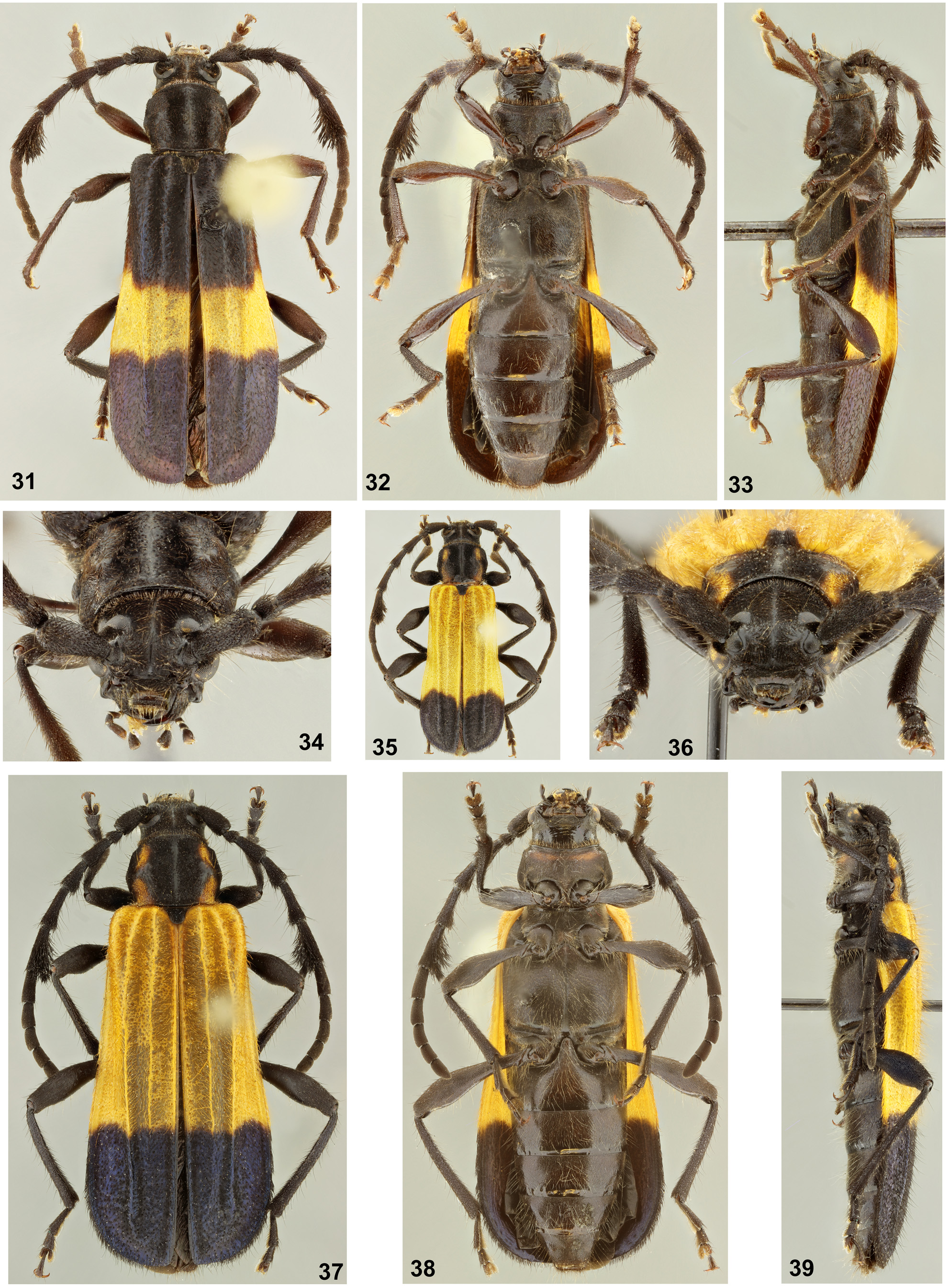
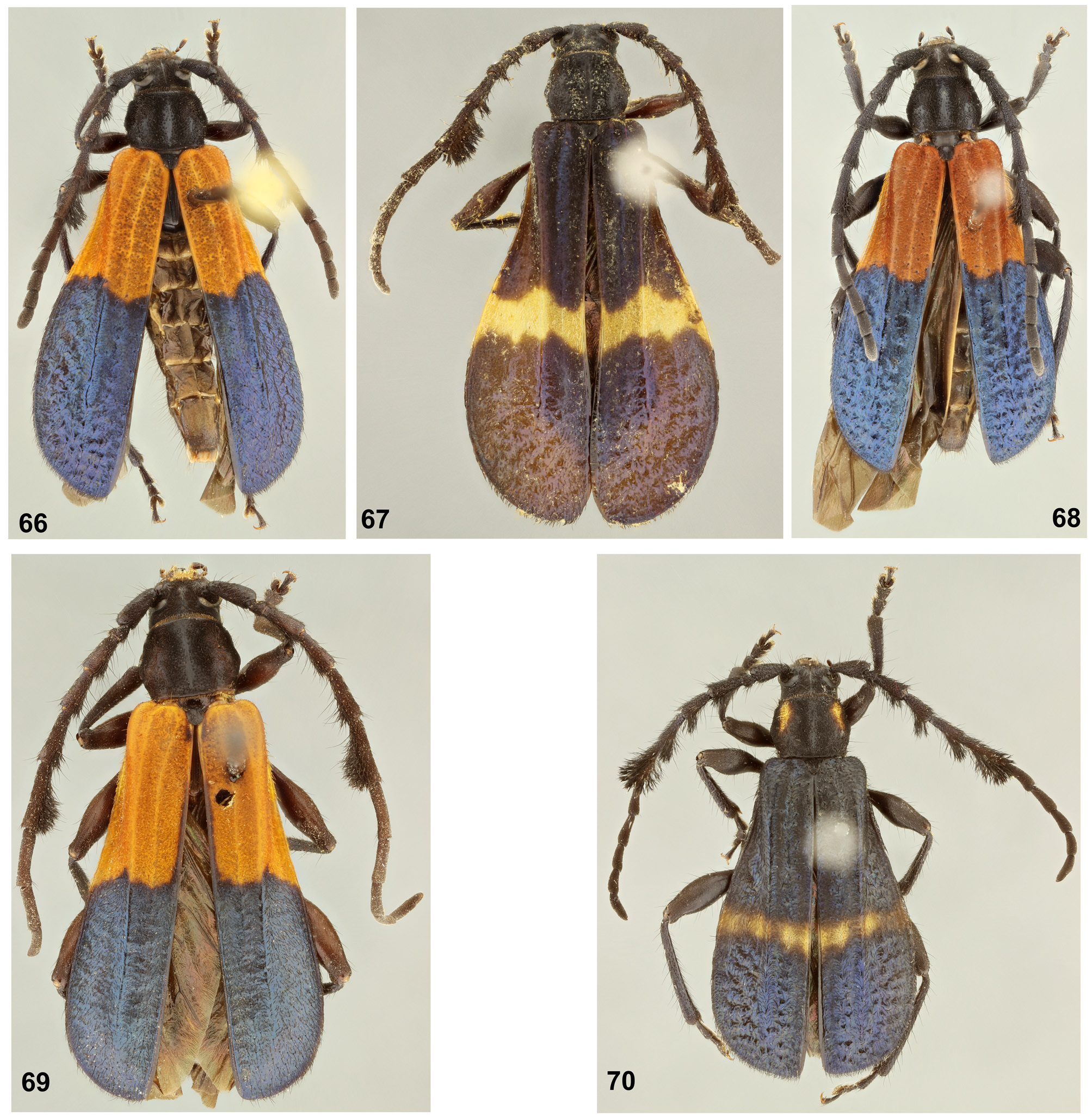
- Tuft of setae on ventral side of the antennomeres III–V moderately short, and antennomere VI with ventral tuft covering or not the entire ventral surface ( Figs. 31 View FIGURES 31–39 , 40 View FIGURES 40–42 , 68 View FIGURES 66–70 , 86 View FIGURES 79–90 ).............................................................. 4
4(3). Antennomere VII slightly longer than IV ( Figs. 31–39 View FIGURES 31–39 ). Colombia ( Cesar), Ecuador ( Loja)........... P. luculentus sp. nov.
- Antennomere VII distinctly longer than IV ( Figs. 40 View FIGURES 40–42 , 68 View FIGURES 66–70 , 86 View FIGURES 79–90 )................................................... 5
5(4). Elytra distinctly pubescent ( Figs. 40–42 View FIGURES 40–42 ). Colombia ( Magdalena), Venezuela.................... P. variabilis Sallé, 1850
- Elytra not pubescent, with decumbent setae very sparse ( Figs. 43–47 View FIGURES 43–47 ). Peru......... P. pallidicolor Martins & Galileo, 2013
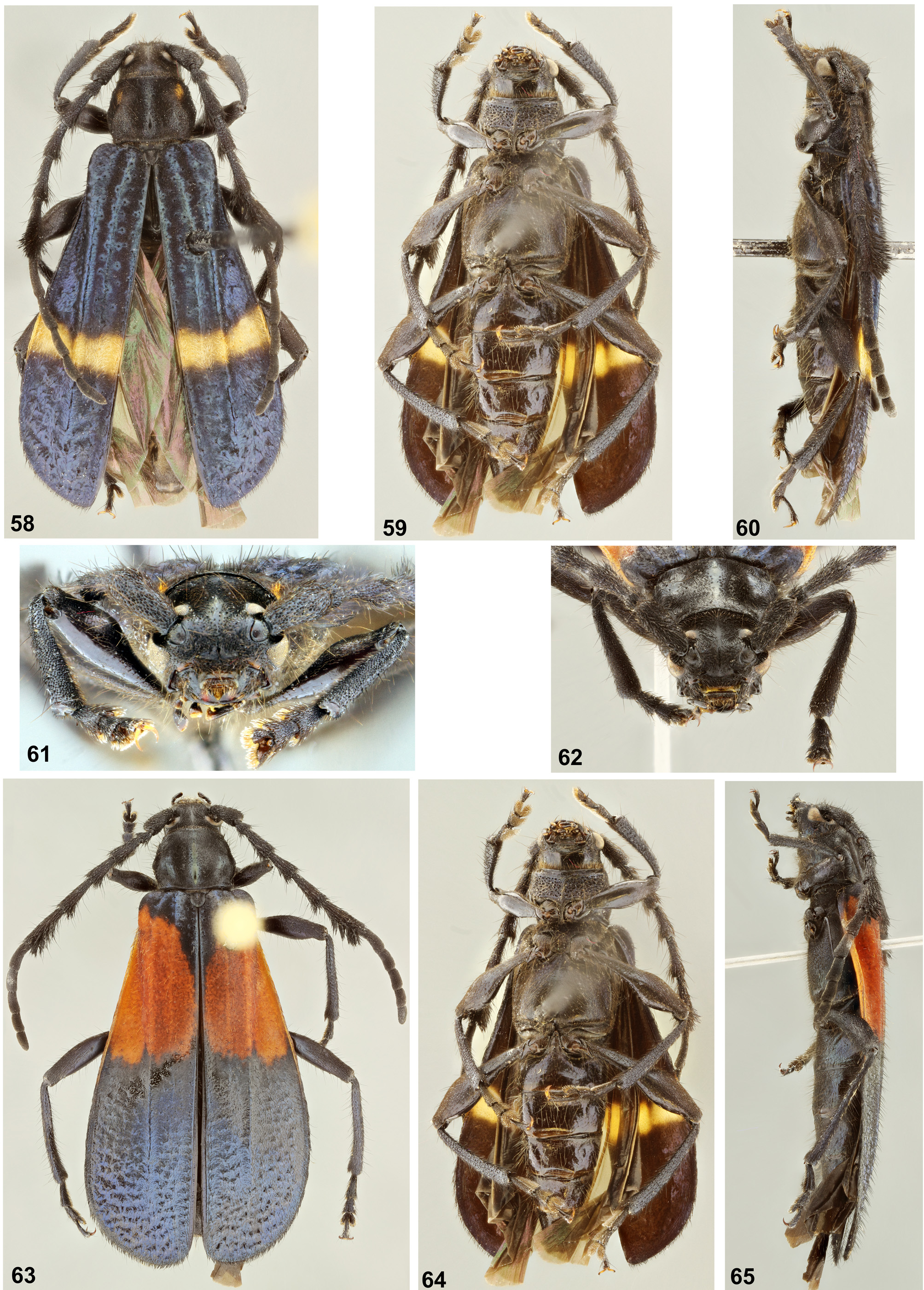
6(1). Small gibbosities of the elytra covering entire posterior half and, usually, following laterally toward anterior third or quarter ( Figs. 48–70 View FIGURES 48–57 View FIGURES 58–65 View FIGURES 66–70 ). Colombia ( Boyacá, Cundinamarca, Norte de Santander, Putumayo), and Ecuador ( Loja, Napo).............................................................................................. P. pulcher Buquet, 1840
- Small gibbosities of the elytra covering, at most, the posterior third of the elytra ( Figs. 71–96 View FIGURES 71–78 View FIGURES 79–90 View FIGURES 91–96 ). Colombia ( Cundinamarca, Boyacá, Quindío, Santander), Peru ( Junín)............................................... P. gracilis Buquet, 1840






No known copyright restrictions apply. See Agosti, D., Egloff, W., 2009. Taxonomic information exchange and copyright: the Plazi approach. BMC Research Notes 2009, 2:53 for further explanation.