
Diponthus nigroconspersus ( Stål, 1861 )
|
publication ID |
https://doi.org/10.11646/zootaxa.5336.1.2 |
|
publication LSID |
lsid:zoobank.org:pub:F31F6A72-21B8-455D-8E64-3CE59613599C |
|
DOI |
https://doi.org/10.5281/zenodo.8270877 |
|
persistent identifier |
https://treatment.plazi.org/id/03D4221B-6D09-D422-2DC2-42F9FE6ABD44 |
|
treatment provided by |
Plazi |
|
scientific name |
Diponthus nigroconspersus ( Stål, 1861 ) |
| status |
|
Diponthus nigroconspersus ( Stål, 1861) stat. resurr.
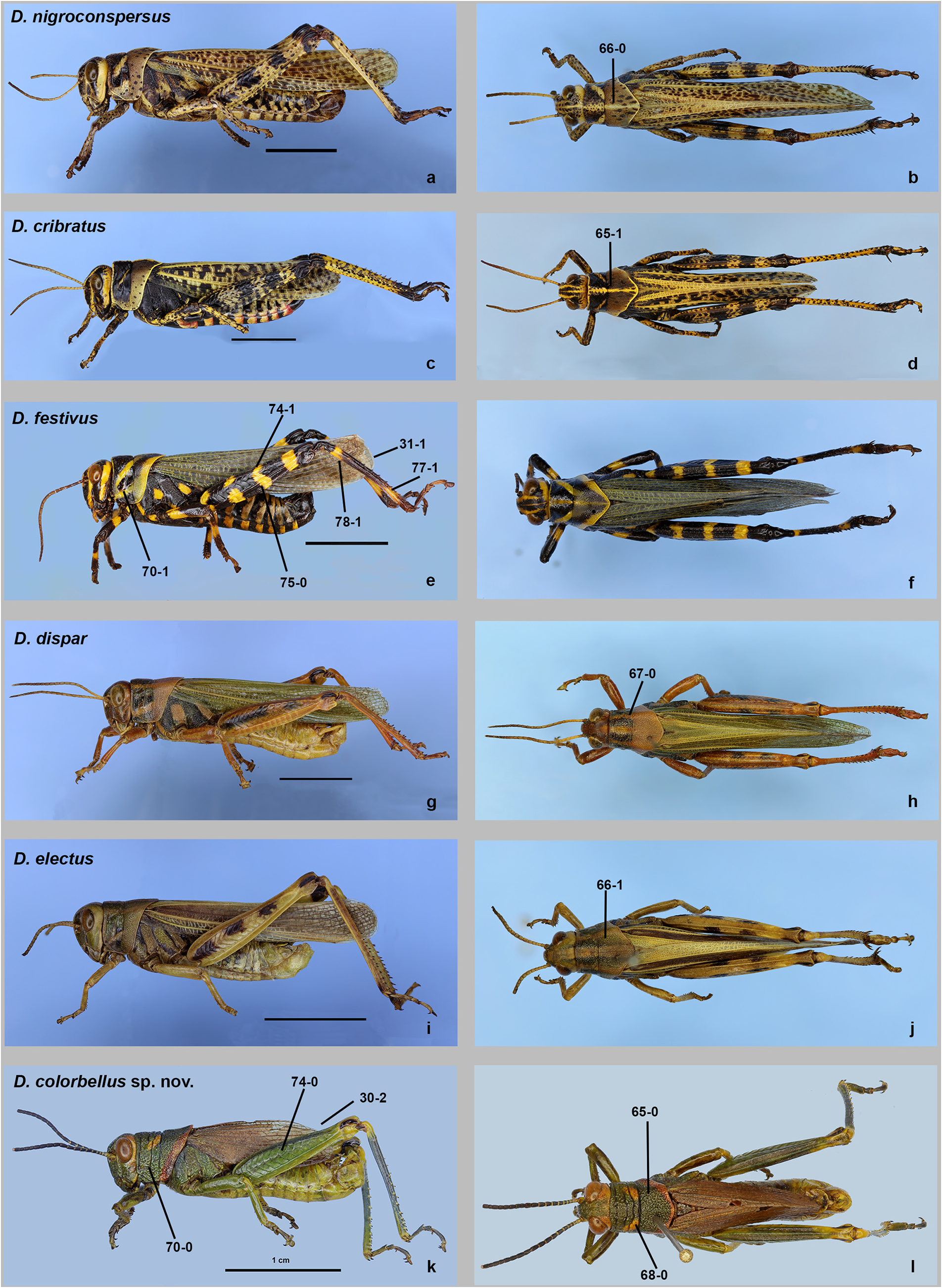
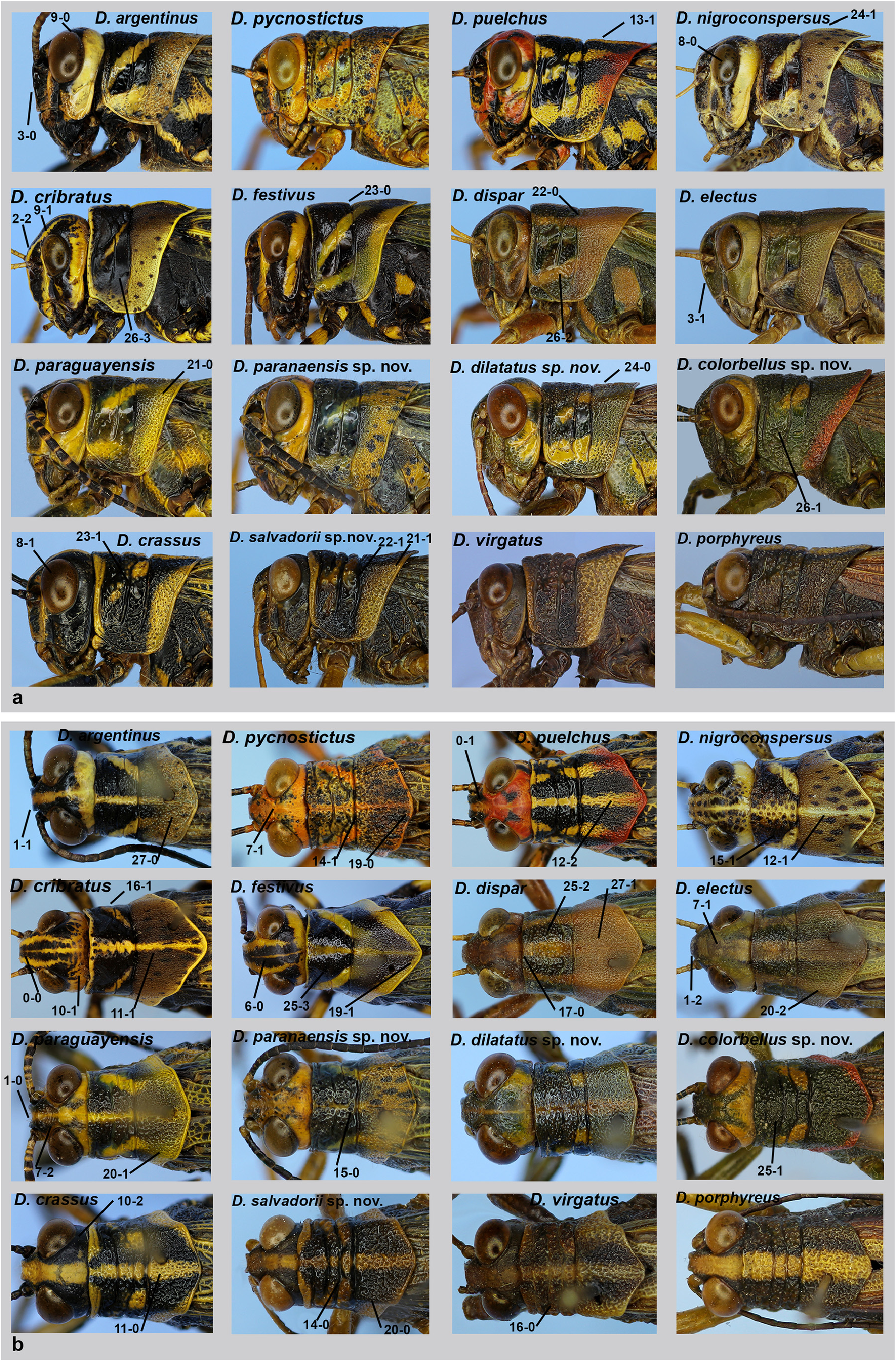
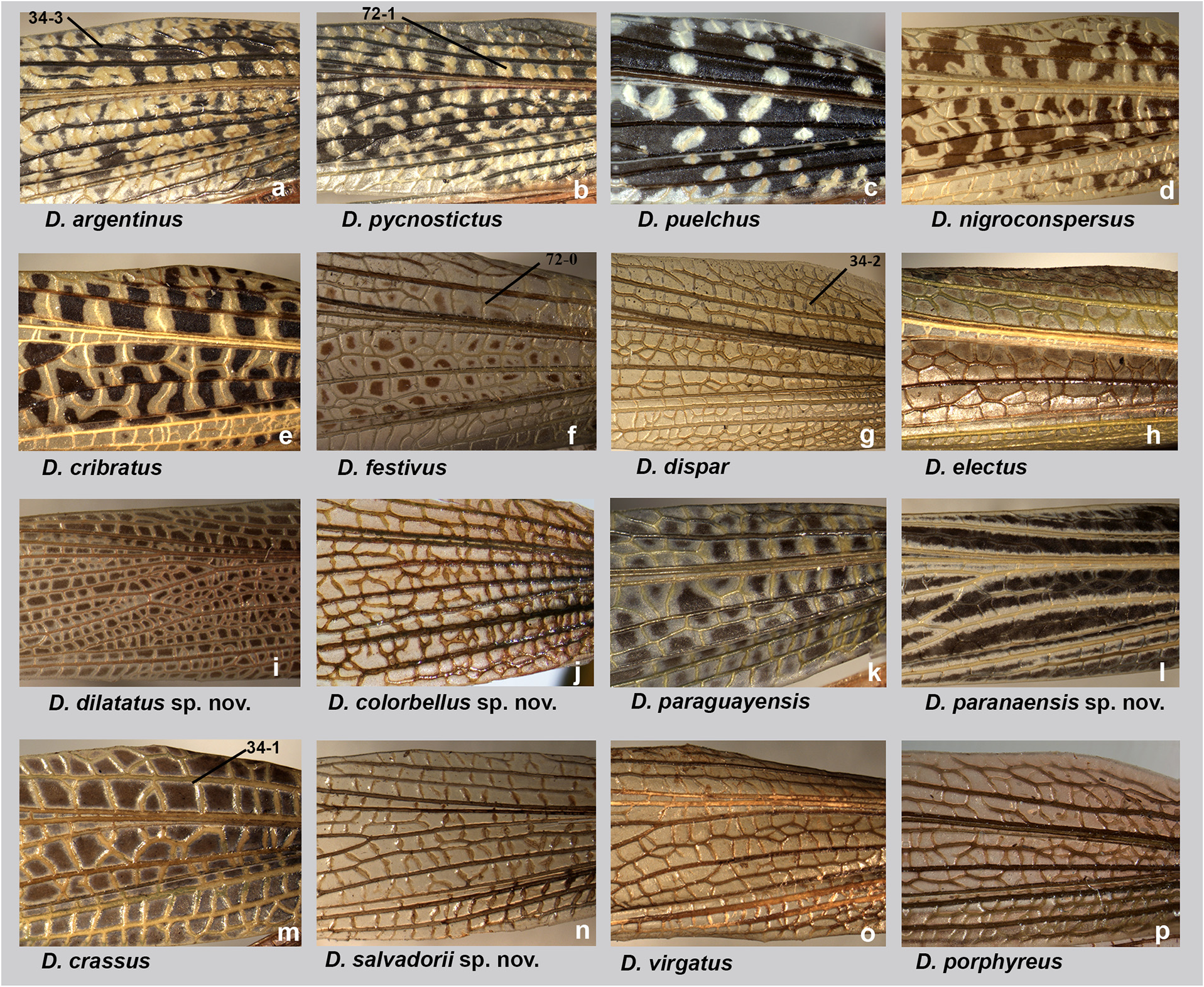
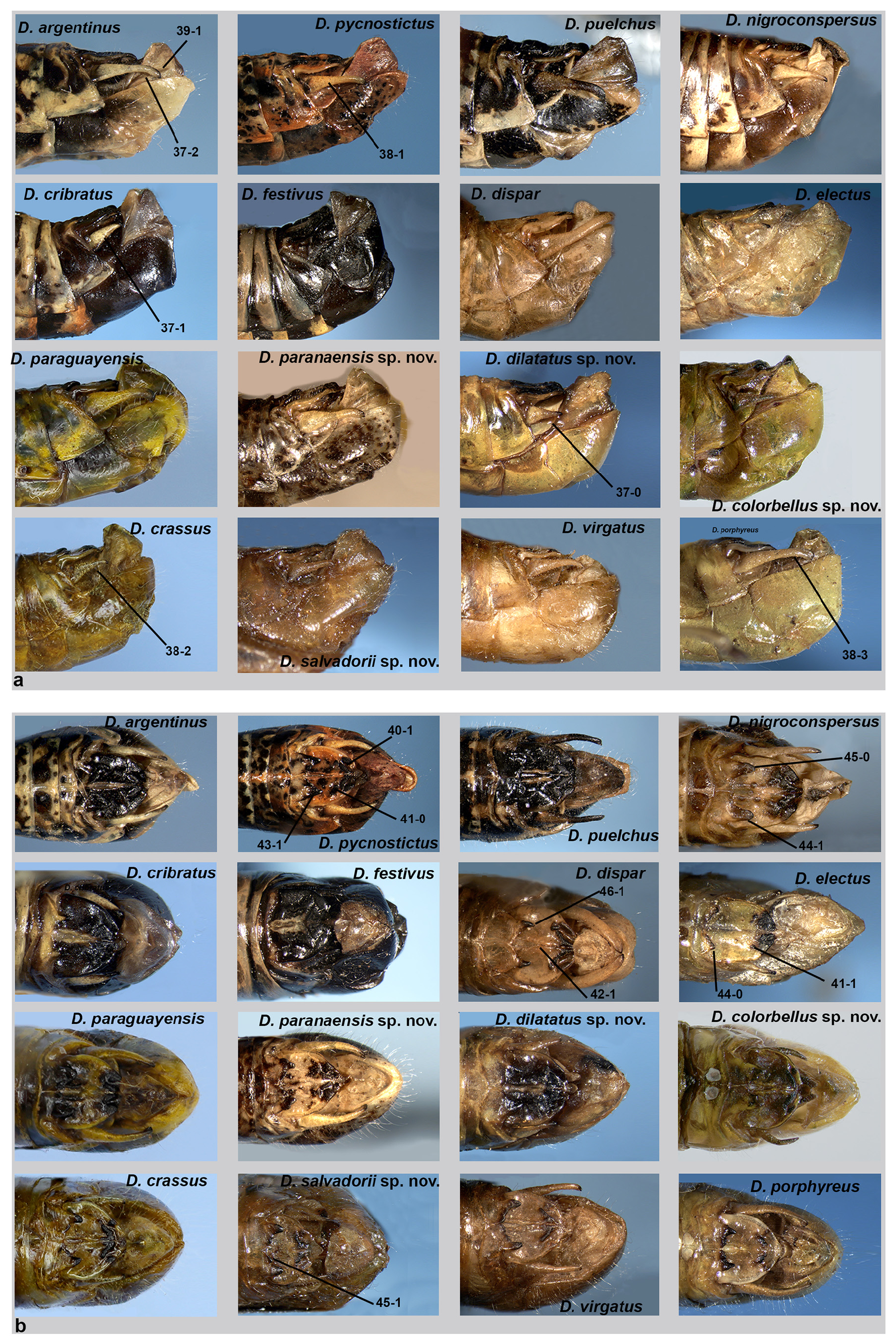
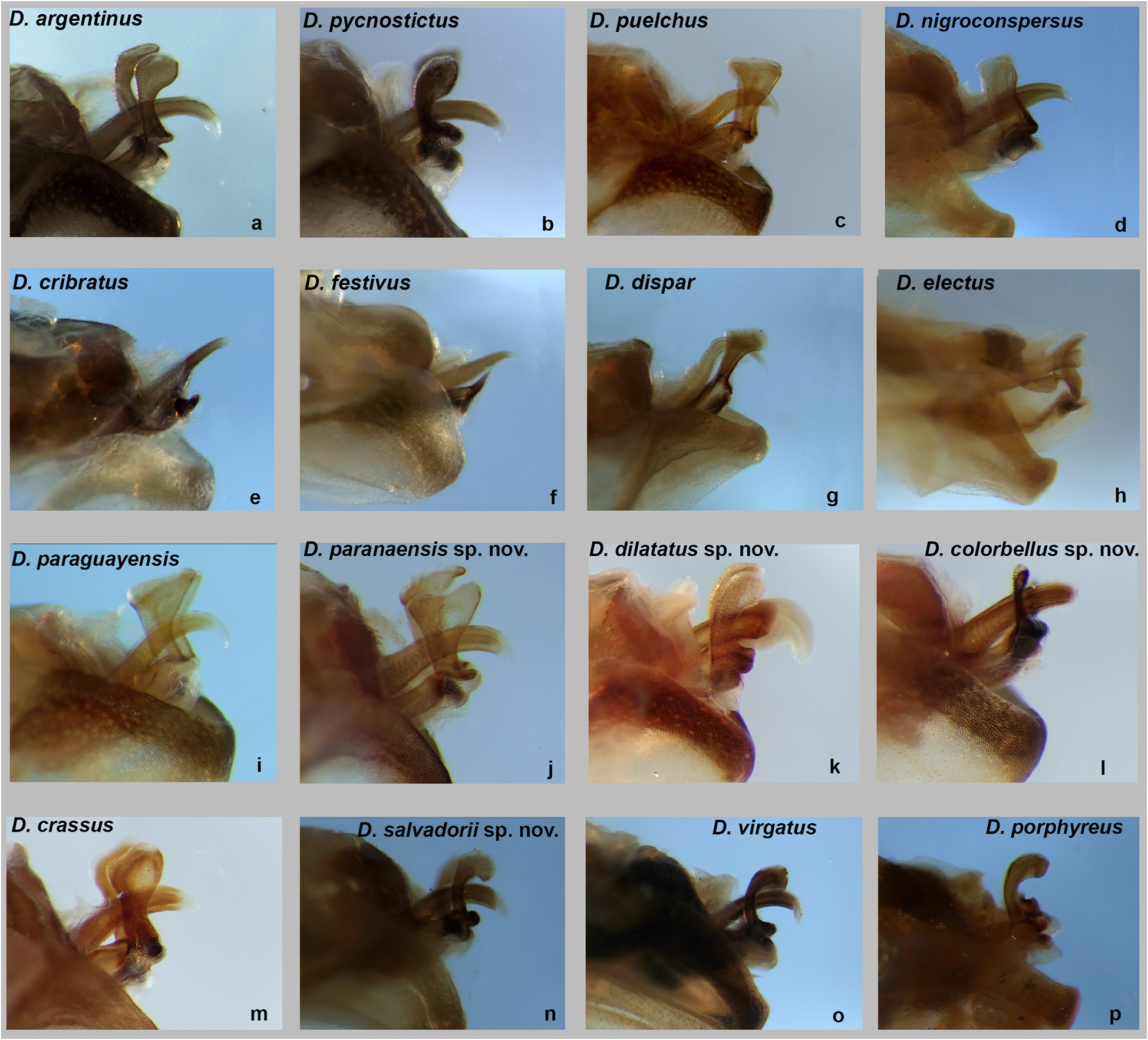
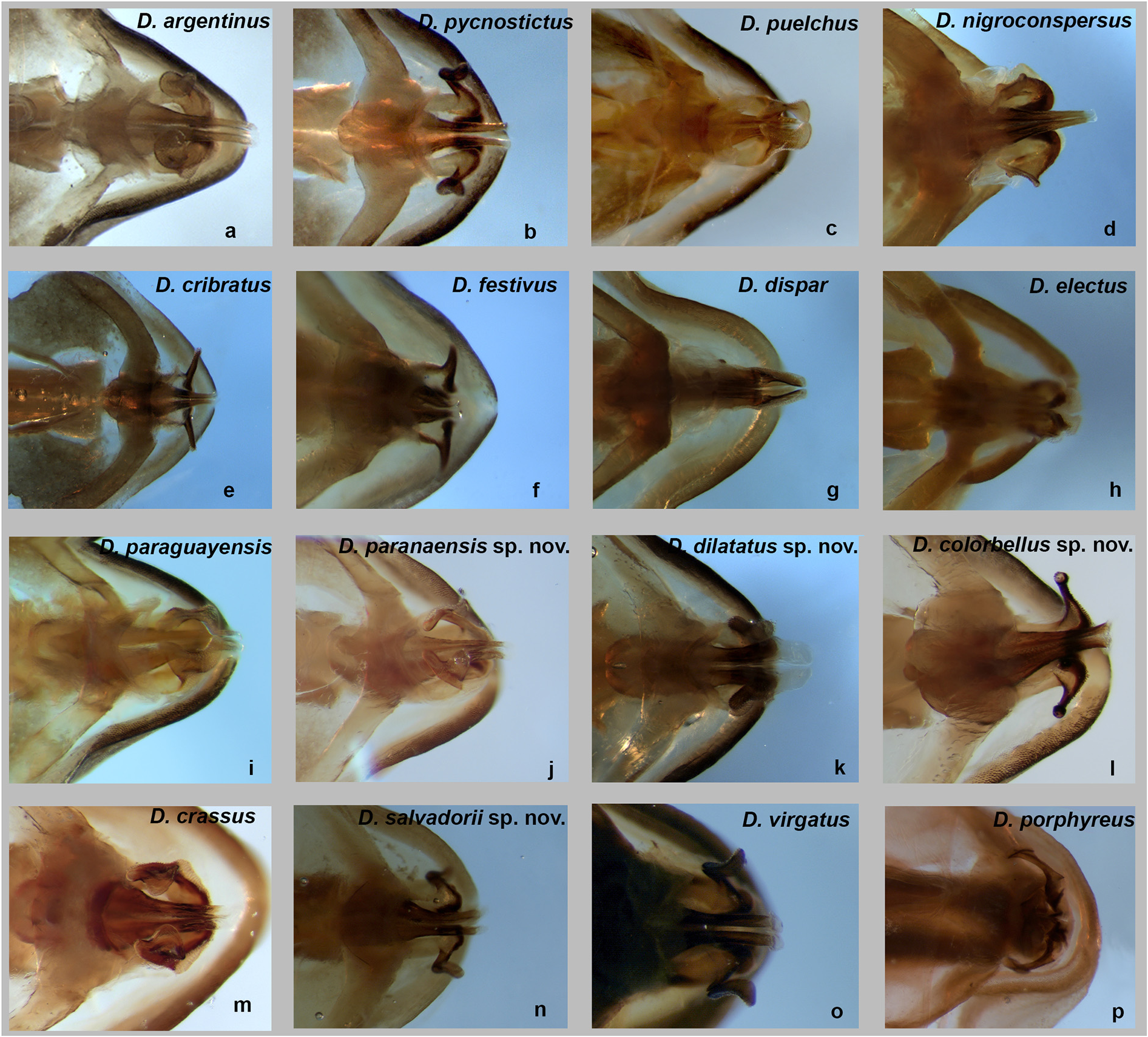
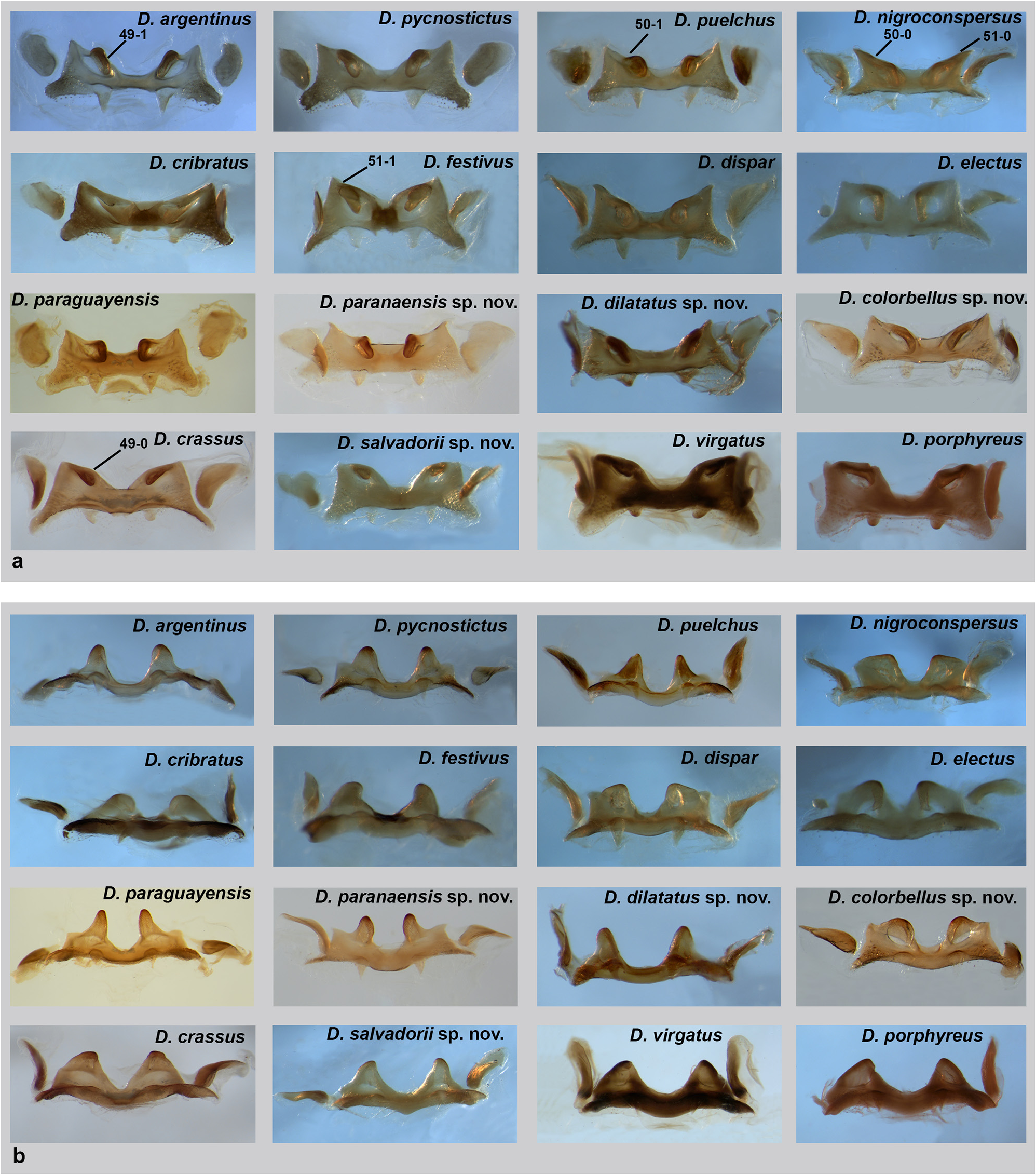
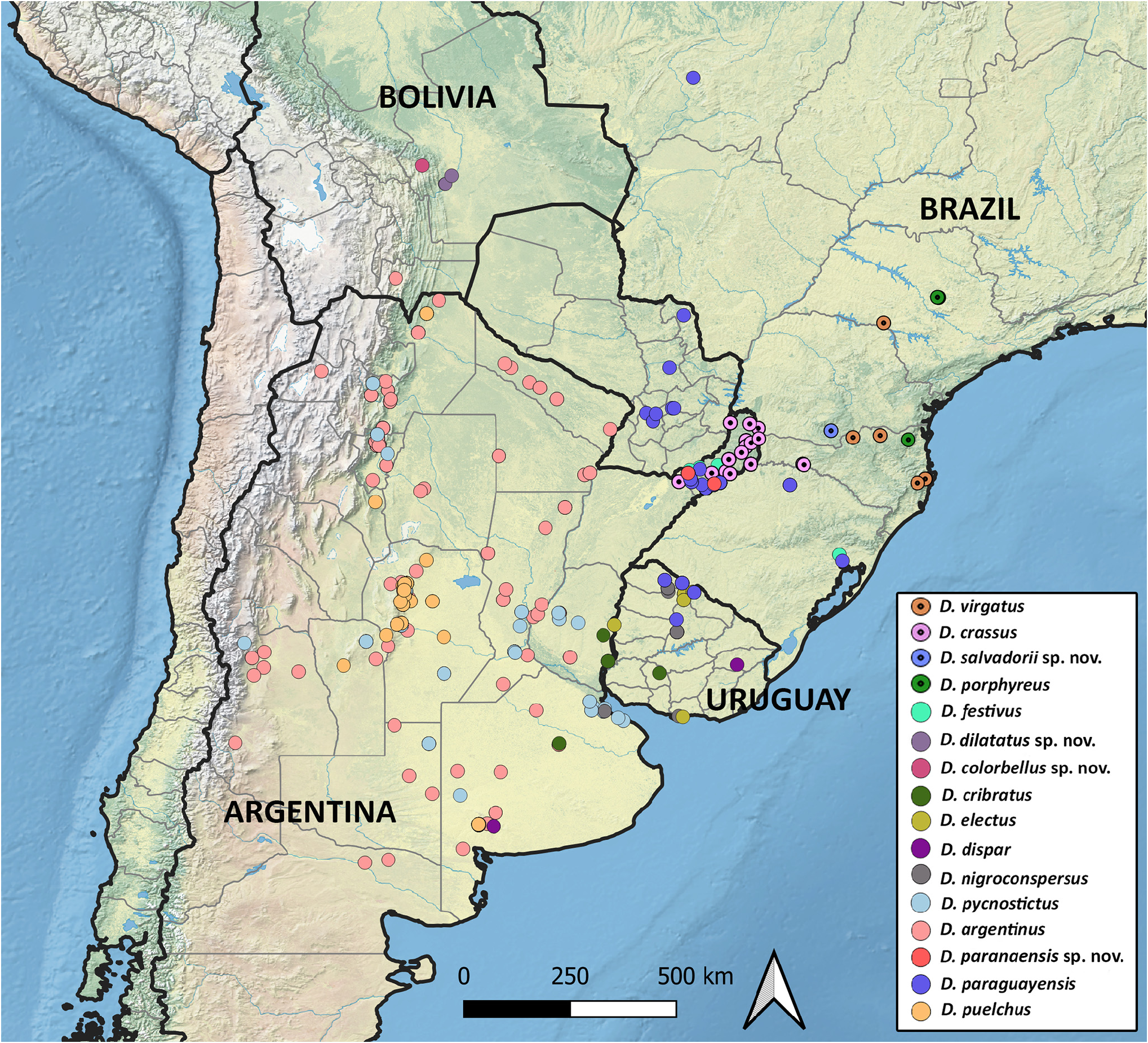
( Figs. 3a, b View FIGURE 3 , 7a, b View FIGURE 7 , 8d View FIGURE 8 , 9a, b View FIGURE 9 , 10d View FIGURE 10 , 11d View FIGURE 11 , 12a, b View FIGURE 12 , and 13 View FIGURE 13 ).
Acridium (Diponthus) nigroconspersum Stål, 1861 [1860]: 327 ( Holotype, female, Uruguay, Montevideo, NHRS Stockholm).
Diponthus nigroconspersus: Walker, 1870: 637 ; Pictet and Saussure, 1887: 374; Bruner, 1900: 65; Kirby, 1910: 382; Liebermann, 1939: 187; Dirsh, 1965: 43 (junior syn. of Diponthus cribratus ); Carbonell et al. 2023 ( Diponthus cribratus ); Cigliano et al. 2023 ( Diponthus cribratus ).
Acridium nigroconspersum is the type species of the genus, subsequently designated by Kirby, W. F. (1910) in “A Synonymic Catalogue of Orthoptera ( Orthoptera Saltatoria , Locustidae vel Acridiidae )”, 3(2): 674 pp.
Comments. Dirsh (1965) considered Diponthus nigroconspersus (Stål) as junior synonym of Diponthus cribratus (Serville) . However, after examination of type specimens of D. cribratus and D. nigroconspersus , and based on the original descriptions, as well as the examination of specimens collected in the distribution area of the species, we consider that Diponthus nigroconspersus is a valid species.
Diagnosis. Pronotal disc with a median dorsal longitudinal yellow band, wide in prozona, thinner in metazona; prozona with two oblique bands and lower area of lateral lobes yellow-ochre; metazona with circular mottles darkcolored in lateral lobes and elongated in metazona ( Figs. 3a, b View FIGURE 3 , and 7a, b View FIGURE 7 ). Prosternal tubercle straight. Tegmina with longitudibnal veins light brown and transverse veins cream colored, delimiting irregular cells with central spots dark brown ( Fig. 8d View FIGURE 8 ). Epiproct quadrangular, furculae large with rounded tips, with tubercle prominent along the median longitudinal groove ( Fig. 7b View FIGURE 7 ). Male cerci long, surpassing the tip of epiproct; distal third down-curved with acute apex ( Fig. 7a View FIGURE 7 ). Dorsal valves of aedeagus with down-curved apex; valves of cingulum sub-rectangular, with posterior margin of apex rounded, in lateral view ( Fig. 10d View FIGURE 10 ). Sclerotized part of cingulum V-shaped; zygoma of cingulum with angulate borders ( Fig. 11d View FIGURE 11 ). Lophi of epiphallus rectangular and wide with upper margins oblique, in frontal view ( Fig. 12b View FIGURE 12 ), placed parallel to the bridge, in dorsal view, extended towards the posterior process of lateral plates ( Fig. 12a View FIGURE 12 ).
Redescription and chromatic characters, and material examined. See Appendix 1
Measurements (in mm). Body length: males: 45.3 (45–46); females: 57.1 (55.5–59); femur III length: males: 18.6 (17–20); females: 24.3 mm (24–25); tegmen length: males: 34.3 (32–36); females: 42.1 (40–43.5).
Distribution. This species is distributed in Argentina ( Buenos Aires), and Uruguay ( Tacuarembó, Artigas, and Montevideo) ( Fig. 13 View FIGURE 13 ).
No known copyright restrictions apply. See Agosti, D., Egloff, W., 2009. Taxonomic information exchange and copyright: the Plazi approach. BMC Research Notes 2009, 2:53 for further explanation.
|
Kingdom |
|
|
Phylum |
|
|
Class |
|
|
Order |
|
|
Family |
|
|
Genus |

Diponthus nigroconspersus ( Stål, 1861 )
| Pocco, Martina E., Lange, Carlos E. & Cigliano, María Marta 2023 |
Diponthus nigroconspersus :
| Dirsh, V. M. 1965: 43 |
| Liebermann, J. 1939: 187 |
| Kirby, W. F. 1910: 382 |
| Bruner, L. 1900: 65 |
| Pictet, A. & Saussure, H. 1887: 374 |
| Walker, F. 1870: 637 |