
Dashymeniella viklundi Wolski & Gorczyca
|
publication ID |
https://doi.org/10.5281/zenodo.214715 |
|
publication LSID |
lsid:zoobank.org:pub:5B8E3749-B2C3-4DAD-A578-15AF9C39A20E |
|
persistent identifier |
https://treatment.plazi.org/id/03AF87C0-FFED-A929-41C6-FE3649ECE102 |
|
treatment provided by |
ImsDioSync |
|
scientific name |
Dashymeniella viklundi Wolski & Gorczyca |
| status |
sp. nov. |
Dashymeniella viklundi Wolski & Gorczyca sp. nov.
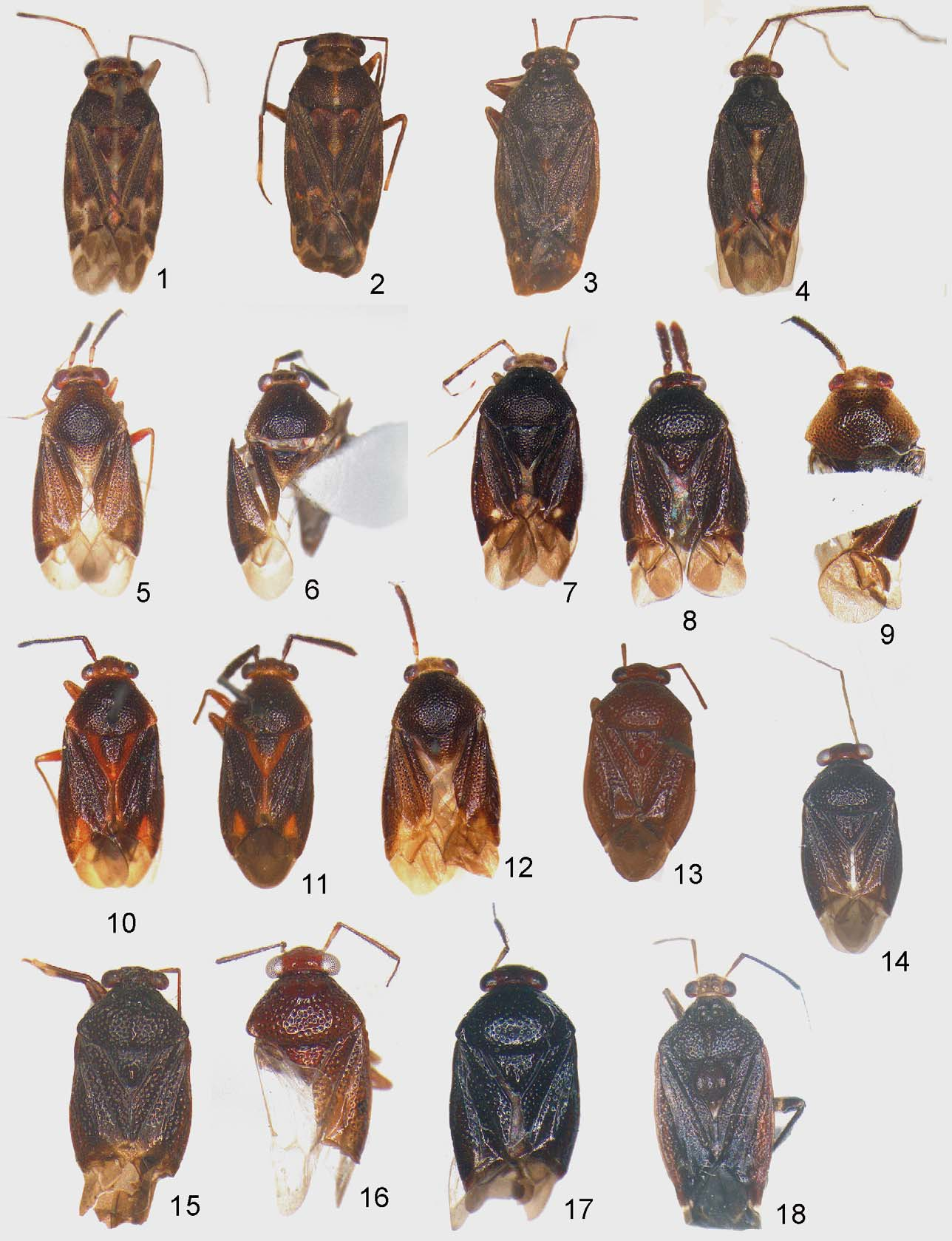
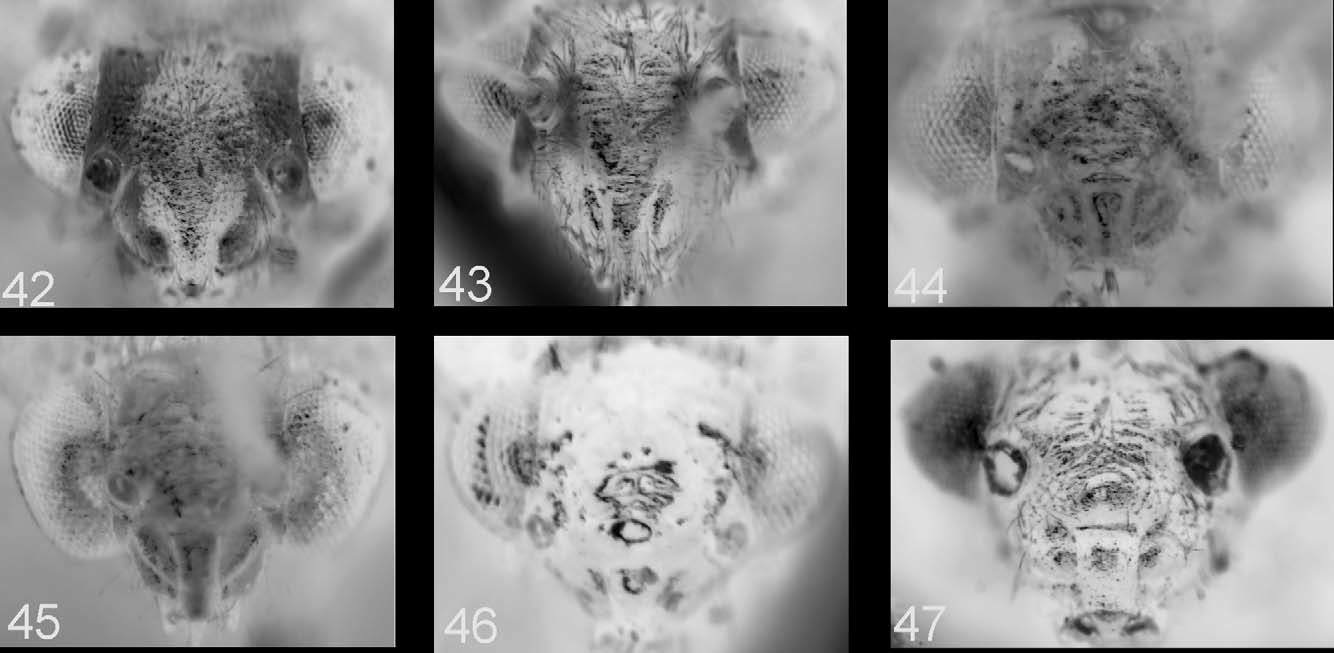
( Figs. 17 View FIGURES 1 – 18 , 46 View FIGURES 42 – 47 , 87 View FIGURE 87 , 102 View FIGURES 96 – 107 – 104)
Diagnosis. Dashymeniella viklundi is recognized by the following set of features: dorsum nearly black ( Fig. 19 View FIGURE 19 ); head covered with sparse punctures ( Fig. 46 View FIGURES 42 – 47 ); DSS large, stout, with apical widened portion nearly triangular; AES relatively small, narrowed basally and apically; MES stout, large, hook-shaped; PES lacking ( Fig. 102 View FIGURES 96 – 107 ); right paramere with apical process moderately narrowed ( Fig. 104 View FIGURES 96 – 107 ).
Most similar to D. spatulatiformis and D. ulu in sharing the characters presented in the diagnosis of D. spatulatiformis . The new species can, however, be distinguished by the coloration of dorsum, and the shape of the male endosomal sclerites.
Description. Male. COLORATION ( Fig. 17 View FIGURES 1 – 18 ). Entire dorsal surface nearly black. Head. Dark brown, paler than remainder of body; antenna dull yellowish; labium dark brown; segments III and IV darker than I and II. Thorax. Thoracic pleura. Nearly black. Legs. Coxae dark brown; metafemur dark brown, paler than coxae; metatibia almost entirely brownish, except for pale, yellowish annulation apically; metatarsus dull yellowish; remaining legs broken. Abdomen. Dark brown. STRUCTURE AND VESTITURE ( Fig. 17 View FIGURES 1 – 18 , 46 View FIGURES 42 – 47 ). Suboval, dorsum strongly shining, glabrous. Head. Strongly shining, glabrous; vertex and frons with sparse and relatively deep punctuation; vertex with weakly raised tubercles each contiguous with occipital carina; antennal segment I narrowed basally, cylindrical at apical half, sparsely covered with fine, semirecumbent setae; segment II mixed with moderately dense, long, semirecumbent, thick setae and with small, scale-like, recumbent setae, narrowed at apical one fifth, remainder of segment II nearly cylindrical; labium stout, apex reaching just beyond metacoxae. Thorax. Pronotum. Punctation moderately dense; anterior margin separated from remainder of pronotum; calli flattened, inpunctate. Scutellum. With moderately raised, inpunctate elevation apically. Hemelytron. Punctation similar to that of pronotum.
Male genitalia. Endosoma ( Fig. 102 View FIGURES 96 – 107 ). DSS large, stout, with apical widened portion nearly triangular; AES relatively small, narrowed basally and apically; MES stout, large, hook-shaped. Left paramere ( Fig. 103 View FIGURES 96 – 107 ). Rounded; apical process somewhat pointed; sensory lobe weakly convex. Right paramere ( Fig. 104 View FIGURES 96 – 107 ). Sinuate laterally; apical process narrowed apically.
Measurements. 3 (n= 2, holotype measurements in parentheses): Body length 3.2–3.3 ( 3.2), width 1.4–1.7 ( 1.4). Head. Length 0.36–0.42 ( 0.36), width 0.86–0.9 ( 0.86), diameter of eye in dorsal view 0.22–0.23 ( 0.22). Antenna. Length of segment I 0.44–0.5 ( 0.44), II 0.79–0.98 ( 0.79), III 0.46–0.55 ( 0.46), IV 0.78 ( 0.78). Labium. Length of segment I 0.5 ( 0.50), II 0.46 ( 0.46), III 0.34 ( 0.34), IV 0.55 ( 0.55). Pronotum. Length 0.84–0.95 ( 0.84), width of anterior margin 0.7–0.75 ( 0.7), length of lateral margin 0.68–0.75 ( 0.68), width of posterior margin 1.38–1.56 ( 1.38).
Female. Unknown.
Etymology. The specific name is dedicated to Bert Viklund ( NHRS) who was one of the collectors of this species.
Distribution ( Fig. 87 View FIGURE 87 ). Malaysia (Sabah: Tawau).
Type material. Holotype 3: Malaysia: Sabah: Tawau: Maliau Basin: Riparian Nature Trial, 04° 44 ’ 36.7 ’’N 116 ° 58 ’ 20.9 ’’E, 254 m. a.o, 0 6 XII – 11 XII 2007, Malaise Trap, Field#VKBS- 2007 -05. FRC Export Permit: JPHTN /PPP/EN: 100 - 44 / 1 / 3 ( 106). B. Viklund et N. Jönsson leg.; paratype 3: the same data as holotype ( NHRS).



No known copyright restrictions apply. See Agosti, D., Egloff, W., 2009. Taxonomic information exchange and copyright: the Plazi approach. BMC Research Notes 2009, 2:53 for further explanation.