
Bothriomiris
|
publication ID |
https://doi.org/10.5281/zenodo.214715 |
|
publication LSID |
lsid:zoobank.org:pub:5B8E3749-B2C3-4DAD-A578-15AF9C39A20E |
|
persistent identifier |
https://treatment.plazi.org/id/03AF87C0-FFC9-A907-41C6-FCBD49ECE35F |
|
treatment provided by |
ImsDioSync |
|
scientific name |
Bothriomiris |
| status |
|
Key to Oriental species of Bothriomiris
1. Pronotum with triangular, ochraceous patch from anterior margin till its medial portion............... B. ornatus Bergroth
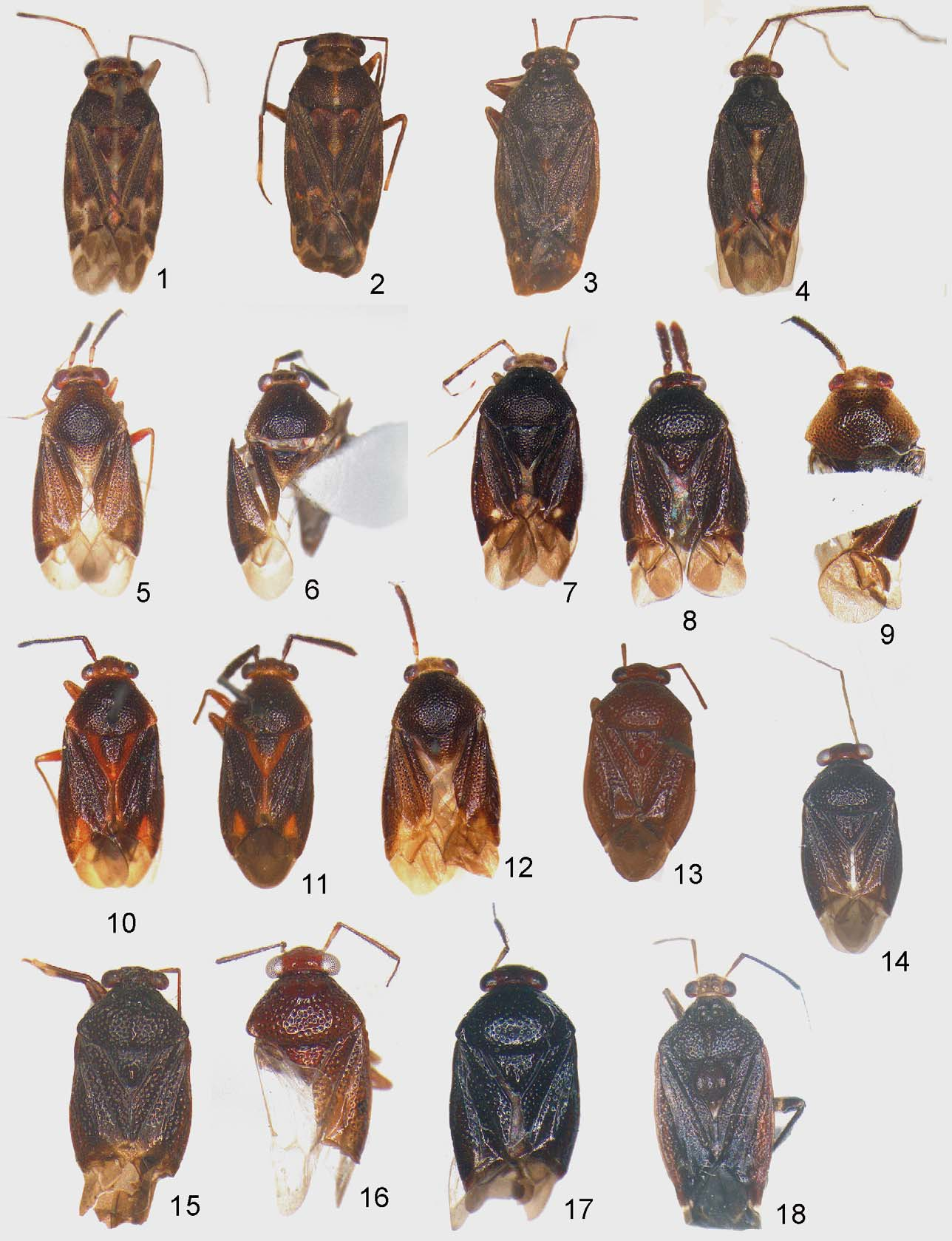
- Pronotum entirely reddish to black ( Figs. 3–4 View FIGURES 1 – 18 ), sometimes with anterior lobe yellow and with yellow swelling from anterior lobe till posterior margin ( Figs. 1–2 View FIGURES 1 – 18 ), but never with triangular, ochraceous patch anteriorly........................... 2
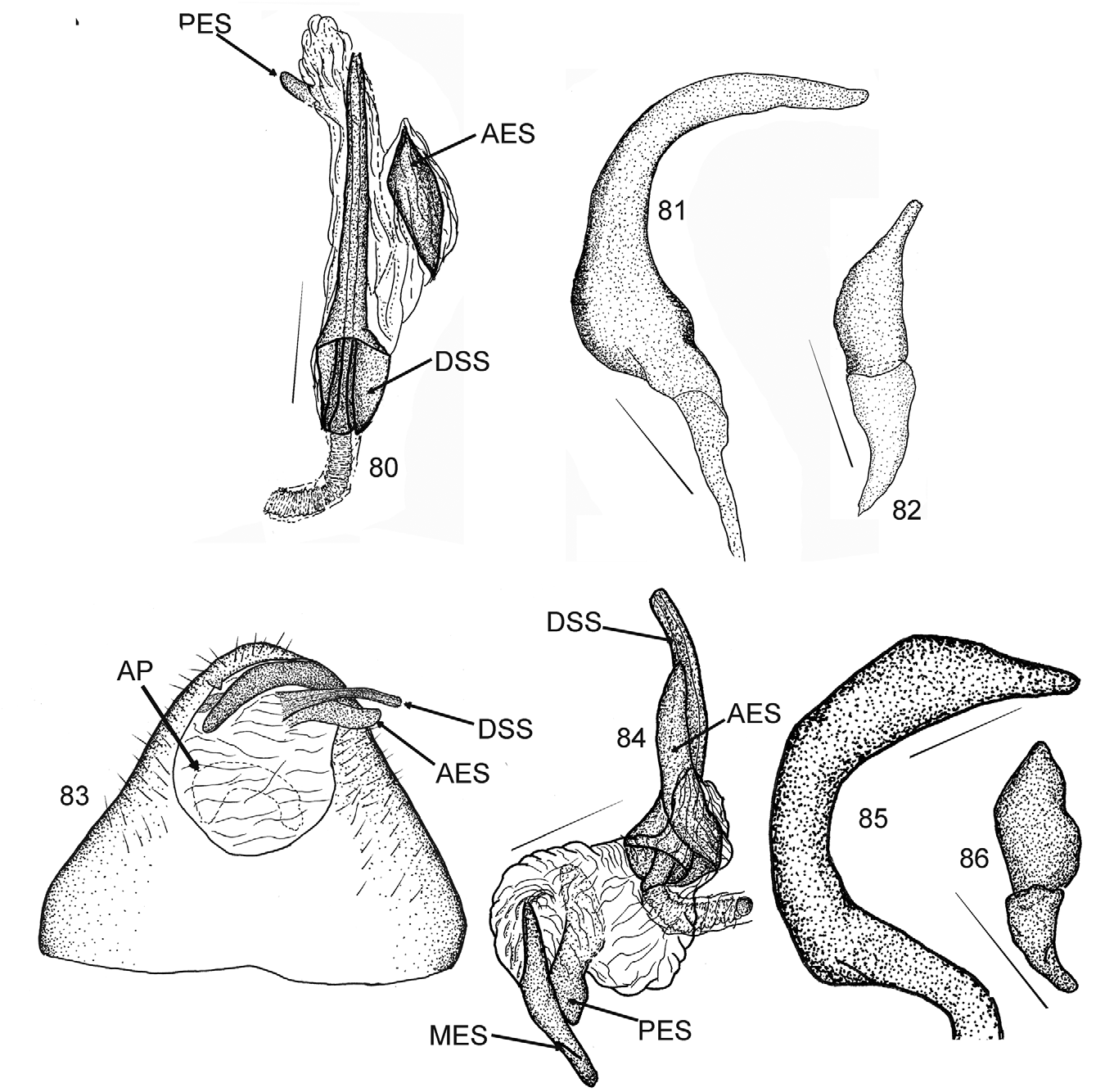
2. Scutellum entirely blackish brown; corium with rounded, contrastingly pale patch apically (see Yasunaga 2000: Fig. 80 View FIGURES 80 – 86 and Yasunaga & Miyamoto 2006: Figs. 1 View FIGURES 1 – 18 A, 2 A); metepisternum sparsely punctate (see Yasunaga 2000: Fig. 81 View FIGURES 80 – 86 )................................................................................................ B. capillosus Yasunaga
- Scutellum usually dark brown with more or less developed pale pattern apically ( Figs. 1–4 View FIGURES 1 – 18 ), sometimes entirely reddish; corium without pale patch apically ( Figs. 3–4 View FIGURES 1 – 18 ), or with Y-shaped yellow pattern ( Figs. 1–2 View FIGURES 1 – 18 ); metepisternum distinctly punctate.................................................................................................... 3
3. Dorsal surface entirely reddish............................................................ B. testaceus Distant
- Dorsal surface usually dark brown or blackish dark brown, sometimes with yellow, reddish or ochraceous areas ( Figs. 1–4 View FIGURES 1 – 18 ). 4
4. Vertex with two distinct, broad tubercles, each situated laterally and contiguous with inner margin of eye and occipital carina; antennal segment I longer than width of vertex ( Fig. 4 View FIGURES 1 – 18 ); left paramere with sensory lobe strongly convex, without any sharply pointed process (see Gorczyca 2005: Fig. 3 View FIGURES 1 – 18 )............................................. B. sulawesicus Gorczyca
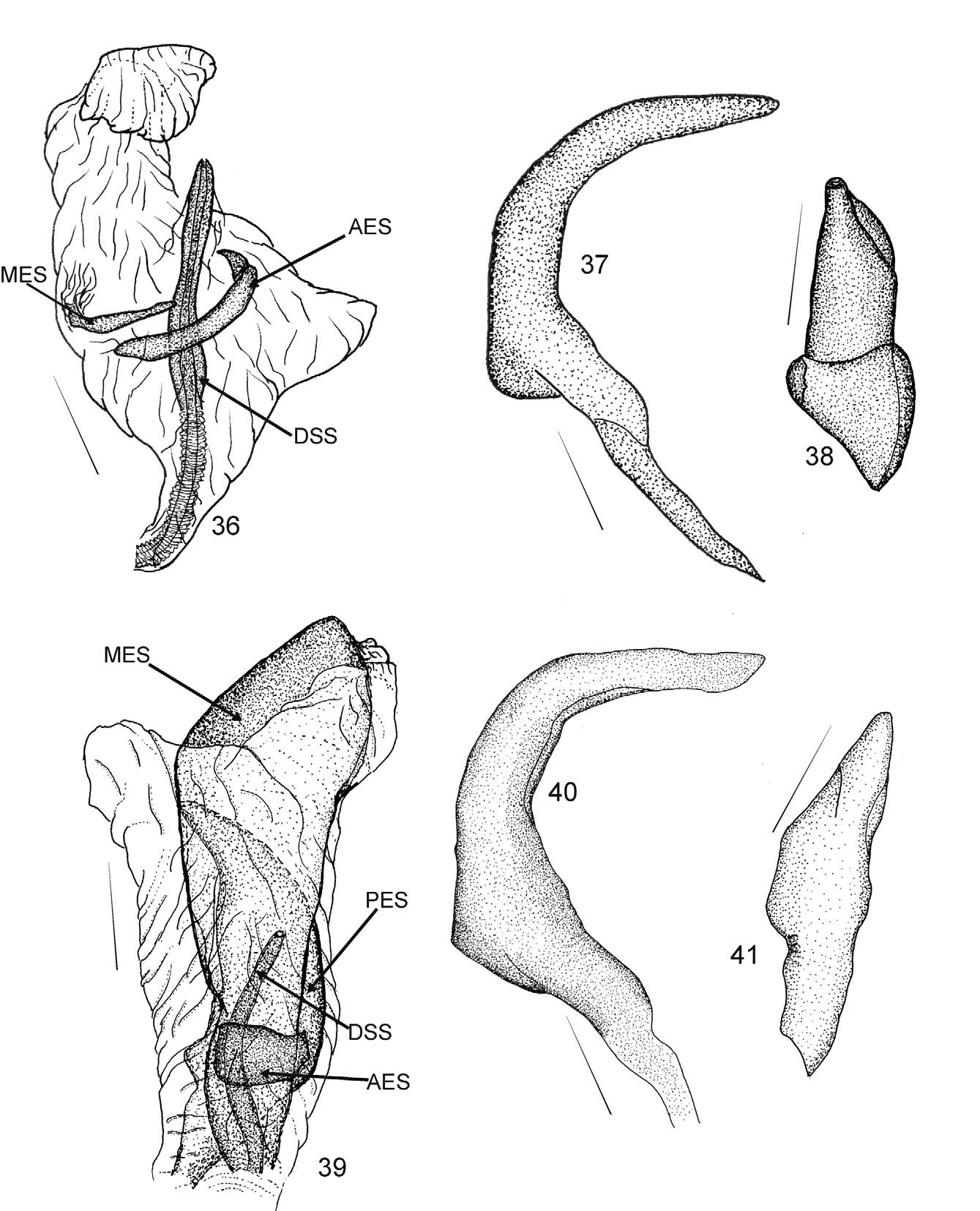
- Tubercles on vertex weakly developed; antennal segment I nearly as long or shorter than width of vertex ( Figs. 1–3 View FIGURES 1 – 18 ); left paramere with sensory lobe not convex ( Fig. 37 View FIGURES 36 – 41 ), or if convex furnished with sharply pointed process (see Gorczyca 2005: Fig. 6 View FIGURES 1 – 18 ).................................................................................................. 5
5. Dorsal surface almost entirely blackish dark brown except dull yellowish apex of scutellum, transverse patch on apex of
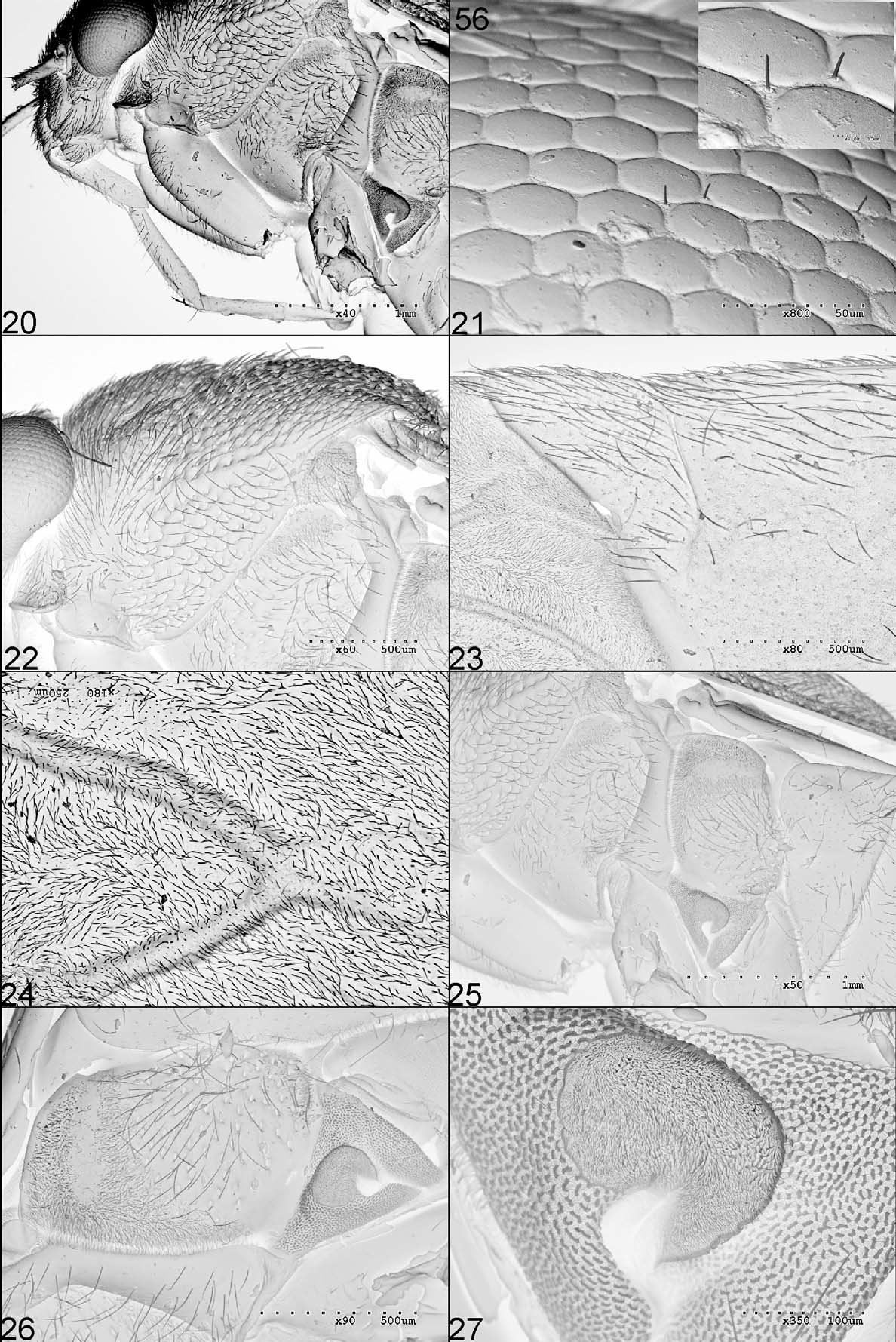
corium, and apex of cuneus ( Fig. 3 View FIGURES 1 – 18 ); pronotal calli punctate; posterior lobe of pronotum entirely blackish ( Fig. 3 View FIGURES 1 – 18 ); left paramere with sensory lobe distinctly convex, furnished with distinct spine (see Gorczyca 2005: Fig. 6 View FIGURES 1 – 18 ).......... B. lugubris Poppius - Dorsum varying from pale brown with reddish and yellowish tinges to dark brown or blackish with yellowish stripes and patches ( Figs. 1–2 View FIGURES 1 – 18 ); pronotal calli inpunctate; posterior lobe of pronotum with distinct, pale, longitudinal stripe at median ( Figs. 1–2 View FIGURES 1 – 18 ); left paramere with sensory lobe indistinctly convex ( Fig. 22 View FIGURES 20 – 27 )....................... B. dissimulans (Walker)
No known copyright restrictions apply. See Agosti, D., Egloff, W., 2009. Taxonomic information exchange and copyright: the Plazi approach. BMC Research Notes 2009, 2:53 for further explanation.