
Ampharetidae, Malmgren, 1866
|
publication ID |
https://doi.org/10.5852/ejt.2021.733.1227 |
|
publication LSID |
lsid:zoobank.org:pub:1AAE62AF-ABD9-4930-B1DE-2C05F66BEC4A |
|
persistent identifier |
https://treatment.plazi.org/id/03A8045E-F717-FFDE-53F7-F20EFA826DBA |
|
treatment provided by |
Plazi |
|
scientific name |
Ampharetidae |
| status |
|
Key to Ampharetidae genera occurring in Antarctica
In order to simplify the task of genera recognition of not trained people we have assembled a dichotomic key hoping that this would speed the recognition of the different Antarctic ampharetid genera.
1. Three or four anterior segments with vertical rows of minute acicular chaetae ................................. ...................................................................................................... Melinninae Chamberlin, 1919 ...2
– Minute acicular chaetae absent ................................................ Ampharetinae Malmgren, 1866 …3
2. Hooks (usually one pair) and dorsal crest (usually one and dentate) behind the branchiae present ........................................................................................................ Melinna Malmgren, 1866
– Hooks absent, dorsal crest present .............................................. Melinnides Wesenberg-Lund, 1950 (= Melinnantipoda)
– Hooks and dorsal crest absent ............................................................... Melinnopsis McIntosh, 1885 (= Amelinna , Melinnexis , Melinnopsides )
3. Buccal tentacles attached outside the mouth, methylene blue staining pattern of ventral glandular shields well marked ............................................................. Noanelia Desbruyères & Laubier, 1977
– Buccal tentacles attached inside the mouth (seldom may be everted), methylene blue staining pattern of ventral glandular shields poor marked ......................................................................................... 4
4. Prostomium Amphicteis -like: with prominent straight transversal nuchal ridges; middle lobe anteriorly more of less incised, usually with pair of longitudinal ridges; rudimental notopodia AU1 several times smaller than normal thoracic ................................................. Amphicteis Grube, 1850
– Prostomium Ampharete or Amage -like: trilobed, without prominent nuchal organs or ridges; middle lobe anteriorly rounded; rudimental notopodia AU1 several times smaller normal thoracic or absent ................................................................................................................................................ 5
– Prostomium without lobes, without prominent nuchal organs or ridges ........................................ 13
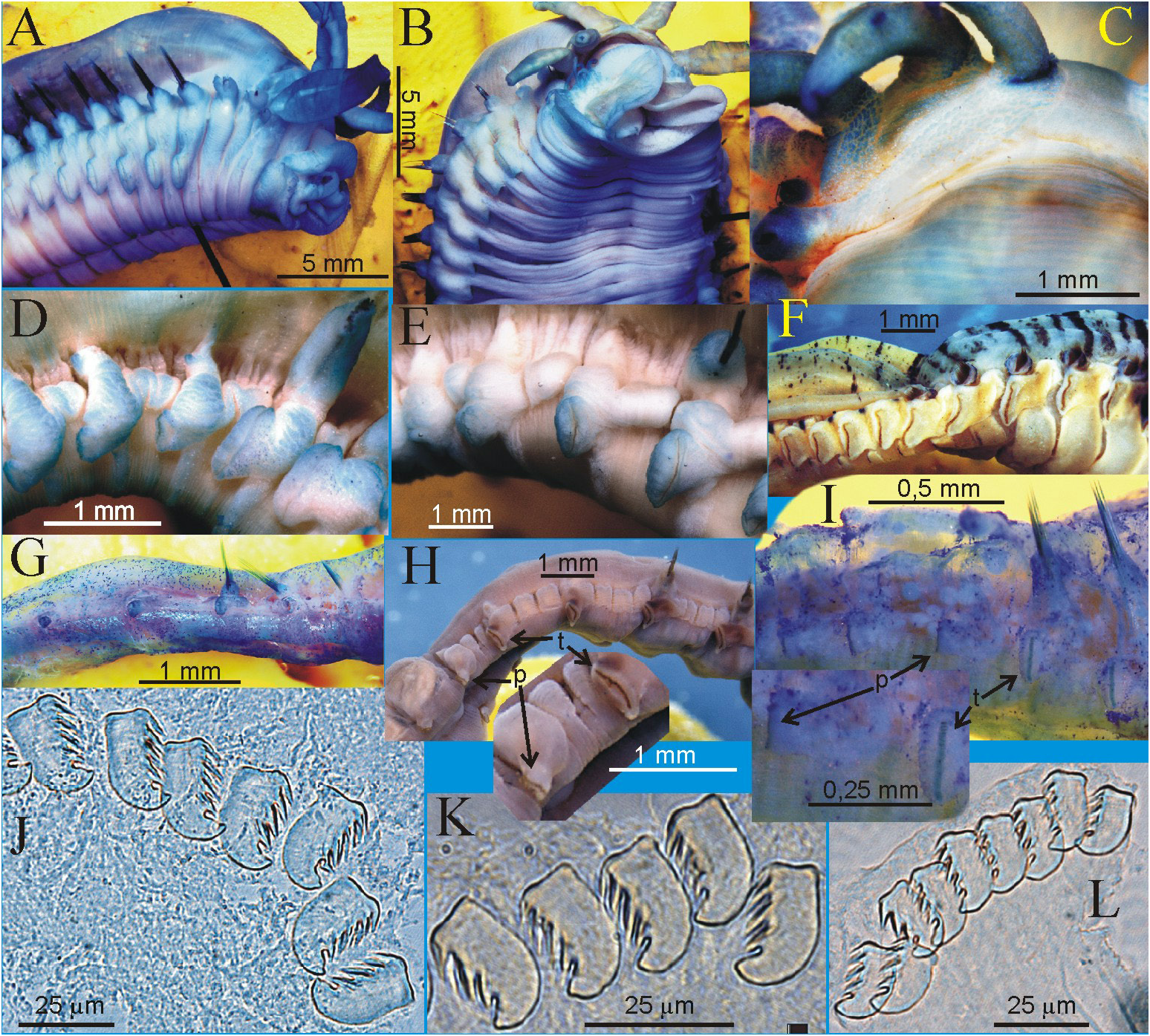
5. Middle lobe of prostomium anteriorly incised or with horns ( Fig. 1 View Fig A–B) ...................................... 6
– Middle lobe of prostomium anteriorly rounded or pointed .............................................................. 8
6. Abdominal neuropodia with very long cirri, longer than width of segment ...................................... .............................................................................................................. Samythopsis McIntosh, 1885 (= Neopaiwa , Paiwa, Weddelia )
– Abdominal neuropodial cirri, if present much shorter than width of segment ( Fig. 1G View Fig ) ................. 7
7. All abdominal neuropodia, including AU1 pinnuli ( Fig. 1G View Fig ), no more than 16 AU .......................... ...................................................................................................................... Amage Malmgren, 1866 (= Egamella , Mexamage , Paramage , Phyllampharete )
– All abdominal neuropodia pinnula, except AU1, neuropodia AU1 tori (like thoracic), more than 20 AU ......................................................................................................... Grubianella McIntosh, 1885
8. Distinct transversal dorsal ridge between TC3 and TC4 present ........................................................ ................................................................................................... Melinnampharete Annenkova, 1937 (= Eusamytha Hartman, 1967 non McIntosh, 1885, Eusamythella , Neosamytha )
– Dorsal ridge absent ........................................................................................................................... 9
9. One, usually from 5 th (4 th– 6 th) to the last pair of posterior notopodia slightly shifted dorsally and connected by low ridge .......................................................................... Anobothrus Levinsen, 1884
– One pair of posterior notopodia (last, 2 nd or 3 rd from last) flattened and shifted dorsally .................. ...................................................................................................................... Sosane Malmgren, 1866
– Posterior notopodia neither flattened, nor shifted dorsally, ridges also absent ............................... 10
10. 1 st segment with ‘horns’ .................................................................. Abderos Schüller & Jirkov, 2013
– 1 st segment without ‘horns’ ..............................................................................................................11
11. Lower lip enlarged, longitudinally grooved ............................................... Lysippe Malmgren, 1866 (= Lysippides , Paralysippe , Pseudampharete , Pterolysippe , Samytha )
– Lower lip not enlarged .................................................................................................................... 12
12. A pair of nephridial papillae medially behind the branchiae. Paleae well developed, paleal chaetae bigger then most developed notochaetae (paleae of species outside Antarctic may be smaller or even absent) .................................................................................................... Ampharete Malmgren, 1866 (= Asabellides , Parampharete , Pseudosabellides , Pterampharete , Sabellides ,? Amythasides )
– Nephridial palillae medially behind the branchiae absent ( Fig. 4C View Fig ). Paleae absent ........................... ....................................................................................................................... Amythas Benham, 1921
13. Two last pairs of notopodia (or only second counting from the back) slightly shifted dorsally and connected by low, transverse ridges ............................................................. Zatsepinia Jirkov, 1986
– Dorsally shifted notopodia and dorsal transverse ridges absent ..................................................... 14
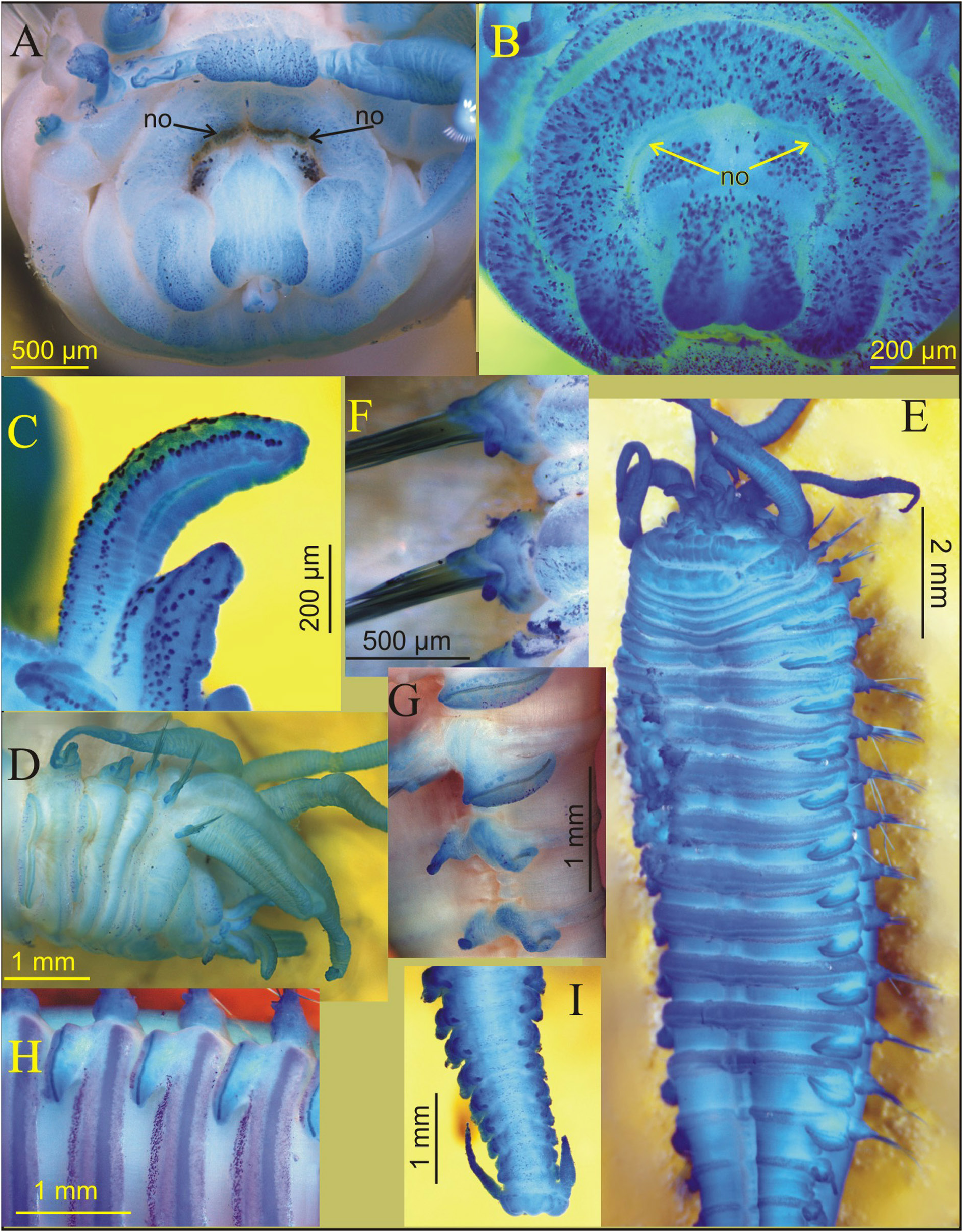
14. Prostomium with pair of tranversal nuchal organs ......................................................................... 15
– Prostomium without nuchal organs ............................................. Glyphanostomum Levinsen, 1884
15. The shape of neuropodia slightly changed along the body ( Fig. 5B View Fig ) ....... Phyllocomus Grube, 1877 (= Shistocomus,? Amphisamytha )
– Neuropodia of thorax, AU1, and AU2 are tori, the rest are abdominal pinnuli, change is well marked .................................................................................................... Neosabellides Hessle, 1917
No known copyright restrictions apply. See Agosti, D., Egloff, W., 2009. Taxonomic information exchange and copyright: the Plazi approach. BMC Research Notes 2009, 2:53 for further explanation.
|
Kingdom |
|
|
Phylum |
|
|
Class |
|
|
Order |
|
|
Family |