
Glyptapanteles mouldsi Fagan-Jeffries, Bird & Austin, 2022
|
publication ID |
https://doi.org/10.5852/ejt.2022.792.1647 |
|
publication LSID |
lsid:zoobank.org:pub:18DB5F54-5CEB-498E-A6F1-E570E6A57833 |
|
persistent identifier |
https://treatment.plazi.org/id/039487E7-EF38-4A59-AAB4-8FD1FCC4F919 |
|
treatment provided by |
Felipe |
|
scientific name |
Glyptapanteles mouldsi Fagan-Jeffries, Bird & Austin |
| status |
sp. nov. |
Glyptapanteles mouldsi Fagan-Jeffries, Bird & Austin sp. nov.
urn:lsid:zoobank.org:act:
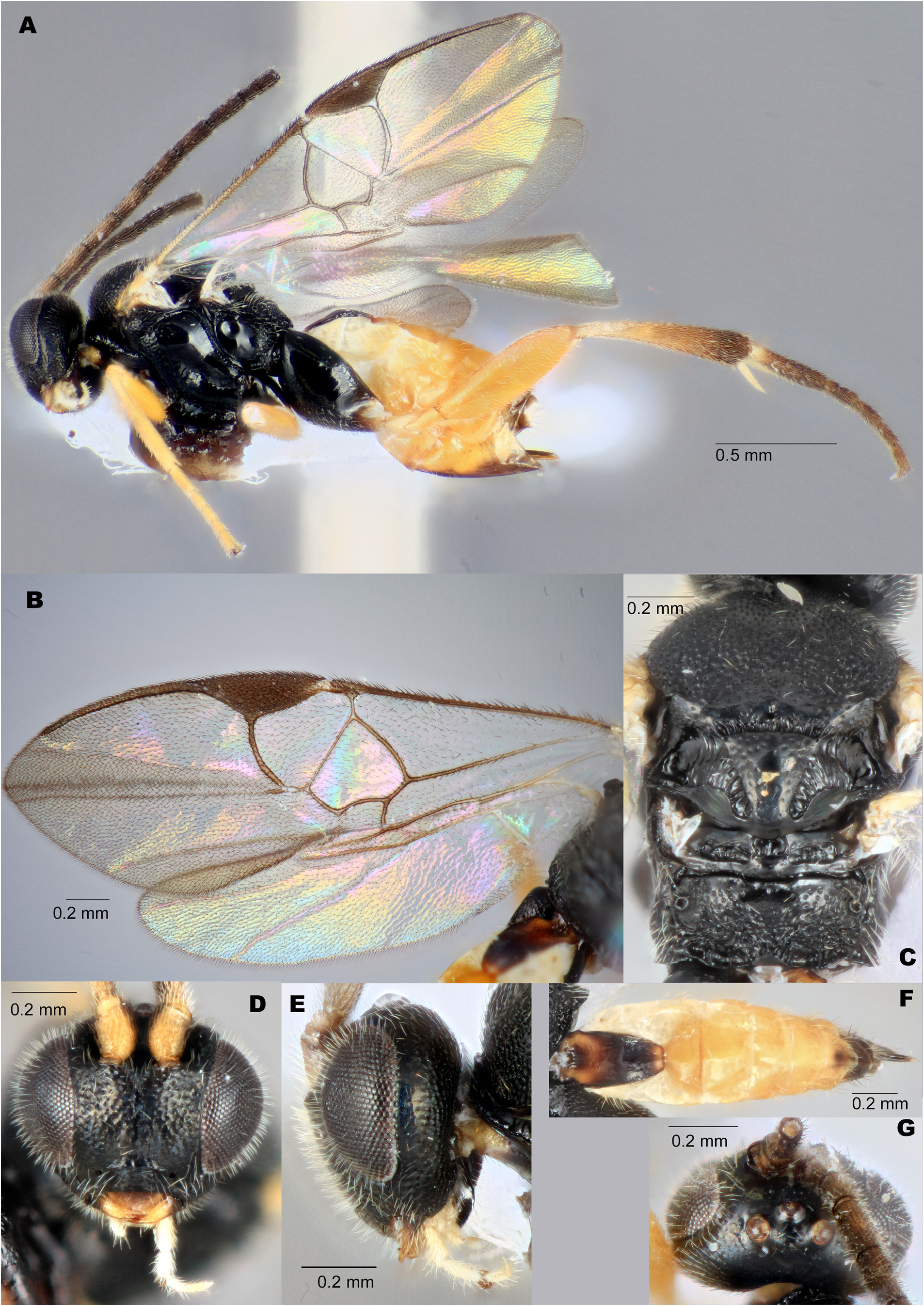
Figs 6D View Fig , 11A–B View Fig , 45 View Fig
Diagnosis
Glyptapanteles mouldsi sp. nov. is in the G. mouldsi species group and can be separated from the other two species in the group ( G. rixi sp. nov. and G. dowtoni sp. nov.) by the metasomal sternites being all pale yellow other than the hypopygium, which is dark and T4–5 all pale/yellow. Glyptapanteles rixi sp. nov. and G. dowtoni sp. nov. have S5+ dark and T4–6 with at least some dark areas, or completely dark. The wingless sequences of the three species differ by at least 6 bp and the COI differs by at least 4.3%.
Etymology
This species is named for Dr Max Moulds, who collected the type series, along with many other specimens, whilst kindly running a Malaise trap for this and other microgastrine projects at Kuranda, north QLD.
Material examined
Holotype AUSTRALIA • ♀; Queensland, Kuranda ; -16.8135, 145.6430586; 317 m a.s.l.; 12 Feb.–6 Apr. 2020; M.S. Moulds leg.; Malaise Trap EFJ2020MT36; Extraction1562, BOLD: AUGLY108-21; QM T250976 . GoogleMaps
Paratypes AUSTRALIA • 1 ♀; same collection data as for holotype; Extraction1559, BOLD: AUGLY106-21; QM T250977 GoogleMaps • 1 ♀; same collection data as for holotype; 16 Mar.–12 Apr. 2017; Extraction552, BOLD: AUMIC343-18; QM T250978 GoogleMaps • 1 ♀; same collection data as for holotype; 18 Apr.–8 Jul. 2017; Extraction735, BOLD: AUMIC488-18; QM T250979 GoogleMaps .
Description
Female
COLOURATION. Gena without a pale spot; labrum mostly dark or reddish-brown; scape colour in ventral half either uniformly paler than flagellomeres, or the same colour or darker than flagellomeres; flagellomeres darkening distally; tegula pale; wing veins uniformly black or brown, or with small lighter area proximally; anteromesoscutum all dark; scutellar disk and metanotum dark; propodeum dark; fore coxa dark; mid coxa dark; hind coxa dark; fore femur pale yellow; mid femur pale yellow; hind femur orange to light brown; fore tibia pale yellow; mid tibia pale yellow; hind tibia darkening posteriorly; hind basitarsus dark reddish-brown; T1 dark or dark reddish-brown; T2 sclerotised area pale; T2 lateral area same colour as sclerotised area, or only slightly paler; T3–T5 pale, T6–7 darkening posteriorly.
HOLOTYPE BODY MEASUREMENTS. Body length 2.3 mm; fore wing length 2.2 mm; antennal length slightly longer than body length.
HEAD. Antennal flagellomere 14 length/width 1.83–2.16; antennal flagellomere 2 length/width 1.77– 3.00; OOD/POD 1.37–1.71; IOD/POD 1.57–1.75.
MESOSOMA. Anteromesoscutum sculpturing with shallow to deep punctures, space between punctures a mixture of smaller than diameter of punctures and of similar size. Often smoother in posterior centre; scutellar disk sculpturing with deep or shallow, sparse, irregularly spaced punctures, more common on anterior lateral edges; 9–12 pits in scutellar sulcus; propodeum with median carina absent, strong punctures in anterior half, rugose sculpturing in posterior half.
WINGS. Pterostigma length 0.54 mm; pterostigma width 0.18 mm; r 0.28 mm; 2RS 0.12 mm; 2m 0.05 mm; (RS+M)b 0.1 mm.
METASOMA. T1 lateral edges parallel for anterior 1/4 of length, then gently narrowing posteriorly, lateral edges often with slight curve or lateral edges parallel for anterior ¾ of length, then narrowing posteriorly; T1 smooth and shiny, sometimes with shallow sculpturing along lateral edges or some shallow scattered punctures on lateral edges; T1 length 0.3 mm; T1 width at posterior edge 0.09 mm; T2 an isosceles trapezoid, lateral edges straight; T2 smooth and shiny; T2 length 0.14 mm; T2 width at posterior edge 0.21 mm; ovipositor slightly protruding from end of metasoma.
Male
Unknown.
Remarks
Glyptapanteles mouldsi sp. nov. constitutes BIN: BOLD:ADL3640 and is 4.87% (p-dist). divergent from the closet BIN in the database (BOLD:AEI8040, an undescribed lineage from Australia, with one specimen).
Using the BOLD Batch ID engine, the COI barcode of the holotype is 5.2% different from the most similar COI sequence from an Australian specimen (AUGLY141-21; an undescribed lineage, with a single specimen). All four of the type specimens were able to be sequenced for the wingless gene and share a unique barcode, which differs by a minimum of 5 bp from all other species with available sequence data.
Distribution
This species is currently known from Kuranda in QLD.


No known copyright restrictions apply. See Agosti, D., Egloff, W., 2009. Taxonomic information exchange and copyright: the Plazi approach. BMC Research Notes 2009, 2:53 for further explanation.
|
Kingdom |
|
|
Phylum |
|
|
Class |
|
|
Order |
|
|
Family |
|
|
Genus |